Spain Accelerates Path to MiCA: Crypto Regulations to Start in 2025
The Spanish Ministry of Economy and Digital Transformation has announced the European Union's Markets in Crypto-Assets (MiCA) Act. The first comprehensive crypto regulatory framework in the EU is set to be enacted on a n...
Archive context
Older archive item. Useful for background and entity history, but not a fresh market-moving signal.
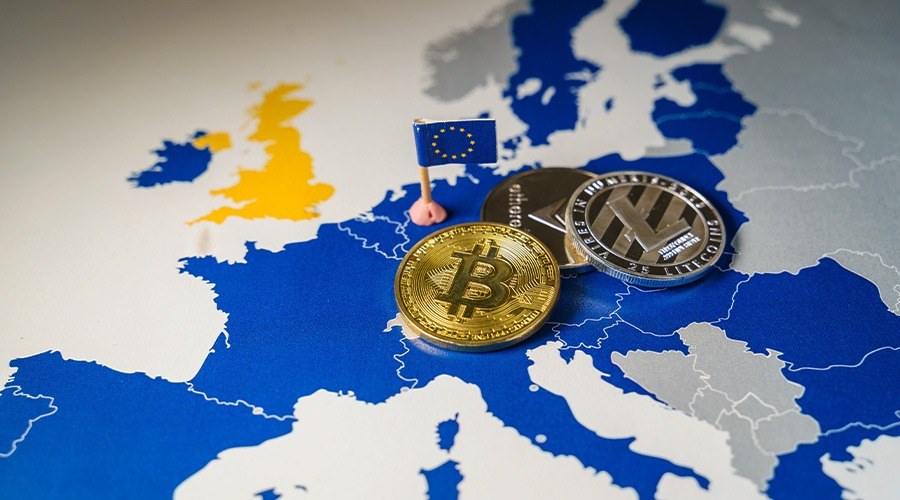
The Spanish Ministry of Economy and Digital Transformation has announced the European Union's Markets in Crypto-Assets (MiCA) Act. The first comprehensive crypto regulatory framework in the EU is set to be enacted on a national level in December 2025. This move occurred as Spain is seeking to accelerate the implementation of MiCA, with the aim of providing enhanced legal protection and certainty to Spanish investors in the crypto space.
The announcement was made on October 26. It followed a meeting between the first Vice President of Spain, Nadia Calviño, and the President of the European Securities and Market Authority, Verena Ross. During their discussions, the Spanish government expressed its intention to fast-track the adoption of MiCA, a regulation designed to govern crypto activities within the EU.
The EU's general deadline for the implementation of MiCA across all 27 member states is July 2026. This deadline includes a 36-month transitional period. It commenced with the publication of MiCA in the Official Journal of the European Union in June 2023. However, Spain seeks to significantly reduce this transitional period to just 18 months, citing its objectives as providing "legal certainty and greater protection for Spanish investors in this type of assets."
Several international cryptocurrency exchanges operating in Spain have received local licenses. In September, Coinbase secured Anti-Money Laundering compliance registration from Spain's central bank, while Kraken obtained virtual asset service provider registration. In June, Crypto.com received similar regulatory approval.
This month, Banco de España, Spain's central bank, joined a growing number of European banking institutions in exploring the potential benefits of a digital euro. The central bank emphasized that physical cash no longer fully exploits the advantages offered by the digitalization of the economy and society. It signals a potential shift toward a more digitally oriented financial landscape.
As Spain positions itself to implement the MiCA framework, the nation is taking steps to regulate and embrace the growing cryptocurrency and digital asset industry, fostering a secure and transparent environment for both investors and market participants.
This article was written by Tareq Sikder at www.financemagnates.com.Why this matters
This cryptocurrency story adds another data point to the current market tape and is useful when read alongside nearby source coverage.
Original source
Read on Finance MagnatesRelated market context
Mirae Asset Issues Tokenized Dollar Notes on Solana for Professional Investors
TL;DR: Mirae Asset Securities’ Hong Kong unit announced the completion of a tokenized funding-note issuance on Solana for eligible...

Bank of England Opens Tokenized Collateral Door With 2027 Deadline for UK Clearing
Key Takeaways: The Bank of England is seeking input on tokenized collateral for central clearing. All tokenizable assets must be e...
Chainalysis Finds $443B MENA Crypto Economy as UAE Growth Outpaces Region
TL;DR: The United Arab Emirates was reported to have grown 32% to about $104.8 billion, while Türkiye remained larger at around $1...

KuCoin Exits Russia and Belarus, Cutting Off Crypto Services in Major Compliance Move
Key Takeaways: KuCoin has closed down trading activity in Russia and Belarus. Affected customers are able to close post positions...

Bitcoin Whitepaper Turns 18: How Satoshi’s 9-Page Vision Reshaped Global Finance
Key Takeaways: On October 31, 2008, the Bitcoin whitepaper was published by Satoshi Nakamoto, which outlines a peer-to-peer electr...

UK crypto firms urged to learn from Europe’s MiCA licensing challenges
UK crypto firms must adapt to stricter regulations, emphasizing consumer protection and market integrity, to remain competitive gl...