Tether’s Alloy Launch Shows Stablecoins Are Moving Beyond Plain Dollars
Tether has launched Alloy, a synthetic dollar product backed by Tether Gold, in a move that pushes the stablecoin issuer further beyond simple dollar tokens. For more details, visit the official Tether platform. TL;DR Te...
Archive context
Older archive item. Useful for background and entity history, but not a fresh market-moving signal.

Tether has launched Alloy, a synthetic dollar product backed by Tether Gold, in a move that pushes the stablecoin issuer further beyond simple dollar tokens.
For more details, visit the official Tether platform.
TL;DR- Tether has introduced Alloy and its aUSDT synthetic dollar product.
- The product is backed by Tether Gold (XAUt) rather than traditional cash reserves.
- The launch shows stablecoin design expanding into new forms of collateral.
Most stablecoin stories are about whether a token is backed by dollars, Treasuries, or bank deposits. Alloy is different. It is designed around over-collateralization with liquid gold exposure, creating a synthetic dollar instrument rather than another straightforward fiat-backed token.
Why Gold-Backed Dollars Are InterestingTether already dominates the conventional stablecoin market with USDT. Alloy suggests the company wants to build a wider collateral platform, where users can hold exposure that behaves like a dollar product while being backed by tokenized gold.
That is a more complex promise than a standard stablecoin. It introduces collateral-price dynamics, liquidation mechanics, and a different risk profile. It also shows why stablecoin issuers are becoming more like financial infrastructure companies than single-product crypto firms.
The Risk Is In The DesignThe appeal is clear: users get a dollar-denominated asset tied to gold collateral, potentially blending the familiarity of stablecoin units with a different reserve base. The caution is just as clear. Synthetic products need users to understand how collateral, redemptions, and market stress interact.
For Tether, Alloy is a way to test how far its brand can stretch. USDT is the liquidity engine. XAUt is the commodity-backed asset. aUSDT tries to connect the two into something more programmable. Whether traders embrace it will depend less on the headline and more on how it behaves when markets are not calm.
This article is based on information from Tether.
This article was written by the News Desk and edited by Samuel Rae.
Why this matters
Tether is showing up inside the Stablecoins theme, so this story is worth tracking for follow-through rather than treating it as a one-off headline.
Original source
Read on NewsBTCRelated market context
Tether signs MoU with Kazakhstan’s central bank to explore tenge stablecoins and tokenized assets
Kazakhstan's collaboration with Tether could enhance its fintech landscape, potentially boosting local currency integration in dig...

Tether Celebrates 12 Years, USD₮ Surpasses 700M Users
Key Takeaways: Tether marked the 12th anniversary of the world’s largest stablecoin by market cap, USD₮. The company claims that U...

Tether Signs Deal With Kazakhstan's Central Bank to Explore a Stablecoin and Tokenized Assets
Tether, issuer of the USDT stablecoin, will help Kazakhstan's central bank study a tenge-pegged token and put real-world assets on...

Securitize Teams With Korea’s LG CNS to Explore Tokenized Funds and Stablecoins
Securitize and Korean technology company LG CNS announced a strategic partnership, set out in a memorandum of understanding, aimed...
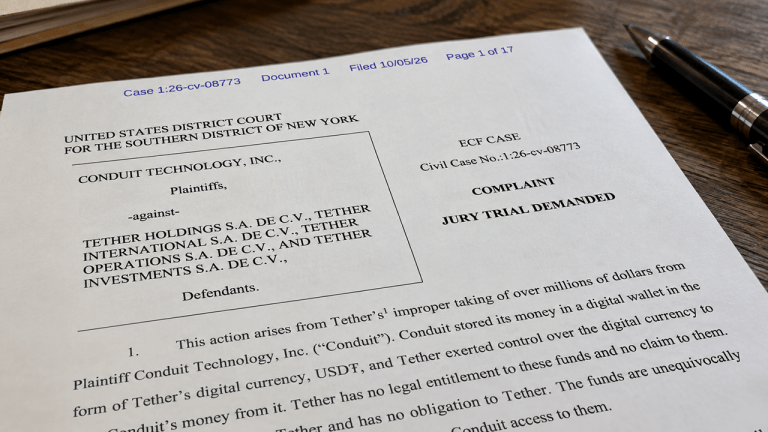
Conduit Sues Tether Over a $2.76M USDT Wallet Frozen for a Year
Conduit Technology has sued Tether after the stablecoin issuer froze $2.76 million in the company’s USDT and allegedly kept it loc...
Kazakhstan Taps Tether to Explore a New Tenge Stablecoin Model
Kazakhstan already has a tenge stablecoin in a central-bank sandbox. Now it has brought Tether into the room to study another one....