The Ongoing Battle Between Stablecoins and the US Dollar
The growing adoption of stablecoins keeps increasing worldwide as countries prepare the ground to launch their own versions of central bank digital currencies or CBDCs. The most talked about stablecoin project nowadays i...
Archive context
Older archive item. Useful for background and entity history, but not a fresh market-moving signal.
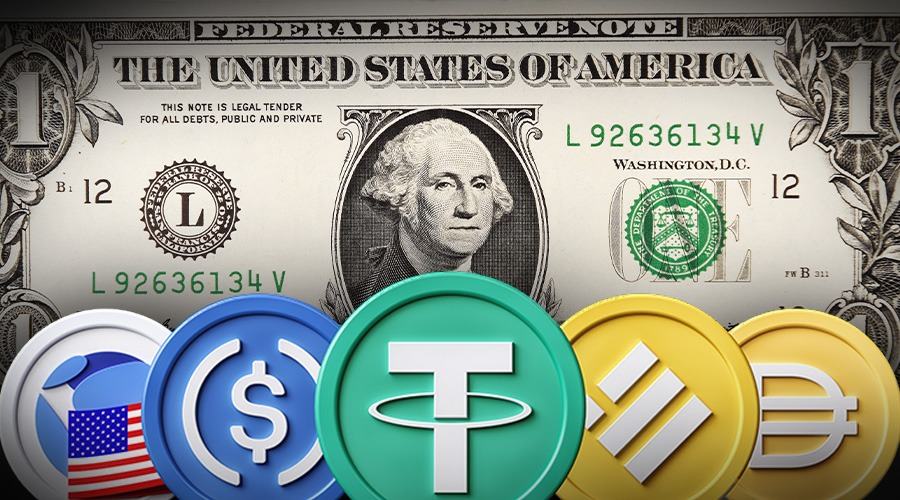
The growing adoption of stablecoins keeps increasing worldwide as countries prepare the ground to launch their own versions of central bank digital currencies or CBDCs. The most talked about stablecoin project nowadays is the digital dollar.
In fact, the Fed’s Chairman, Jerome Powell, recently talked about it and said that developing a digital dollar could help safeguard the US dollar dominance in the world. “A US CBDC (central bank digital currency) could... potentially help maintain the dollar’s international standing,” he said.
Powell added during his speech: “As we consider feedback...we will be thinking not just about the current state of the world, but also how the global financial system might evolve over the next 5 to 10 years.”
Stablecoins DominanceThe digital dollar is still a project, as well as many other CBDCs that are being discussed nowadays. However, the stablecoins market is consolidated across the cryptocurrency sphere, specifically the ones pegged to the US dollar, with Tether (USDT) being the dominant one, with a market capitalization of over $69 billion, followed by USD Coin (USDC), with over $55 billion, according to metrics from CoinMarketCap.
Stablecoins Market Cap - Source: CoinMarketCap
The questions are many when we talk about stablecoins pegged to the greenback: is there a battle of dominance between adopting stablecoins and fiat? Can we talk about the US dollar vs. stablecoins as a sole concept? Or are there other fronts to cover?
Focus of the DiscussionGabriella Kusz, CEO at Global Digital Asset and Cryptocurrency Association
Speaking with Finance Magnates, Gabriella Kusz, the CEO at Global Digital Asset and Cryptocurrency Association, commented that all depends on what regulations are actually adopted: “If they are balanced and act to advance innovation while protecting consumers (ie, provide transparency around the nature of collateralization, require adequate capital reserves and facilitate ease/access to conversion into and out of fiat) then I believe such regulations will advance the development of stablecoins.”
She pointed out that we should talk about the concept of the Global Digital Economy rather than discussing a battle between stablecoins and US dollar because most of the stablecoins are backed by fiat USD. “Stablecoins when backed by fiat are predominantly backed by the US dollar, so the concept or argument of stablecoins versus the US is a bit of a moot point. By virtue of the fact that most fiat backed stable coins are carrying the US dollar with them they actually work to advance and extend the prominence of the US dollar in the Global Digital economy,” Kusz added.
Neil Bergquist, CEO and Co-Founder at Coinme
Neil Bergquist, the CEO and Co-Founder at Coinme, told Finance Magnates that he agrees with the fact that there should not be a battle between the US dollar and US dollar-backed stablecoins because dollar blacked stablecoins are supposed to be a 1:1 representation of USD. “As USD stablecoin adoption grows, so does the adoption of USD. The unique benefit of stablecoins is that they’re on a blockchain which enables a digitally native financial experience. For example, with stablecoins, people can move dollars the way we send and receive email,” he commented.
Also, he talked about regulations in the stablecoin sphere: “A regulatory framework for stablecoins would encourage additional stablecoin adoption and investment in stablecoin infrastructure. In addition, I would assume stablecoin-specific regulation would attempt to protect customers by ensuring stablecoins are, in fact, backed by dollars 1:1, could remain pegged to the dollar during times of high volatility, and ensure proper AML controls are in place.”
Both experts agreed that the focus of the discussion should be aligned on what the regulation should stand by nowadays, rather than putting a battle between stablecoins and the fiat.
This article was written by Felipe Erazo at www.financemagnates.com.Why this matters
This cryptocurrency story adds another data point to the current market tape and is useful when read alongside nearby source coverage.
Original source
Read on Finance MagnatesRelated market context

Money20/20 USA 2026: How Bitcoin, Stablecoins and AI Are Reshaping the Future of Finance
Bitcoin Magazine Money20/20 USA 2026: How Bitcoin, Stablecoins and AI Are Reshaping the Future of Finance Fintech has moved beyond...

EU crypto platforms given 3 months to remove unauthorized stablecoins
The ESMA's directive may reshape EU crypto markets by limiting non-compliant stablecoins, potentially altering global regulatory t...

ESMA orders MiCA firms to halt services for non-compliant stablecoins
The EU's deadline for crypto firms to drop non-compliant stablecoins like USDT may reshape market dynamics and regulatory strategi...

ESMA gives crypto firms 3 months to exit non-compliant stablecoins
ESMA urged EU crypto firms to halt services involving non-MiCA-compliant stablecoins, giving regulators three months to address ex...

Securitize Rolls Out 1:1-Backed Tokens of Apple, Nvidia and 10 Other U.S. Stocks on Solana
Securitize launched Securitize Stocks on Thursday, a line of tokenized U.S. equities for eligible investors in the U.S., the Europ...

Why Bitcoin’s Liquidity Advantage Matters as Institutions Move In
Bitcoin Magazine Why Bitcoin’s Liquidity Advantage Matters as Institutions Move In Bitcoin’s portability, divisibility and accessi...