UAE Central Bank Issues AML Guidance for Virtual Assets
The UAE Central Bank has issued new anti-money laundering and counter-terrorism financing guidance covering the dealings with virtual assets, including cryptocurrencies and non-fungible tokens (NFTs). UAE’s New Virtual A...
Archive context
Older archive item. Useful for background and entity history, but not a fresh market-moving signal.

The UAE Central Bank has issued new anti-money laundering and counter-terrorism financing guidance covering the dealings with virtual assets, including cryptocurrencies and non-fungible tokens (NFTs).
UAE’s New Virtual Assets Guidance
The new guideline, which will come into effect within a month, will be applicable to all licensed financial institutions, including banks, finance companies, exchange houses, payment service providers, registered hawala providers, insurance companies, agents, and brokers.
The guidance discusses the risks while dealing with virtual assets and virtual asset service providers and signifies the effective implementation of legal obligations for licensed financial firms. In addition, they provide clear definitions of virtual assets, virtual asset service providers, and their business models.
Furthermore, the guideline outlines due diligence procedures the financial institutions need to follow when dealing with the customers of virtual asset service providers. On top of that, they highlighted proper channels and mechanisms through which financial institutions should interact with virtual asset service providers.
“The new guidance related to the virtual assets sector contribute to strengthening the supervisory and regulatory frameworks of the Central Bank to combat money laundering and the financing of terrorism,” said Khaled Mohamed Balama, the Governor of the UAE Central Bank.
Progressive Rules around Virtual Assets
The UAE is one of the progressive nations regulating the digital asset industry. Dubai, one of the seven emirates, even formed a dedicated regulator overseeing the virtual asset industry. Last month, Abu Dhabi-based federal agency, the Securities and Commodities Authority, started accepting license applications for cryptocurrency services.
Moreover, the Central Bank pointed out that the new guidance considered Financial Action Task Force (FATF) standards. Last year in March, the FATF added the UAE to its ‘grey’ list, basically increasing monitoring of the jurisdiction. At the time, the UAE said it would work with the FATF to address the concerns.
“We are constantly working to enhance efforts and strengthen the awareness of licensed financial institutions to prevent all kinds of financial crime activities, and reduce potential risks to protect the financial and monetary system and maintain its soundness and stability, in line with the Financial Action Task Force standards,” the Governor added.
This article was written by Arnab Shome at www.financemagnates.com.Why this matters
This cryptocurrency story adds another data point to the current market tape and is useful when read alongside nearby source coverage.
Original source
Read on Finance MagnatesRelated market context
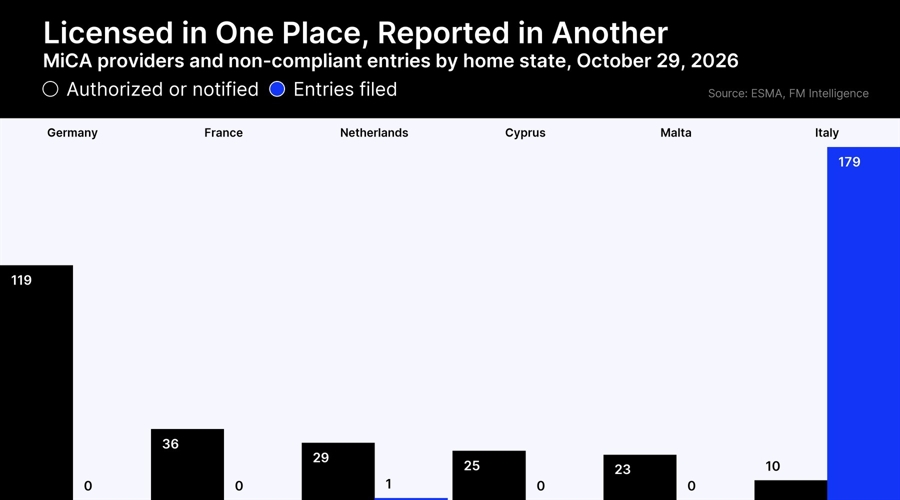
Italy Filed 95% of the EU's Register of Unlicensed Crypto Firms
Italy's market regulator filed 179 of the 188 entries on the EU's register of unlicensed crypto firms, an FM Intelligence analysis...

Eric Trump warns Bitcoin’s low transfer fees threaten financial institutions
Bitcoin's low transfer fees could disrupt traditional banking models, challenging their fee-based revenue streams and operational...
SEC Updates Crypto-Asset FAQs as Firms Seek Clarity on Federal Securities Rules
TL;DR: The SEC Division of Corporation Finance added questions 1.4, 1.5 and 1.6 to its crypto-assets FAQ on November 2, 2026. SEC...

Binance tracked assets climb $3.4 billion in two days after post-hack withdrawal restart
Binance's swift asset recovery post-hack highlights its resilience and underscores the critical importance of maintaining user tru...
Coinbase says 99% of customer assets sit in cold storage after Binance’s $6.3 billion breach
Coinbase says 99% of customer assets are in cold storage and it wasn't affected by the $6.3 billion Binance hack.
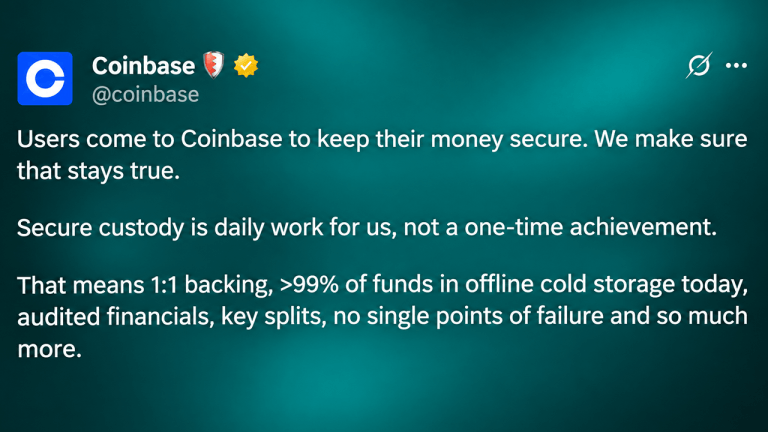
Coinbase Says 99% of Customer Assets in Cold Storage After $6.3B Binance Hack
Coinbase says more than 99% of customer assets are held in offline cold storage following Binance’s $6.34 billion hack on Oct. 29,...