Unpacking Mantra’s OM crash requires forensic study — CertiK exec
Mantra founder and CEO John Mullin has begun an $80 million burn of OM tokens to regain users’ trust following the token’s crash earlier in April. However, the question of the underlying reasons for the crash remains una...
Archive context
Older archive item. Useful for background and entity history, but not a fresh market-moving signal.
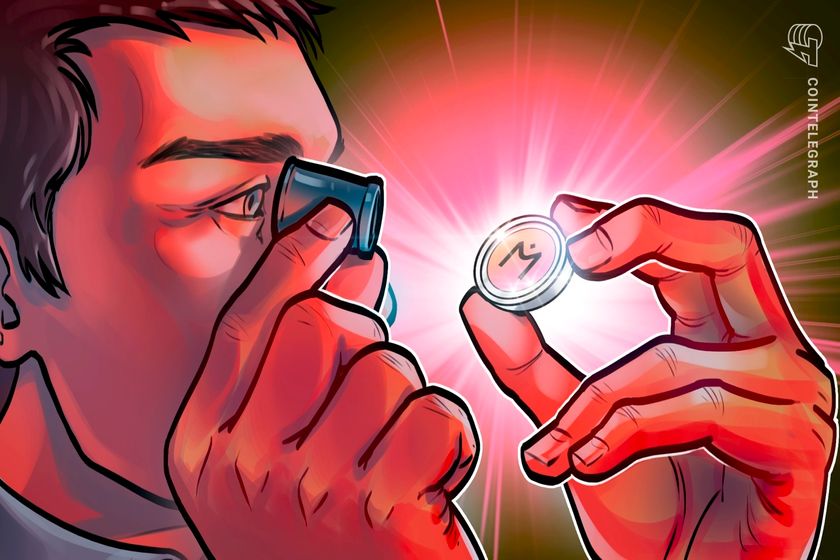
Mantra founder and CEO John Mullin has begun an $80 million burn of OM tokens to regain users’ trust following the token’s crash earlier in April. However, the question of the underlying reasons for the crash remains unanswered, blockchain investigators told Cointelegraph.
Unpacking Mantra’s OM crash would require a detailed forensic study rather than just basic blockchain analysis, said Natalie Newson, senior blockchain investigator at the blockchain security firm CertiK.
“A full forensic investigation, akin to what we saw post-FTX, would be needed to substantiate claims of calculated exploitation,” Newson told Cointelegraph, highlighting challenges of tracing over-the-counter (OTC) transactions.
Newson’s perspective on the OM crash came days after Mantra released its post-crash statement, asking centralized exchange partners to collaborate on further unpacking the incident.
Onchain activity versus opaque OTC dealsAddressing the OM token crash, Newson stressed the importance of distinguishing between public onchain activity and the “more opaque nature of OTC deals.”
Mantra CEO Mullin disclosed in an interview with Coffeezilla on April 15 that the Mantra team had “done a small amount of OTCs,” up to $30 million of OM tokens.
Mantra’s founder and CEO, John Mullin, in an interview with Coffeezilla. Source: YouTubeUnlike traceable transactions on centralized exchanges, OTC crypto transfers involve a method of buying and selling cryptocurrencies outside of exchanges, designed to enable deep liquidity and big trades while mitigating the volatility of prices.
“In this case, the accumulation of approximately 100 million OM by a whale appears to have been the result of secondary market transactions — not necessarily direct activity from Mantra insiders,” Newson said.
Analysis by Arkham or Nansen is not enoughAs previously mentioned, Mullin denied allegations that the OM crash resulted from an insider token dump, claiming that blockchain analytics platform Arkham had “mislabelled” some wallets.
Newson said that data from Arkham and similar platforms like Nansen would be insufficient to confirm or deny insider involvement.
“To confirm coordinated insider behavior, it would likely require more than just basic wallet tracing on platforms like Arkham or Nansen,” Newson said, adding:
“Blockchain analytics tools can provide directional clues, but without access to offchain agreements and centralized exchange records, drawing definitive conclusions would be difficult.”Newson is not alone in highlighting the complicated nature of tracing transactions in the OM token crash.
Related: Mantra OM token crash exposes ‘critical’ liquidity issues in crypto
“There are ways to get data from the node, but it does not seem to be easy to get a full history,” Whale Alert’s co-founder Frank Weert told Cointelegraph.
Mullin previously said that the team had been considering hiring a forensic auditor following the OM crash but had made no decision as of April 16.
Arkham did not respond to multiple Cointelegraph inquiries to comment on the Mantra incident.
Magazine: Altcoin season to hit in Q2? Mantra’s plan to win trust: Hodler’s Digest, April 13 – 19
Why this matters
This cryptocurrency story adds another data point to the current market tape and is useful when read alongside nearby source coverage.
Original source
Read on CointelegraphRelated market context

Morgan Stanley Builds Crypto Lab to Test Stablecoins, Tokenization and DeFi at Scale
Key Takeaways: Morgan Stanley has opened a Digital Asset Lab dedicated to blockchain technologies. The test is to be applied to th...

European Banking Authority Puts USDC Under Significant-Token Supervision
The European Banking Authority has designated USDC as the EU’s first significant e-money token under MiCA, setting up an additiona...

Blockworks Asks SEC to Make Token Projects Disclose Market-Maker Deals and Promoter Payments
Token projects raising money under the SEC’s proposed crypto offering rules would have to spell out their token loans, their agree...

Stablecoin Payments Reach $482 Billion As Token Supply Barely Grows
A new payments dataset offers a useful correction to the idea that stablecoin growth must be measured by how many tokens are in ci...
Solana non-vote transactions surge 104% in Q3 2026, reaching 8.92B
The surge in Solana's transactions suggests increased network demand, potentially influencing its market valuation and future pric...

Ondo and Superstate lead weekly growth in tokenized US T-bill market
The rise of tokenized T-bills highlights growing blockchain integration in finance, yet limited DeFi use suggests untapped potenti...