US Bank Outflows and Concerns Mount: 11 Banks Bail Out First Republic Bank From Collapse
After the fall of Silvergate Bank, Silicon Valley Bank (SVB), and Signature Bank (SNBY), First Republic Bank, a commercial bank and wealth management services provider, is the latest financial institution to receive a ba...
Archive context
Older archive item. Useful for background and entity history, but not a fresh market-moving signal.
After the fall of Silvergate Bank, Silicon Valley Bank (SVB), and Signature Bank (SNBY), First Republic Bank, a commercial bank and wealth management services provider, is the latest financial institution to receive a bailout. Close to a dozen lenders announced they will deposit $30 billion into the beleaguered bank’s coffers to shore up liquidity. U.S. banks have suffered from the financial contagion that followed the three bank failures last week. According to reports, depositors removed $8.8 billion from Charles Schwab Corporation’s prime money market funds.
Impact of Recent Bank Failures on U.S. Banking Industry Spurs Wave of BailoutsSeveral banks received bailouts in the past week due to the collapse of three major U.S. banks. This event shook the banking industry, and banks of all sizes, including giants like Bank of America and JPMorgan, saw a decline in their stocks. After Silvergate, SVB, and SNBY failed, banks borrowed approximately $164.8 billion from the Federal Reserve to secure liquidity. The collapse has also impacted international financial institutions, as Credit Suisse received a 50 billion Swiss franc bailout from the Swiss National Bank following the bailout of SVB and SNBY depositors by the U.S. central bank, Treasury, and Federal Deposit Insurance Corporation (FDIC).
First Republic Bank (NYSE: FRC) experienced a tumultuous week with a 50.41% decline in its stock value against the U.S. dollar in the last five days. Despite exploring various options, including a sale, to improve its liquidity during this chaos, the bank founded in 1985 faced the risk of failure. However on Thursday, 11 banks, including Bank of America, Citigroup, JPMorgan Chase, Wells Fargo, Goldman Sachs, Morgan Stanley, BNY Mellon, PNC Bank, State Street, Truist Bank, and US Bank, deposited $30 billion into First Republic Bank (FRC), saving it from a possible collapse.
The press release addressing the funding mentions that, after the government receiverships of SVB and SNBY, “a few banks experienced uninsured deposit outflows.” The 11 lenders’ statement indicates that “the actions of the largest banks in the U.S. demonstrate their trust in the country’s banking system.” First Republic Bank’s (FRC) shares managed to recover on Thursday before the market closed, finishing 9.98% higher and gaining $3.11 per share. In August 1986, FRC shares were $10 each, and on March 16, 2023, they traded at $34.27 per share.
In addition to the 11 lenders who mentioned outflows of uninsured deposits, a recent report by Bloomberg contributor Silla Brush revealed that Charles Schwab Corporation experienced “net outflows of $8.8 billion from its prime money market funds this week.” Bloomberg’s data suggests that it was the largest number of redemptions in six months, and Schwab customers withdrew funds from a pair of Schwab Value Advantage Money funds.
Investors are also concerned that Pacwest Bancorp may face similar issues, as the financial holding company’s stock has fallen 27.16% in the last five days. Several other bank shares, including stocks from Synchrony Financial, CNB Financial, Discover Financial, and Capital One, have also recorded losses in the past week.
What do you think the long-term effects of these bank failures and subsequent bailouts will be on the U.S. banking industry and the wider economy? In the comments section below, let us know what you think about this subject.
Why this matters
This cryptocurrency story adds another data point to the current market tape and is useful when read alongside nearby source coverage.
Original source
Read on Bitcoin NewsRelated market context

Paraguay Bank Collapse Shows Why Bitcoin Was Created as USDT Hits Premium
Paraguay bank crisis is showing why Bitcoin was created in the first place. USDT sellers reportedly demanded premiums of up to 13%...
Bitcoin and USDT attract modest premiums in Paraguay as millions face banking crisis
Bitcoin and USDT have traded at premiums in Paraguay's peer-to-peer markets as a banking collapse unsettles the country's financia...

Paraguay Bank Crisis Sends USDT to 13% Premium After Ueno Freeze Hits 3M Customers
Key Takeaways: Bybit P2P listing also went about 13% cheaper than Paraguay’s official dollar rate in USDT. The failure of Ueno Ban...
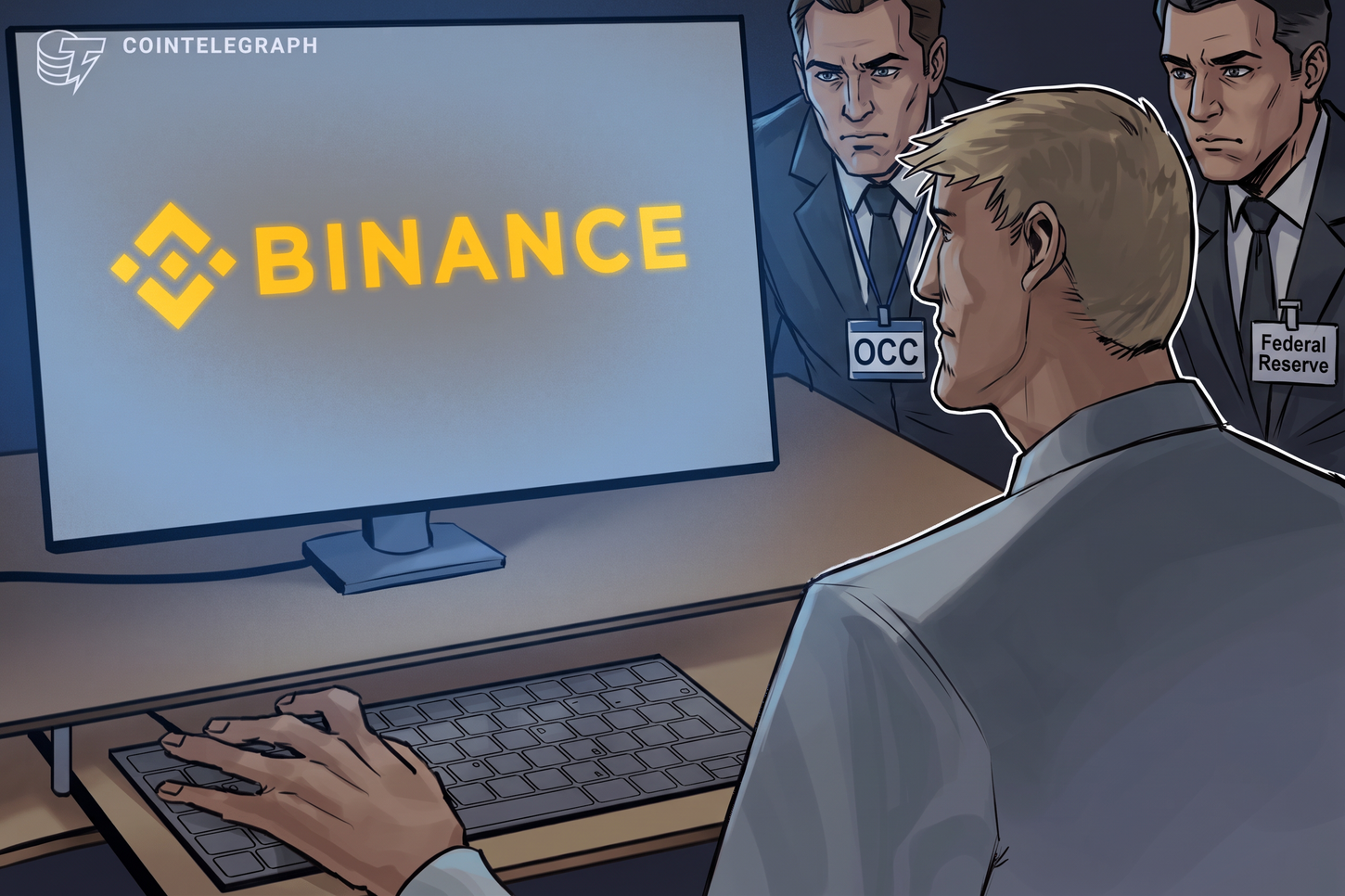
Fed, OCC check US banks after Binance hack as experts flag security risks
US regulators reportedly contacted banks following last week’s $6.3 billion Binance security hack, while experts raised concerns a...
Elizabeth Warren poised to lead Senate Banking Committee and target Wall Street, crypto
Warren's leadership could intensify regulatory scrutiny, potentially reshaping financial industry practices and impacting crypto m...

Bitcoin ETF Outflows Hit $430M as Hong Kong Expands Its BTC Market
Bitcoin ETF outflows reached $430.2 million at the end of Thursday, as institutional investors continued withdrawing capital from...