US lawmakers advance anti-CBDC bill
The US House Financial Services Committee advanced a bill aimed at preventing federal banks from using or issuing central bank digital currencies, or CBDCs, paving the way for a vote in the chamber.In an April 2 committe...
Archive context
Older archive item. Useful for background and entity history, but not a fresh market-moving signal.

The US House Financial Services Committee advanced a bill aimed at preventing federal banks from using or issuing central bank digital currencies, or CBDCs, paving the way for a vote in the chamber.
In an April 2 committee session, lawmakers voted 27-22 in favor of passing the CBDC Anti-Surveillance State Act. The bill was one of five the committee considered in a markup hearing discussing possible amendments. Lawmakers also approved a bill regulating payment stablecoins, setting up the legislation for a full House vote.
“Last Congress, this bill passed out of the House of Representatives by a 216-192 vote,” said Minnesota Representative Tom Emmer, the anti-CBDC bill’s sponsor. “So far this Congress, this bill has 114 cosponsors and support from groups ranging from the Independent Community Bankers Association and the American Bankers Association to Club for Growth, Heritage Action, and the Blockchain Association.”
Related: Crypto regulation must go through Congress for lasting change — Wiley Nickel
Many Republican lawmakers have warned institutions such as the Federal Reserve and the Treasury Department away from exploring CBDC development, often citing financial privacy concerns. After reintroducing the bill in March, Emmer suggested it was an attempt to codify an executive order from US President Donald Trump into law. That order, signed on Jan. 23, prohibited “the establishment, issuance, circulation, and use” of a CBDC in the United States.
Is it politically advantageous to oppose CBDCs?It’s unclear whether the anti-CBDC bill will have the votes in the House and Senate to be passed to Trump’s desk to sign into law. Senator Ted Cruz introduced a companion bill to Emmer’s on March 26, suggesting a coordinated effort by Republicans to push the legislation through.
Since the development of digital assets, government entities like the Fed have explored the possibility of releasing a CBDC. Many US lawmakers and industry leaders have opposed the idea, claiming the technology could be used to monitor Americans’ financial transactions.
Magazine: Solana ‘will be a trillion-dollar asset’: Mert Mumtaz, X Hall of Flame
Why this matters
This cryptocurrency story adds another data point to the current market tape and is useful when read alongside nearby source coverage.
Original source
Read on CointelegraphRelated market context

French Lawmakers Back Tax on Crypto-to-Stablecoin Swaps by a Single Vote
France’s National Assembly voted on Oct. 16 to adopt an amendment to the 2027 finance bill that would make trading crypto for stab...

Blockchain Association Asks Treasury to Narrow GENIUS Act Rule on Who Can Sell Stablecoins
The Blockchain Association is asking the U.S. Treasury to set a higher bar before a crypto company can be found to have taken part...
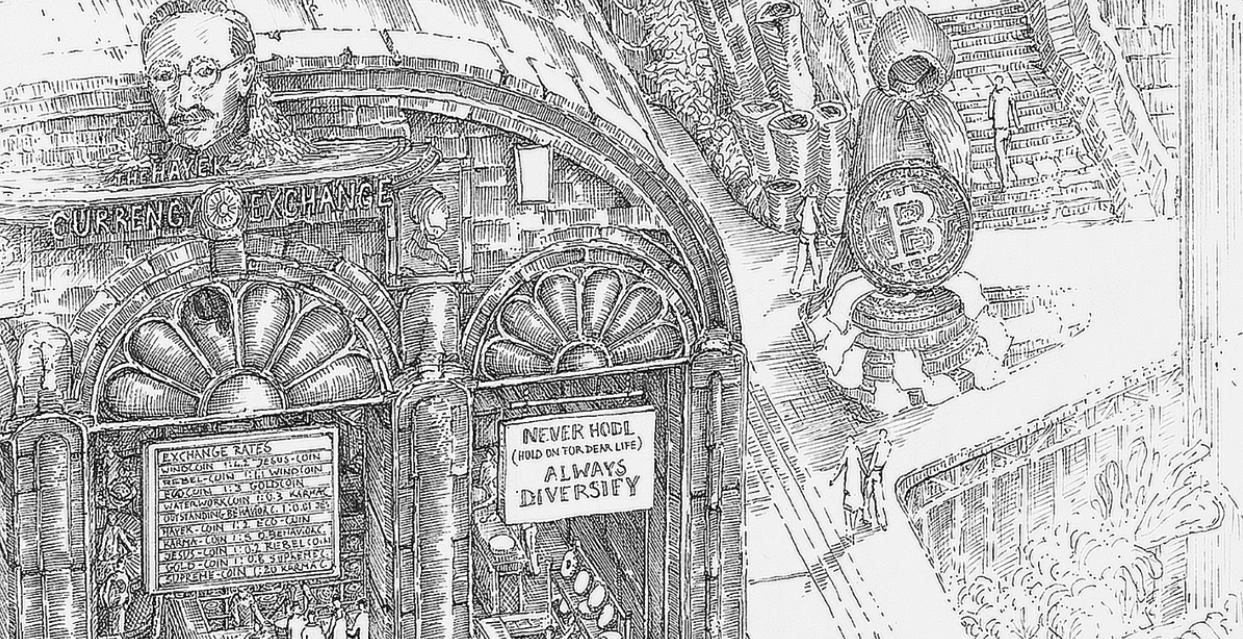
The Architecture of Money: Mapping Financial Power in the Age of Bitcoin
Bitcoin Magazine The Architecture of Money: Mapping Financial Power in the Age of Bitcoin Money determines where we live, what we...

Tether backs Tenstorrent’s $1.5 billion raise to widen access to AI computing
Tether's investment in Tenstorrent signals a strategic shift towards diversifying AI infrastructure, potentially decentralizing co...

Coinbase Taps Thunes to Link Stablecoins to Billions of Accounts
Coinbase is partnering with Thunes to connect stablecoin transfers with payouts to billions of bank accounts and mobile wallets. T...

Metaplanet Bitcoin Investment Clears Super League Shareholder Vote
TL;DR: Super League shareholders have approved proposals connected to Metaplanet’s plan to contribute 2,100 BTC and cash to a new...