X brings crypto trading closer to your social feed
Crypto Twitter (now X) has always been a place where someone with an illustrated animal for a profile picture can explain why your financial future depends on a token you just learned about. Now X’s Cashtag links are sho...
Archive context
Older archive item. Useful for background and entity history, but not a fresh market-moving signal.
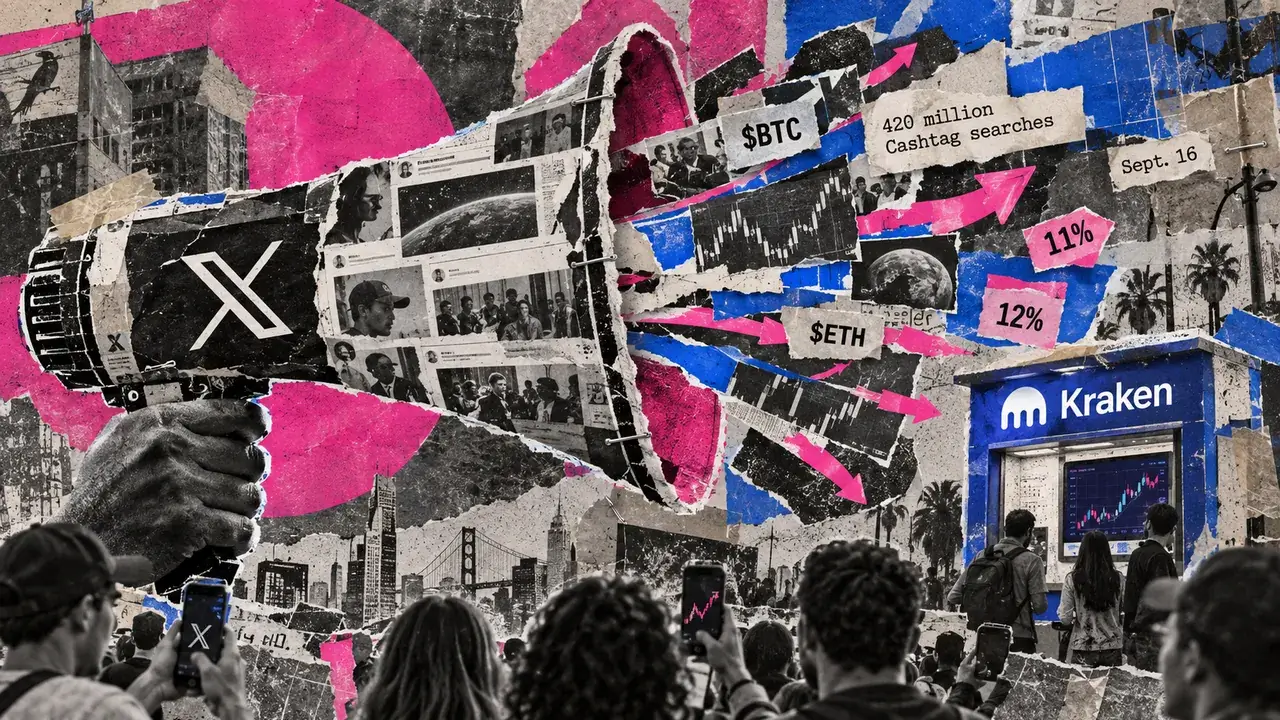
Crypto Twitter (now X) has always been a place where someone with an illustrated animal for a profile picture can explain why your financial future depends on a token you just learned about. Now X’s Cashtag links are shortening the route from that conversation to a crypto exchange.
Kraken joined X's US Cashtag partner program on Sept. 16, giving users another route from tickers such as $BTC to its exchange. Tapping a Cashtag can bring up posts and a price chart on X, while the trading link sends users to Kraken's app or website, where they sign in or register and complete the purchase.
Kraken's announcement describes this as a way to become easier to find inside applications people already use. That's the important part of the deal. X isn't becoming an exchange, and the trade itself still happens at Kraken. What changes is the distance between discovering an asset and reaching somewhere that sells it.
That distance has historically been surprisingly long for crypto. Someone might first hear about Bitcoin on X, read a thread explaining it, search for the price somewhere else, compare exchanges, open an account, fund it, and eventually return to the asset they were interested in several steps earlier. Cashtag links compress part of that process into the same environment where the interest started.
Exchanges want to own the next Cashtag clickTwitter experimented with the same idea before it became X. In 2023, eToro connected Twitter Cashtags to its platform, citing 420 million Cashtag searches during the first three months of that year. Those searches weren't 420 million investors, and they certainly weren't 420 million trades. But they showed why exchanges care about this part of the internet.
People searching $BTC or $ETH have already done something valuable from a financial company's perspective: they've identified the asset they're interested in.
Traditional advertising has to find people who might want to invest and then convince them to care about a particular product. Cashtag traffic starts much further down that road. Users are already looking at the asset, reading arguments about it, checking the price, or watching other people trade it.
That makes the next click valuable. Kraken doesn't need everyone who opens a Cashtag to buy anything. It needs to be one of the places users think of when reading about an asset turns into wanting exposure to it.
This changes exchange competition in a subtle way. Fees, liquidity, and execution still count once investors are comparing trading platforms, but distribution determines which platforms make it into that comparison in the first place.
Crypto companies have spent years fighting for the places where people trade. Increasingly, they're also fighting for the places where people decide they want to trade.
The X feed is becoming part of the financial interfaceThat's where the X integration becomes more interesting than another referral link.
Crypto's social life and its financial life have always been unusually close. Prices move around posts, memes become investment theses, founders announce products directly to holders, and traders narrate positions in public while other people decide whether to follow them.
The industry didn't need X to invent social investing because much of crypto already worked that way. What Cashtag integrations do is formalize the next step.
The same feed can now help create interest, reinforce it through repeated exposure, show the price, and direct users toward somewhere they can act on it. The exchange still handles the transaction, but the social platform becomes part of the route that produced it.
That could be important for adoption because people don't usually wake up wanting a new financial product in the abstract. They encounter it through friends, communities, creators, news, jokes, arguments, and whatever everyone else appears to be talking about.
X already concentrates much of that process for crypto. Its recommendation system uses signals such as likes, reposts, replies, and connections to decide what people may want to see, while the For You feed distributes posts beyond accounts users deliberately follow.
Those systems are built to surface attention, not decide whether an investment is sensible. But when trading access appears beside the conversation, attention becomes financially actionable much faster.
This doesn't automatically make the resulting decisions worse. Crypto users who already know what they want may prefer reaching a familiar exchange without leaving the flow of what they're reading, and fewer steps can make investing easier for newcomers who previously found crypto unnecessarily difficult to navigate.
The larger consequence is that adoption becomes less about persuading people to enter a separate crypto world. Instead, financial products come to the places people already spend their time.
That's a very different version of mainstreaming. People don't necessarily adopt crypto by becoming “crypto people” and reorganizing their online lives around exchanges, wallets, and specialist websites. They encounter an asset in an ordinary feed, tap the ticker, and move into a financial service from there.
The boundary between media and financial distribution gets thinner in the process. Less friction means the feed carries more weight. Reducing friction has obvious commercial value because every extra step gives someone another opportunity to abandon a purchase.
However, removing those steps also gives more influence to whatever created the impulse in the first place.
Research shows that financial interfaces can affect behavior. In a 2024 experiment involving more than 9,000 consumers, the UK's Financial Conduct Authority found that some app-design features increased trading and risk-taking. Push notifications increased trading by 11%, while points and prize draws increased it by 12%.
The experiment wasn't about X and doesn't tell us what Cashtag users will do. Its relevance is simpler: the way a financial decision is presented can change how people act. On X, that presentation starts before anyone reaches an exchange.
Investors may have already seen a bullish thread, watched a token trend, read dozens of replies, or seen the same ticker repeatedly before clicking toward a trade. By then, the exchange isn't creating the idea. It's receiving a user whose conviction was built somewhere else.
That makes social distribution extremely powerful for crypto because the feed doesn't have to sell the financial service directly. It only has to make the asset feel important enough to investigate. The trading provider handles the rest.
There are still ordinary financial questions at the end of that route. Kraken's fees vary by product and execution method, and users still have to consider the quoted price, spread, account eligibility, and whether they actually want the asset they're about to buy.
But those details are no longer the most interesting part of the integration: the bigger shift is where the investment decision begins.
Crypto exchanges used to be destinations people visited after deciding to buy. Social platforms increasingly have the chance to become the place where discovery, conviction, and the first step toward execution happen together.
For an industry that has always grown through online communities, that could be a much bigger adoption channel than another trading feature.
Crypto Twitter spent years telling people what to buy. Now it can also point them toward the checkout.
The post X brings crypto trading closer to your social feed appeared first on CryptoSlate.
Why this matters
Kraken is showing up inside the Market Structure theme, so this story is worth tracking for follow-through rather than treating it as a one-off headline.
Original source
Read on CryptoSlateRelated market context

Tether Celebrates 12 Years, USD₮ Surpasses 700M Users
Key Takeaways: Tether marked the 12th anniversary of the world’s largest stablecoin by market cap, USD₮. The company claims that U...

OKX Eyes 63 U.S. Stocks in Major Tokenized Trading Expansion
Key Takeaways: OKXICE informed the SEC about its plan to establish an online platform called “Tokenized Securities Venue” that wou...

XRP Whales Dominate Exchange Outflows as Bitcoin Shorts Rise on Hyperliquid
The contrasting flows highlight a market where some large investors are moving XRP away from exchanges even as leveraged traders p...
Why Abstract is killing its Ethereum L2 instead of launching a token to save it
Abstract will shut down on Dec. 15 despite onboarding more than 400,000 users, hosting 144 apps, and landing brands including Disn...
OKX Secures Circle, Ripple and Standard Chartered Backing at $25B Valuation
Key Takeaways: OKX raised funding with Circle, Ripple, QRT, and SC Ventures with a valuation of $25B. The deal is a continuation o...
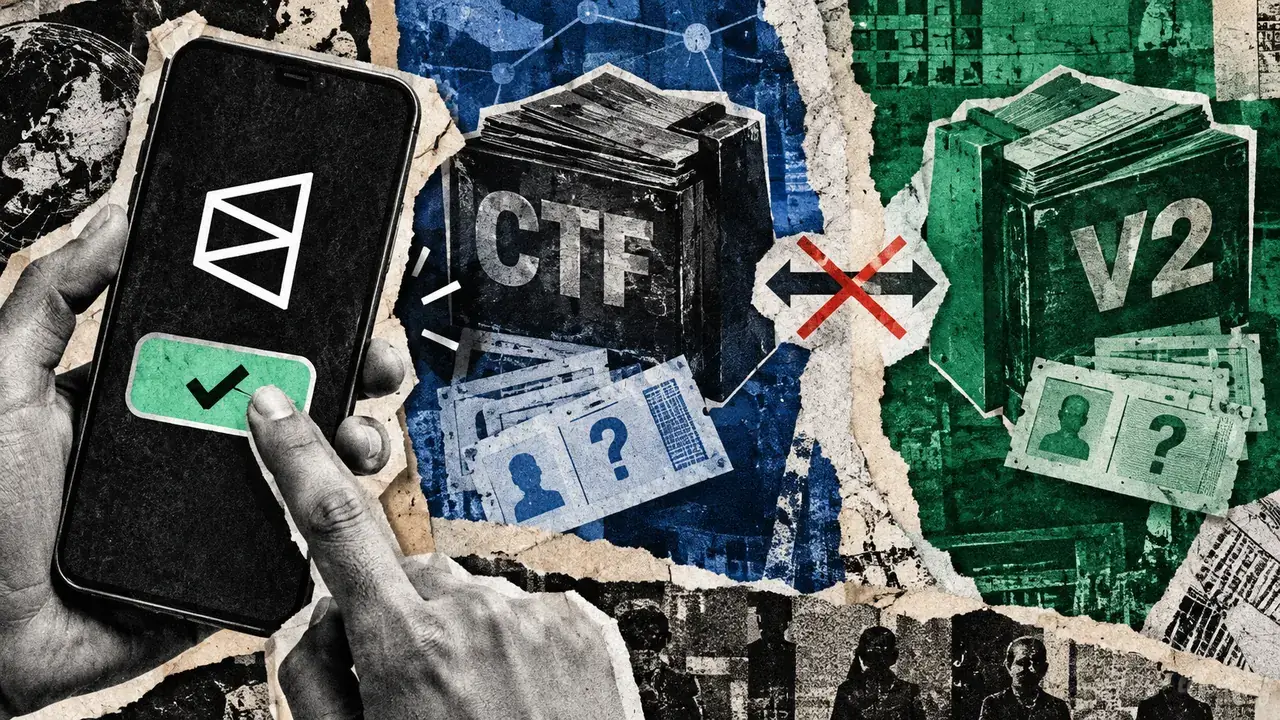
Polymarket’s upgrade won’t automatically move existing bets to new contracts
Polymarket’s Protocol V2 rollout does not automatically move existing bets held under its older Conditional Tokens Framework, or C...