Ethereum open interest hits new all-time high — Will ETH price follow?
Ether (ETH) price dropped 6% between March 19 and March 21 after failing to break the $2,050 resistance level. More notably, ETH has fallen 28% since Feb. 21, underperforming the broader crypto market, which declined 14%...
Archive context
Older archive item. Useful for background and entity history, but not a fresh market-moving signal.

Ether (ETH) price dropped 6% between March 19 and March 21 after failing to break the $2,050 resistance level. More notably, ETH has fallen 28% since Feb. 21, underperforming the broader crypto market, which declined 14% over the same period.
Despite ETH’s price struggles, Ether futures open interest hit a record high on March 21. This has led traders to question whether large investors are positioning for a potential rally toward $2,400 while also raising concerns about the risks of cascading liquidations due to heightened leverage.
Ether futures aggregate open interest, ETH. Source: CoinGlass
The aggregate open interest in Ether futures rose 15% over two weeks, hitting a record 10.23 million ETH on March 21. Binance, Gate.io, and Bitget collectively dominate 51% of the market, while the Chicago Mercantile Exchange (CME) holds 9% of ETH open interest, according to CoinGlass data. This contrasts with Bitcoin futures, where CME leads with a 24% market share.
Demand for leveraged ETH longs has declinedThe increased activity in ETH futures contracts typically indicates institutional investors’ interest, as open interest measures the demand for leverage. However, buyers (longs) and sellers (shorts) are always matched, so an increase in open interest does not inherently indicate a positive outlook.
To gauge whether buyers are seeking more leverage, analysts should compare ETH futures monthly contract prices to spot exchange rates. In neutral markets, these derivatives typically trade 5% to 10% higher on an annualized basis to account for the extended settlement period. If traders turn bearish, this premium would likely drop below that range.
Ether futures 2-month annualized premium. Source: Laevitas
The annualized premium for ETH monthly futures dropped to below 4% on March 21, down from 5% two weeks earlier. This decline in the futures premium suggests reduced incentives for traders to use the “cash and carry” strategy, which involves selling futures contracts while simultaneously buying spot ETH to capture the premium as a fixed-income trade.
Spot ETF outflows and reduced network fees pressure ETH pricePart of Ether’s decline stems from weak demand for US-based Ether exchange-traded funds (ETFs), which saw $307 million in net outflows over the two weeks ending March 20. The macroeconomic environment has also dampened investor confidence, as economists warn of rising recession risks due to global tariff wars, inflationary pressures, and US government spending cuts, according to the Boston Globe.
However, some analysts argue that Ether’s recent price weakness stems from an imbalance between network fees—required to compensate validators—and the interests of decentralized applications (DApps) and layer-2 scaling solutions. This critique was perfectly summarized by Martin Köppelmann, co-founder of Gnosis.
Source: koeppelmann
In a sense, Ethereum’s successful shift to proof-of-stake and the introduction of blob space to enhance scalability through rollups—while significantly boosting the network’s capabilities—are also seen as factors limiting Ether’s price growth. Despite the low transaction costs of its layer-2 solutions, some ETH investors believe they are not being adequately rewarded.
Ether’s price has faced pressure from rising macroeconomic risks, while demand for DApps continues to decline—whether due to increased competition or waning investor interest. Ethereum’s 7-day base layer revenue fell to $605,000 on March 17, a sharp drop from $2.5 million just two weeks earlier.
There is no indication that the surge in ETH futures open interest is driven by bullish positioning. On the contrary, demand for leveraged long positions remains notably weak, suggesting cautious market sentiment.
This article is for general information purposes and is not intended to be and should not be taken as legal or investment advice. The views, thoughts, and opinions expressed here are the author’s alone and do not necessarily reflect or represent the views and opinions of Cointelegraph.
Why this matters
This ethereum story adds another data point to the current market tape and is useful when read alongside nearby source coverage.
Original source
Read on CointelegraphRelated market context

Starknet considers leaving Ethereum for a quantum-resistant Layer 1
Starknet's STRK token more than doubled over seven days while developers considered leaving Ethereum to build an independent Layer...

Thailand wants a piece of the $120 billion Bitcoin and Ethereum ETF market, but on its own terms
Thailand has finalized rules allowing domestic Bitcoin and Ethereum ETFs while restricting retail access to competing overseas inv...

Ethereum Name Service Team Asks DAO to Switch On ENSv2 and Freeze New .eth Sign-Ups on v1
ENS Labs has asked the ENS DAO to activate ENSv2 on Ethereum mainnet, a step that would freeze new .eth registrations on the origi...
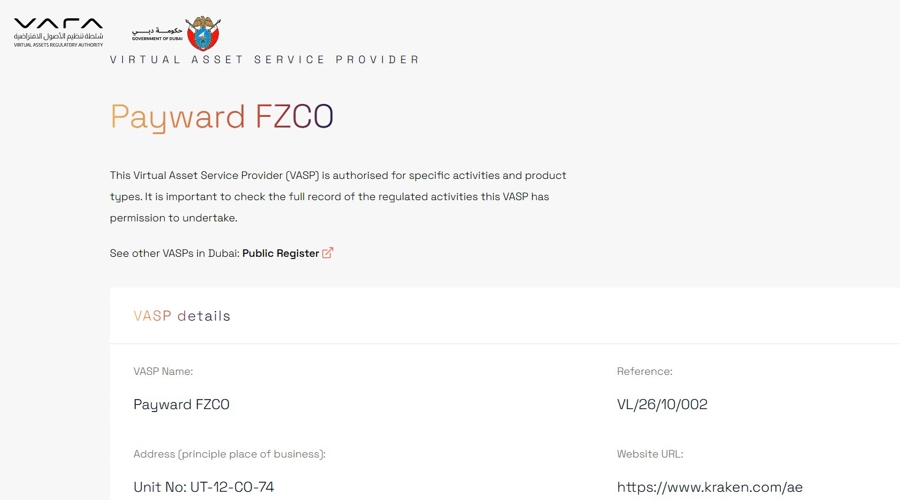
Kraken Gets Final Dubai Crypto License, Plans UAE Launch Within Weeks
Kraken's parent Payward received Full Market Approval from Dubai's Virtual Assets Regulatory Authority (VARA) today (Monday). Krak...

Tom Lee sees $2 trillion wealth transfer fueling crypto demand as Bitmine buys more ether
The Bitmine chairman said he expects younger investors to drive demand for digital assets as his ether treasury company inches clo...

Bitcoin’s rebound approaches the $85,000 zone where past buyers may sell
Bitcoin and Ethereum extended their weekend recovery, although on-chain indicators and derivatives positioning suggest the rebound...