Obol – The largest Decentralized Operator Ecosystem in Ethereum
Why you should listen Obol Network is building a decentralised staking infrastructure for proof‑of‑stake networks like Ethereum. Obol enables Distributed Validators (DVs): validator clusters made up of multiple operators...
Archive context
Older archive item. Useful for background and entity history, but not a fresh market-moving signal.

Obol Network is building a decentralised staking infrastructure for proof‑of‑stake networks like Ethereum. Obol enables Distributed Validators (DVs): validator clusters made up of multiple operators who jointly run a validator, each holding partial key shares (via Distributed Key Generation). This setup boosts fault tolerance—if one or two nodes go offline or are compromised, the validator stays operational and the full private key is never concentrated in one place, significantly slashing security risk.
Obol also integrates a rewards distribution mechanism, Obol Splits, that lets cluster participants define on‑chain how staking rewards are split—non‑custodial, transparent, and immutable.
The Obol Stack is a plug‑and‑play framework that sits on Kubernetes and Helm, enabling users to deploy and maintain decentralised infrastructure—like Ethereum validators, full nodes, L2 sequencers, DePIN nodes, AI agents, and more—in an enterprise‑grade but user‑friendly fashion.
Whether you’re a solo home operator or part of a global datacenter cluster, the Stack lets you package, version, and deploy your setup via Helm charts—then share or discover them through the Obol App Store. This means no wrestling with Bash, Docker Compose, or fragile scripts—everything’s containerised, composable, and ready to scale.
Supporting linksIf you enjoyed the show please subscribe to the Crypto Conversation and give us a 5-star rating and a positive review in whatever podcast app you are using.
Why this matters
This ethereum story adds another data point to the current market tape and is useful when read alongside nearby source coverage.
Original source
Read on Brave New CoinRelated market context
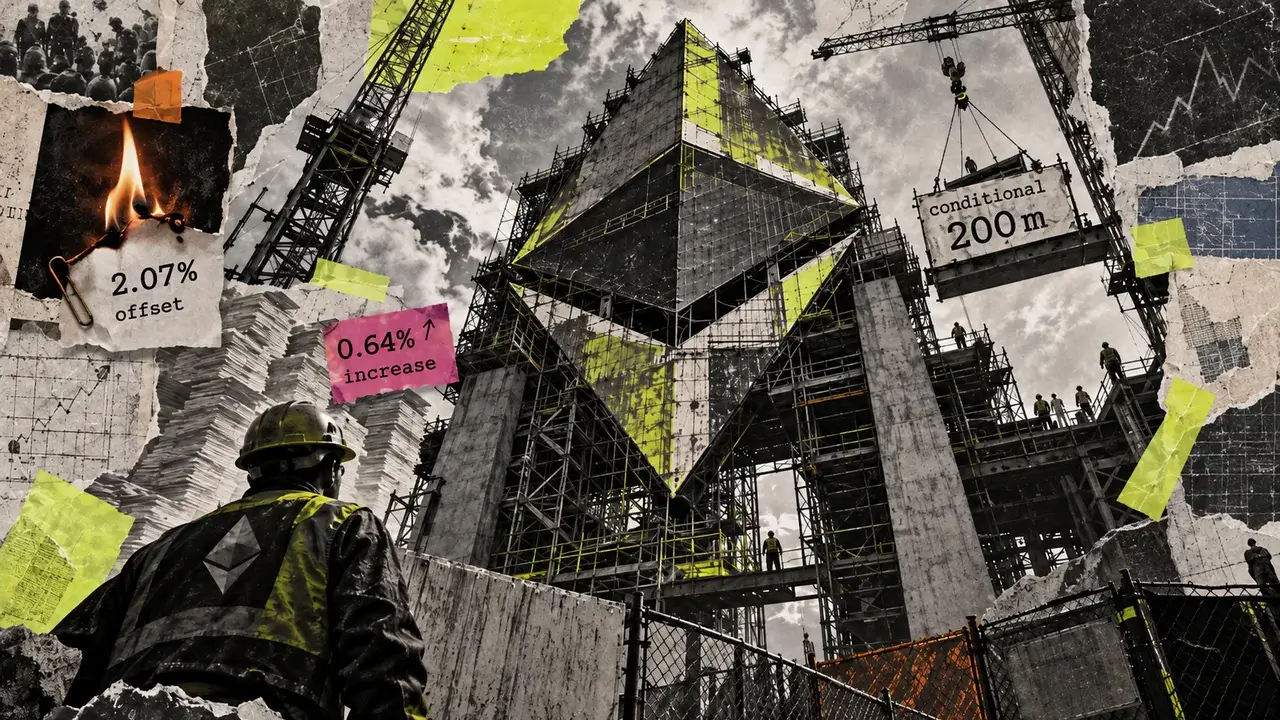
ETH fee burns cover just 2% of new coins printed in 2026
Ethereum's transaction fees have burned enough ETH to offset just 2.07% of the new coins issued in 2026, according to an Oct. 9 su...

Starknet considers leaving Ethereum for a quantum-resistant Layer 1
Starknet's STRK token more than doubled over seven days while developers considered leaving Ethereum to build an independent Layer...

AI Could Weaken Ethereum Security as Cryptographic Risks Grow, Vitalik Buterin Warns
Buterin urged developers to prepare for potential AI vulnerabilities in both conventional and quantum-resistant cryptography, whil...

Dormant Ethereum address holding 12,746 ETH wakes up after 10.2 years
The reactivation of dormant Ethereum wallets highlights potential market shifts, as early holders may choose between selling or st...

Spot Bitcoin and Ethereum ETFs bleed $1.22 billion in a single week
The significant outflows from Bitcoin and Ethereum ETFs could signal shifting investor sentiment, potentially impacting broader cr...
Ethereum Foundation-linked wallets send 4,393 ETH to Kraken
The Ethereum Foundation's recurring transfers to Kraken may indicate strategic financial maneuvers, impacting market perceptions a...