Russia picks Bitcoin, Ethereum and USDT for public trading as retail faces $58,000 cap
The Bank of Russia has proposed opening public organized crypto trading with only Bitcoin, Ethereum, and Tether’s USDT eligible for admission. Under the draft directive, a Russian resident who is not a qualified investor...
Archive context
Older archive item. Useful for background and entity history, but not a fresh market-moving signal.
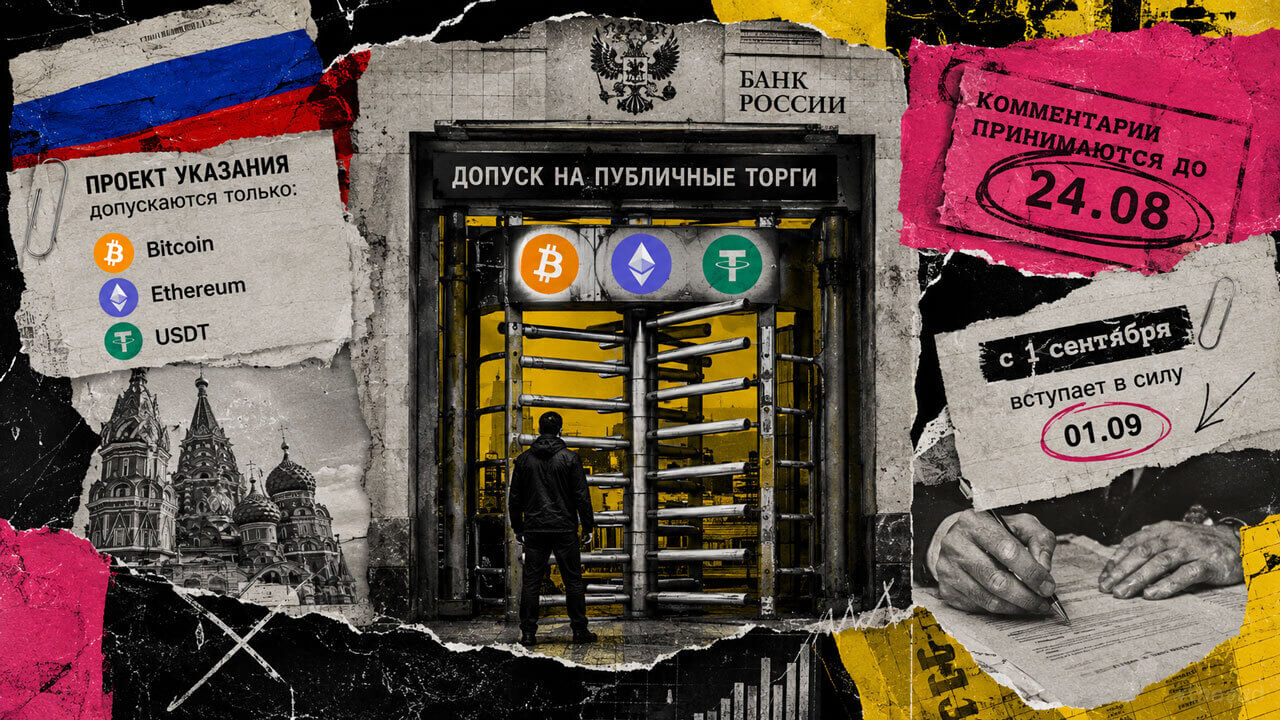
The Bank of Russia has proposed opening public organized crypto trading with only Bitcoin, Ethereum, and Tether’s USDT eligible for admission.
Under the draft directive, a Russian resident who is not a qualified investor could spend up to ₽300,000, nearly $58,000, on cryptocurrency through a single broker in a calendar year. The cap measures cumulative purchase costs through that broker.
That structure makes the broker the unit of the proposed ceiling. It also limits acquisitions: the directive’s formula totals the ruble cost of cryptocurrency purchases made for the client through the broker during the year.
The draft remains open for comments through Aug. 24, according to its explanatory note. The central bank can amend the three-asset appendix, cap, or other provisions before issuing a final directive.
Russia’s draft crypto rules would limit non-qualified residents to ₽300,000 in annual purchases per broker while qualified investors retain broader access. Related Reading Russia’s legal crypto on-ramp to arrive with a state-owned bank holding the keys The reported December launch matters because Russia’s new rules may make custody, limits, and compliance the price of legal access. Jul 7, 2026 · Liam 'Akiba' Wright Investor status changes the gate for Bitcoin, Ethereum, and USDTPublic organized trading of Bitcoin, Ethereum, and USDT would begin with the three assets in the appendix. Qualified investors have a wider regulated route under the framework described by the central bank.
In its overview of the underlying law, the Bank of Russia said that qualified investors must also pass a test, after which they may buy and sell any cryptocurrencies through intermediaries without a ceiling on the amount.
The overview places brokers and management companies alongside crypto exchanges and digital repositories within the planned market infrastructure, with organized trading available as a single transaction channel.
Crypto exchanges would buy and sell cryptocurrencies, while digital repositories would record rights to the assets. Brokers and management companies would provide additional routes for investor transactions, including access to organized trading.
The official summary separates admission to the public venue from the range of assets available to qualified investors through regulated intermediaries.
Related Reading EU sanctions push deeper into Russian crypto rails with bans on digital rouble support The new package moves beyond named exchanges, putting Russia-linked stablecoins, platforms, and settlement agents in scope. Apr 27, 2026 · Liam 'Akiba' WrightRussia’s underlying cryptocurrency market law is scheduled to take effect on Sept. 1, with the proposed directive taking effect 10 days after official publication. Its date and number remain blank while consultation continues, so the publication-triggered clock has yet to begin.
The overview of the law also describes a distinct channel for foreign trade. Exporters and importers may use any type of wallet or cryptocurrency for cross-border payments, either directly or through intermediaries. That provision concerns international settlement rather than domestic public-market admission.
Related Reading Russia creates crypto sanctions loophole, but cash-out routes remain ringfenced The ELR gives selected firms a legal route, but wallets, exchanges, counterparties, and issuers still face pressure. Jun 25, 2026 · Liam 'Akiba' WrightThe Aug. 24 deadline is the immediate decision point for the organized-trading gate. The current text assigns Bitcoin, Ethereum, and USDT to the public venue, grants tested, qualified investors broader intermediary access, and leaves the wording and publication date of the final directive unresolved.
The post Russia picks Bitcoin, Ethereum and USDT for public trading as retail faces $58,000 cap appeared first on CryptoSlate.
Why this matters
Bitcoin is showing up inside the Stablecoins theme, so this story is worth tracking for follow-through rather than treating it as a one-off headline.
Original source
Read on CryptoSlateRelated market context

Tether signs MoU with Kazakhstan’s central bank to explore tenge stablecoins and tokenized assets
Kazakhstan's collaboration with Tether could enhance its fintech landscape, potentially boosting local currency integration in dig...

Tether Signs Deal With Kazakhstan's Central Bank to Explore a Stablecoin and Tokenized Assets
Tether, issuer of the USDT stablecoin, will help Kazakhstan's central bank study a tenge-pegged token and put real-world assets on...

Cardano Brings Compliance Rules On-Chain With CIP-0113 Launch
TL;DR: Cardano’s CIP-0113 programmable token standard is now live on mainnet. It gives issuers the ability to build controls such...
Russia’s Sberbank Given Green Light to Custody Bitcoin
Bitcoin Magazine Russia’s Sberbank Given Green Light to Custody Bitcoin Russia’s largest bank has announced it is the first in the...

Tether Celebrates 12 Years, USD₮ Surpasses 700M Users
Key Takeaways: Tether marked the 12th anniversary of the world’s largest stablecoin by market cap, USD₮. The company claims that U...

Paxos Crypto Brokerage adds XRP trading and custody for institutional partners
Paxos' XRP integration for institutions may enhance crypto market liquidity, stability, and acceptance, bridging traditional finan...