The future of DeFi isn’t on Ethereum — it’s on Bitcoin
Opinion by: Matt Mudano, CEO of Arch Labs Ethereum is struggling, and decentralized finance (DeFi) is suffering as a result. Layer-2 (L2) solutions have fractured liquidity, making capital inefficient. In search of green...
Archive context
Older archive item. Useful for background and entity history, but not a fresh market-moving signal.
Opinion by: Matt Mudano, CEO of Arch Labs
Ethereum is struggling, and decentralized finance (DeFi) is suffering as a result. Layer-2 (L2) solutions have fractured liquidity, making capital inefficient. In search of greener pastures, the community has turned to Solana — only to find a memecoin-driven ecosystem fueled by pump-and-dump schemes, attracting liquidity extractors, and turning the chain into a playground for speculation and fraud.
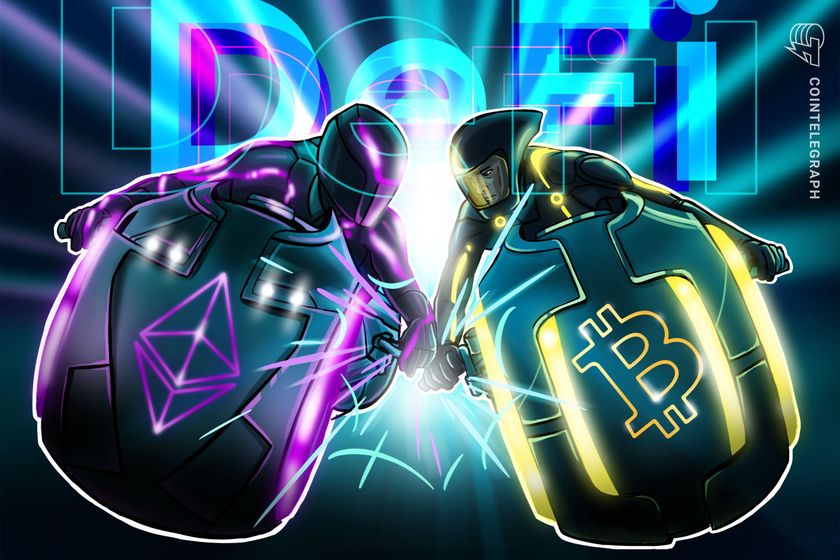
DeFi needs a reset that returns to first principles and aligns with Satoshi’s original vision of a decentralized financial system. The only network capable of sustaining the next evolution of DeFi isn’t Ethereum or Solana. It’s Bitcoin.
DeFi is struggling on EthereumEthereum was once the undisputed home of DeFi, but today, it’s clear that the ecosystem is struggling. The network’s roadmap constantly changes, with no clear path toward long-term sustainability.
L2 solutions were supposed to scale Ethereum. Instead, they’ve fractured DeFi into isolated liquidity silos. While L2s have lowered transaction fees, they now compete for liquidity rather than contributing to a unified financial system. The result? A fragmented landscape that makes capital inefficient and DeFi protocols harder to scale.
Ethereum’s proposed solution — chain abstraction — sounds promising in theory but fails in practice. The fundamental issue is a structural misalignment of incentives, and as a result, Ethereum is gradually losing its competitive edge in DeFi.
It’s time to ask: Can DeFi’s future lie in a fragmented Ethereum?
Solana isn’t the answerWith Ethereum losing its competitive edge, many developers and users have turned to Solana. The blockchain has seen an 83% increase in developer activity year-over-year, and its decentralized exchanges (DEXs) have outperformed Ethereum’s for five consecutive months.
There’s a fundamental problem: Solana’s DeFi growth isn’t built on sustainable financial applications — a memecoin frenzy fuels it.
The recent surge in activity isn’t driven by innovation in decentralized finance but by speculative trades. Following the TRUMP memecoin craze, the total extracted value from Solana’s memecoins ranged between $3.6 billion and $6.6 billion. This isn’t DeFi growth — it’s a liquidity extraction engine where short-term speculators cash in and move on.
Solana has real strengths. Its speed and low transaction costs make it ideal for high-frequency trading, and its ecosystem has made meaningful strides in decentralized physical infrastructure networks (DePINs), AI and decentralized science, or DeSci. But the dominance of memecoin speculation has turned the chain into a playground for fraud and pump-and-dump schemes. That’s not the foundation DeFi needs.
Solana isn’t the answer if the goal is to build a lasting financial system.
Bitcoin DeFi is thrivingIt’s time to return to first principles and build DeFi on the original blockchain: Bitcoin — the most trusted, decentralized network backed by the soundest money in the digital economy.
This is not just theoretical. Bitcoin DeFi is already experiencing explosive growth. Consider the numbers: Total value locked (TVL) in Bitcoin DeFi surged from $300 million in early 2024 to $5.4 billion as of Feb. 28, 2025 — a staggering 1,700% increase. The Bitcoin staking sector is dominating, with protocols like Babylon ($4.68 billion TVL), Lombard ($1.59 billion) and SolvBTC ($715 million) leading the charge. This demonstrates the growing demand for Bitcoin to become a productive asset rather than a passive store of value.
Recent: Bitcoin DeFi takes center stage
Bitcoin-native DeFi isn’t simply copying Ethereum’s playbook — it’s pioneering new financial models. Advancements in the space have introduced dual staking, allowing users to stake Bitcoin (BTC) alongside native tokens to enhance security and earn yields. Meanwhile, novel approaches to tokenizing Bitcoin’s hashrate turn mining power into collateral for lending, borrowing and staking, further expanding Bitcoin’s financial utility.
In addition, Ordinals and BRC-20 tokens have driven record-high transaction activity, with inscriptions reaching 66.7 million and generating $420 million in fees — highlighting the growing demand for tokenized assets on Bitcoin.
It is clear that Bitcoin is no longer just digital gold — it’s becoming the foundation for the next phase of decentralized finance.
The future of DeFi is on BitcoinThe future of DeFi lies with Bitcoin, where incentives align with long-term value creation. Unlike Ethereum’s fragmented model and Solana’s speculative economy, Bitcoin-based DeFi is built on institutional-grade liquidity and sustainable growth.
As the largest and most liquid crypto asset, Bitcoin boasts a $1.7 trillion market cap and $94 billion in exchange-traded fund (ETF) holdings. Even a fraction of this liquidity migrating into DeFi would be a game-changer. Bitcoin holds over $1 trillion in untapped liquidity and continues to attract strong interest from institutional investors and sovereign wealth funds, with governments already exploring it as a potential reserve asset.
Several projects are already building on Bitcoin, building a sustainable ecosystem where users can hold the most trusted digital asset while making it productive through DeFi mechanisms.
Ethereum had its moment. Solana had its hype. It’s Bitcoin’s turn to actualize Satoshi’s original vision of a decentralized financial system.
Opinion by: Matt Mudano, CEO of Arch Labs.
This article is for general information purposes and is not intended to be and should not be taken as legal or investment advice. The views, thoughts, and opinions expressed here are the author’s alone and do not necessarily reflect or represent the views and opinions of Cointelegraph.
Why this matters
This ethereum story adds another data point to the current market tape and is useful when read alongside nearby source coverage.
Original source
Read on CointelegraphRelated market context

Thailand wants a piece of the $120 billion Bitcoin and Ethereum ETF market, but on its own terms
Thailand has finalized rules allowing domestic Bitcoin and Ethereum ETFs while restricting retail access to competing overseas inv...

State of TRON Q3 2026 Report Highlights $2.21 Trillion in Stablecoin Settlement Amid Network Activity Growth
Geneva, Switzerland, October 12, 2026 — TRON DAO, the community-governed DAO dedicated to accelerating the decentralization of the...

From TOKEN2049 to Ecosystem Co-Building: HTX Advances Its Multifaceted Engagement Across the Global Crypto Industry
Singapore, October 12, 2026 – From October 6 to 8, the global crypto industry turned its attention to Singapore for TOKEN2049, a m...

Circle mints approximately $3.5 billion USDC on Solana in the past seven days
Circle's USDC minting on Solana may boost liquidity and network activity, potentially influencing Solana's market dynamics and pri...

The $5,000,000 USDG Kraken Futures Challenge: one leaderboard, three multipliers
TL;DR Enroll in the $5,000,000 USDG Kraken Futures Challenge. It runs from October 12 to December 10, 2026 on Kraken Futures. Trad...

DeFi Development Corp. adds 22,070 SOL to its growing Solana treasury
DeFi Development Corp.'s focus on Solana treasury highlights the growing trend of crypto integration in traditional investment veh...