Vitalik Buterin Proposes Node Upgrade to Boost Ethereum Accessibility
Ethereum co-founder Vitalik Buterin has unveiled a new proposal aimed at making it significantly easier for everyday users to run Ethereum nodes, by reducing the hardware and storage requirements currently needed to sync...
Archive context
Older archive item. Useful for background and entity history, but not a fresh market-moving signal.
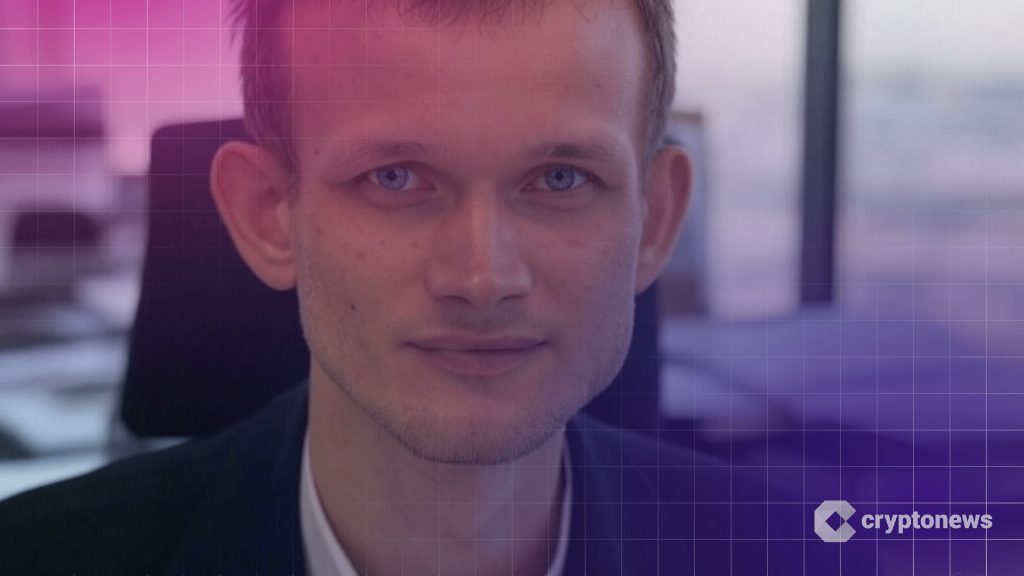
Ethereum co-founder Vitalik Buterin has unveiled a new proposal aimed at making it significantly easier for everyday users to run Ethereum nodes, by reducing the hardware and storage requirements currently needed to sync with the network.
In a blog post published Sunday on Ethereum’s research forum, Buterin suggested a shift in how nodes store and retrieve data, moving from full data replication to a more flexible, user-centric model.
Under this approach, nodes would store only the data relevant to the user, rather than Ethereum’s entire global state, which currently exceeds 1.3 terabytes, according to Etherscan.
“Currently, the overhead is impractically high,” Buterin wrote, adding that even with ongoing optimizations, the cost of operating a full node will likely remain out of reach for most users without specialized hardware or cloud support.
Buterin Proposes Local-First ModelThe proposal centers around a local-first model. Instead of continuously tracking the full history of Ethereum, nodes would sync with only the relevant portions and request additional historical data as needed — similar to how public library systems share books across branches.
Buterin’s long-standing goal has been to make fully verified Ethereum nodes operable on standard consumer devices, even smartphones.
While he acknowledged last year that achieving that goal may take a decade or longer, the current proposal brings Ethereum a step closer to decentralizing access and reducing reliance on centralized service providers.
“Relying too much on a few dominant providers invites censorship risks,” Buterin warned. “There’s value in ensuring greater ease of running personal nodes.”
How to make Ethereum L1 scaling more friendly to users running local nodes for personal use:https://t.co/881XRJLpI0
— vitalik.eth (@VitalikButerin) May 19, 2025The proposal arrives as Ethereum prepares for its upcoming Pectra upgrade, described by core developers as the most ambitious yet.
The overhaul will lay groundwork for greater scalability and decentralization, aligning with Buterin’s latest efforts.
Last month, Ethereum Foundation researcher Dankrad Feist introduced Ethereum Improvement Proposal (EIP) 9698.
The proposal aims to increase the network’s gas limit by 100 times over the next two years, potentially enabling the Ethereum mainnet to handle up to 2,000 transactions per second (TPS).
Ethereum Has ‘Huge Opportunity’ to Fix AI’s Centralization ProblemEthereum could play a key role in solving some of the most pressing problems facing artificial intelligence, according to Eric Connor, a former core developer of the blockchain.
Earlier this month, Connor said Ethereum’s “biggest mainstream moment” could come through its integration with AI, as the sector struggles with centralization, opaque algorithms, and growing privacy concerns.
“AI is plagued by black-box models, centralized data silos, and privacy pitfalls,” Connor noted, adding that Ethereum is uniquely positioned to address these issues.
Ethereum has already shown the world trustless, programmable finance through DeFi and stablecoins. But its biggest mainstream moment is waiting in the wings with AI.
AI is on a fast-track to reshape almost every aspect of our lives. But it’s plagued by black-box models,…
In March, crypto venture capitalist Nic Carter of Castle Island Ventures pointed to two key issues undermining Ether’s value: the rise of layer-2 (L2) scaling networks and unchecked token issuance.
He argued that “greedy Eth L2s” are siphoning off value from Ethereum’s base layer while giving little back.
He also criticized the Ethereum community’s acceptance of excessive token creation, claiming that “ETH was buried in an avalanche of its own tokens. Died by its own hand.”
The post Vitalik Buterin Proposes Node Upgrade to Boost Ethereum Accessibility appeared first on Cryptonews.
Why this matters
This ethereum story adds another data point to the current market tape and is useful when read alongside nearby source coverage.
Original source
Read on CryptonewsRelated market context

AI Could Weaken Ethereum Security as Cryptographic Risks Grow, Vitalik Buterin Warns
Buterin urged developers to prepare for potential AI vulnerabilities in both conventional and quantum-resistant cryptography, whil...

Vitalik Buterin says AI could accelerate Ethereum’s roadmap by decades
AI's role in Ethereum's development could redefine blockchain innovation timelines, but it also heightens the need for robust secu...

Starknet considers leaving Ethereum for a quantum-resistant Layer 1
Starknet's STRK token more than doubled over seven days while developers considered leaving Ethereum to build an independent Layer...

Thailand wants a piece of the $120 billion Bitcoin and Ethereum ETF market, but on its own terms
Thailand has finalized rules allowing domestic Bitcoin and Ethereum ETFs while restricting retail access to competing overseas inv...

U.S. inflation, Ethereum upgrade talks: Crypto Week Ahead
Your look at what's coming in the week starting Oct. 12.

New iPhone spyware can hunt for crypto wallets and extract their data every 15 seconds
Researchers found a new iPhone spyware variant that can remotely extract cryptocurrency wallet data and sensitive credentials from...