Bitcoin Mining in 2025: Challenges, Costs, and the Role of Cloud Mining
By 2025, the Bitcoin mining industry is under significant pressure. Mining difficulty has reached new highs, global energy prices continue to rise, and the latest halving has reduced block rewards. Together, these factor...
Archive context
Older archive item. Useful for background and entity history, but not a fresh market-moving signal.

By 2025, the Bitcoin mining industry is under significant pressure. Mining difficulty has reached new highs, global energy prices continue to rise, and the latest halving has reduced block rewards. Together, these factors have narrowed profit margins, especially for miners using older or less efficient ASIC hardware. As a result, many operators have reduced capacity, upgraded equipment, or left the market.
During this period, cloud mining has become relevant again. It offers a way to access remote hash power without dealing with hardware maintenance, facility setup, or energy infrastructure. Still, user outcomes depend heavily on how transparent the provider is and how each contract is structured. If you want to explore other mining approaches, using reliable mining software may also help improve efficiency. With this context in mind, the next section looks at how cloud mining fits into today’s mining environment and what users should consider before choosing a provider.
Quick Overview: Top 10 Crypto Mining Providers in 2025 Platform One-Sentence Summary Best For AutoHash Swiss-registered, AI-optimized, renewable-energy cloud mining with transparent daily payouts. Users seeking compliance, automation & stability ECOS Armenia-regulated platform offering contracts, portfolios & custody. Regulation-focused users Genesis Mining One of the earliest Bitcoin cloud mining brands with Icelandic operations. Users valuing long-term trust Bitdeer Industrial-scale BTC mining with hosting and customizable plans. Advanced miners scaling operations NiceHash Flexible hashrate marketplace for multiple algorithms. Technical users optimizing strategies HashShiny Beginner-friendly BTC mining with accessible plans. New users needing simple onboarding StormGain Cloud Miner Free built-in Bitcoin miner for testing. Users evaluating cloud mining Kryptex GPU-focused mining for multiple altcoins. Diversified GPU miners Hashing24 Conservative BTC mining with leased hardware. Users seeking predictable, low-noise exposure IQMining Multi-algorithm switching for diversified mining. Users wanting flexible payouts 1. AutoHash – AI Optimization & Renewable EnergyAutoHash combines Swiss registration, AI-driven mining tools, and renewable-energy data centers. These characteristics may appeal to users who prioritize operational transparency, energy efficiency, and structured mining tools.
Key Advantages- Offers $100 in trial hash power for new users: AutoHash includes a $100 trial allocation that allows users to test the service before reviewing long-term contracts. Click here to visit AutoHash and claim $100 free hash power.
- AI-Powered Mining Optimization: The AI system distributes hash power across BTC, DOGE, and LTC pools to support operational efficiency.
- Renewable Energy Infrastructure: Hydro, wind, and geothermal-powered facilities help reduce operational overhead and support lower-carbon mining operations.
Users can use the trial allocation to assess how the platform performs before considering larger plans.
2. ECOS — Regulated Cloud Mining EnvironmentLocated in Armenia’s Free Economic Zone, ECOS positions itself as a regulated digital asset infrastructure provider.
- BTC cloud mining contracts with clear terms
- Built-in wallet and investment portfolio features
- Conservative ROI compared to newer entrants
- Suitable for users who prioritize regulation and long-term operational stability
Genesis Mining is a long-established Iceland-based provider known for:
- Access to geothermal, energy-efficient operations
- Multi-year operational history
- Recognized brand reputation
A practical option for users who prefer longevity and operating history over higher-yield models.
4. Bitdeer — Industrial-Scale Mining & HostingBitdeer offers:
- Hosting and mining plans
- Access to enterprise-level mining farms
- Options for scaling large deployments
More appropriate for users with prior experience in managing mining strategies due to its advanced configurations.
5. NiceHash — Hashrate MarketplaceNiceHash provides:
- Buying and selling mining power
- Multi-algorithm options
- Flexible configuration tools
Highly efficient for users familiar with mining mechanics and algorithm tuning.
6. HashShiny — Beginner-Focused Cloud Mining- Straightforward onboarding
- Affordable BTC mining contracts
- User-friendly dashboard
Well-suited for individuals new to cloud mining.
7. StormGain — Free Cloud Miner for Testing- Free integrated cloud miner
- Connected with the StormGain trading platform
- Low yields but no upfront cost
Best used for evaluation or educational purposes, not long-term revenue.
8. Kryptex — GPU-Based Altcoin Mining- Broad support for GPU-friendly altcoins
- Multiple payout options
- Convenient algorithm switching
Valuable for users seeking exposure beyond Bitcoin mining.
9. Hashing24 — Bitcoin-Only Mining Model- Leased physical mining hardware
- Bitcoin-only model
- Steady, lower-return structure
A simple option for those who prefer predictable mining exposure.
10. IQMining — Multi-Algorithm Cloud Mining- Multi-algorithm mining options
- Varied contract durations
- Moderate pricing
Useful for users wanting a flexible balance between BTC and alternative cryptocurrencies.
Why Bitcoin Mining Faces Pressure in 2025By 2025, Bitcoin mining is experiencing sustained structural stress. Mining difficulty sits at unprecedented highs, hash price ranges between $34–$38 per PH/s, and many mining farms face rising operational costs. Increasing global energy prices and rapid ASIC depreciation have further reduced profitability, leading many operators to scale down or close.
Recent developments include:
- Hashprice declines: BTC earnings per PH/s fall below $35
- Mining difficulty increases: Network hash rate reaches new highs
- Miner adjustments: Some shift infrastructure toward AI/HPC workloads or discontinue PoW mining
Traditional mining faces challenges related to cost, difficulty, and diminishing revenue. As a result, some users explore cloud mining as an alternative model for participating in mining.
Conclusion: Transparency & EfficiencyThe 2025 mining downturn reflects structural pressures rather than short-term volatility. To remain competitive, miners may consider platforms that provide regulatory oversight, AI-supported hash power allocation, renewable energy, and clear operational policies.
Platforms such as AutoHash, ECOS, and Bitdeer are frequently referenced within the cloud mining sector.
- Efficient hash power usage helps reduce costs
- Clear contract terms and ROI projections help manage expectations
Users may benefit from prioritizing transparency and operational reliability over high advertised yields. Cloud mining can also complement broader strategies such as spot holdings or staking.
FAQ: Bitcoin Cloud Mining in 2025Q1: Is Bitcoin cloud mining profitable in 2025?
A: Profitability varies based on BTC price, mining difficulty, energy efficiency, and contract structure. AI optimization and renewable energy may support performance, but returns are not guaranteed.
Q2: Are cloud mining providers legitimate?
A: Some providers, including AutoHash, ECOS, and Genesis Mining, hold formal registrations and operate real data centers. Users should verify documentation and payout history.
Q3: How can beginners start mining without hardware?
A: Register with a reputable provider, begin with a small allocation, test payouts, and expand gradually. Trial allocations can help users review platform functionality before committing.
Q4: What are the main risks?
A: Platform failure, hash price volatility, BTC price fluctuations, unrealistic ROI claims, and withdrawal restrictions. Only use funds you can afford to lose.
Q5: What makes a provider safer?
A: Transparent registration, renewable-energy operations, real-time dashboards, multi-signature wallets, and consistent payout records.
Please be advised that all information, including our ratings, advices and reviews, is for educational purposes only. Crypto investing carries high risks, and CryptoNinjas is not responsible for any losses incurred. Always do your own research and determine your risk tolerance level; it will help you make informed trading decisions.
The post Bitcoin Mining in 2025: Challenges, Costs, and the Role of Cloud Mining appeared first on CryptoNinjas.
Why this matters
This mining story adds another data point to the current market tape and is useful when read alongside nearby source coverage.
Original source
Read on CryptoNinjasRelated market context
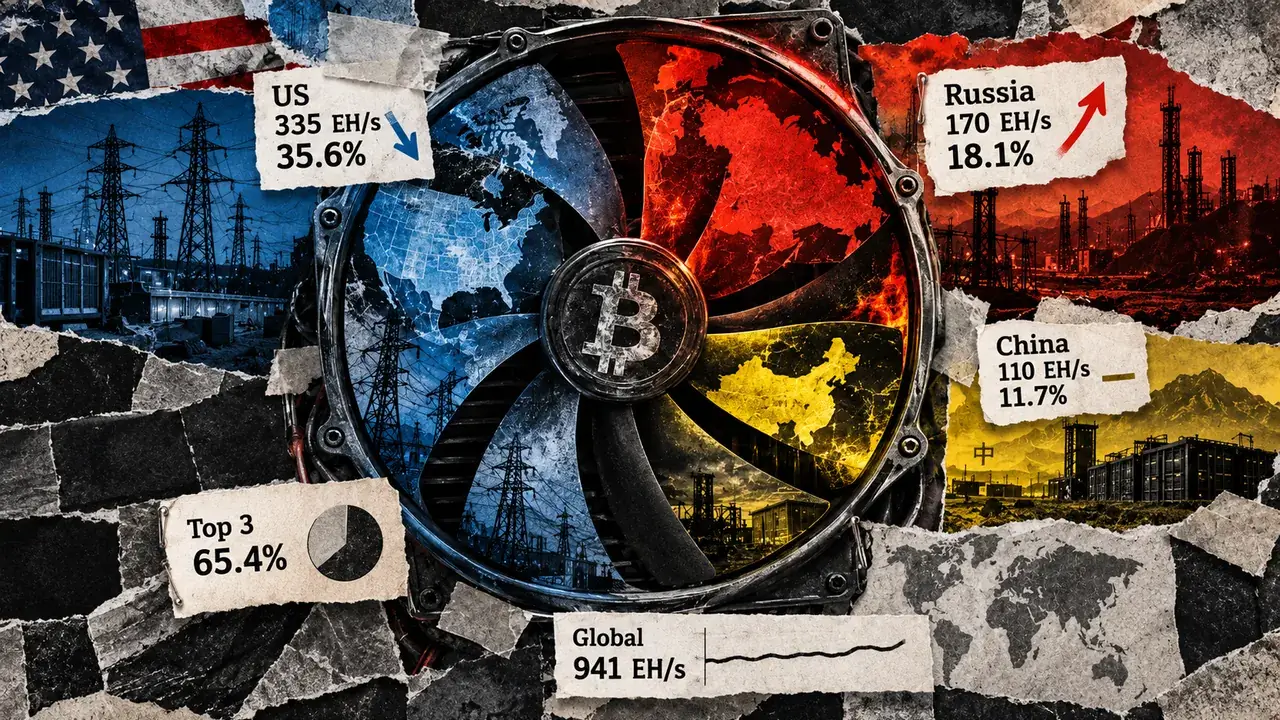
3 countries control 66% of Bitcoin mining, but 1 rival is gaining
Bitcoin's estimated US mining footprint shrank as Russia's grew, with little change in top-three country concentration. Hashrate I...

BitGo and HashKey Cloud expand partnership to staking, custody and RWA tokenization
The expanded partnership could accelerate institutional adoption of blockchain technologies in Asia-Pacific, enhancing market inte...
Fortitude Bets Up to $100 Million on Bitmain Zcash Mining Hardware
Fortitude Mining has signed a non-binding agreement for up to $100 million of Bitmain’s next-generation zcash mining hardware, sec...

Tether Celebrates 12 Years, USD₮ Surpasses 700M Users
Key Takeaways: Tether marked the 12th anniversary of the world’s largest stablecoin by market cap, USD₮. The company claims that U...

Non-Custodial Crypto Exchanges: How Self-Custody Is Changing the Way Users Swap Digital Assets
For many users, the distinction comes down to custody. A centralized platform may hold assets on behalf of its customers, while a...

Trust Wallet integrates MoonPay so US users can buy crypto without leaving the app
The integration enhances user convenience and self-custody appeal but raises concerns about dependency on a single provider's stab...