BitFuFu’s October Bitcoin Mining Output Falls Despite Steady Hashrate
TL;DR: BitFuFu produced 137 BTC in October, down from 167 in September, while managed hashrate stayed close to 19.5 EH/s. The miner attributed the decline partly to rising network difficulty, illustrating why steady capa...
Watchlist
Fresh in the current trading session. A tracked entity is involved.
TL;DR: BitFuFu produced 137 BTC in October, down from 167 in September, while managed hashrate stayed close to 19.5 EH/s. The miner attributed the decline partly to rising network difficulty, illustrating why steady capacity does not necessarily mean steady production.
A Bitcoin miner can run broadly the same amount of computing power and still produce fewer coins. BitFuFu’s latest monthly operating statement provides a neat example. The company reported November 6 that it mined 137 BTC in October, down from 167 in September, even as total hashrate under management remained largely unchanged.
Its managed rate stood at 19.5 exahashes per second, compared with 19.4 EH/s a month earlier. The company held 1,454 BTC at October’s end, up from 1,388 in September. Production decreased while the treasury balance increased, because production and coin retention are separate measures.
Difficulty makes the same equipment earn lessBitFuFu said Bitcoin network difficulty rose about 11.8% during October, from 132.76 trillion at the beginning of the month to 148.36 trillion at month-end. Difficulty adjusts how hard it is for miners collectively to find valid blocks. When competition increases, a miner with an unchanged share of computing power may capture a smaller share of the rewards than before.
The split inside BitFuFu’s operation was also revealing. Self-mining production fell to 67 BTC from 98 BTC, while cloud-mining production was nearly flat at 70 BTC against 69 BTC in September. Total monthly production therefore declined by 30 BTC, but the effect was not identical across its operating categories.
NewsBTC recently examined Bitcoin’s recovery above one zettahash of network hashrate. That broader competition can be healthy for network security while making mining economics more demanding for individual operators. It is possible for both statements to be true at once.
Efficiency improves, but economics remain demandingBitFuFu’s average fleet efficiency improved to 16.3 joules per terahash from 16.7 in September. Lower energy use per unit of hashing is useful, although it does not automatically offset higher difficulty, power prices, financing costs or changes in Bitcoin’s market price. The company also reported power capacity under management of 317 megawatts, compared with 324 MW a month earlier.
These figures are particularly relevant when evaluating mining businesses that sell both direct Bitcoin exposure and computing services. Managed hashrate can include machines owned by clients or supplied by third parties, not just equipment on the company’s balance sheet. Investors should therefore distinguish self-owned hashrate, contractual capacity, energy efficiency and coins actually received.
A miner accumulating coins can improve its Bitcoin exposure even while production slows. But treasury growth alone says little about the cost of producing each BTC or the cash needed to keep equipment operating. The real test is whether operations remain resilient when difficulty rises and the market price fails to keep pace.
What November’s update should establishThe next report will show whether October’s production weakness was temporary or persisted under the next difficulty environment. Useful metrics include self-mined output, third-party mining contribution, installed and energised capacity, average fleet efficiency and the amount of Bitcoin retained rather than sold.
BitFuFu’s figures are unaudited operating metrics, not a full measure of profitability. They nevertheless make the central point clearly: Bitcoin mining is a competitive process, and an operator can improve its hardware efficiency while producing fewer coins. That is why mining comparisons need more than a headline hashrate number.
This article was written by the News Desk and edited by Samuel Rae.
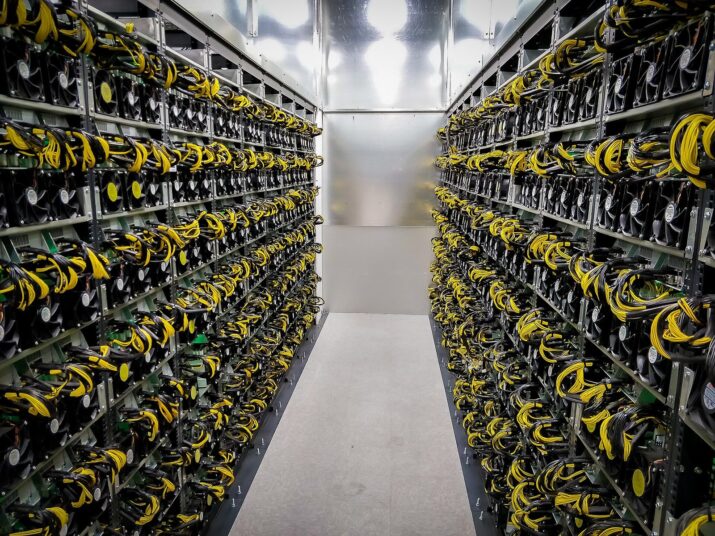
Featured image: Illustrative photograph of Bitcoin mining racks in a data centre (2018 Argo Blockchain Mirabel facility; generic mining illustration only — does NOT depict a BitFuFu, IREN, or TeraWulf facility). Photo: MikeBogosian via Wikimedia Commons, licensed under CC BY-SA 4.0.
Why this matters
Bitcoin is showing up inside the Institutional Adoption theme, so this story is worth tracking for follow-through rather than treating it as a one-off headline.
Original source
Read on NewsBTCRelated market context
TeraWulf Says AI Leasing Now Generates 83% of Revenue as Bitcoin Mining Recedes
TL;DR: TeraWulf’s November 6 earnings release shows $63 million in third-quarter high-performance-computing lease revenue, around...

Bitcoin Mining Difficulty Has Never Stayed Below Its Peak for This Long
Bitcoin’s mining difficulty has now spent 374 days below its October 2025 all-time high, the longest such stretch in the network’s...

Solana’s October Upgrade Review Puts 200ms Slots and $5B in Tokenized Assets in Focus
TL;DR: Solana Foundation’s November 6 ecosystem review says two protocol changes went live in October: a reduction in target slot...

Core Scientific (CORZ) to Exit Bitcoin Mining by Year-End as Colocation Hits $215 Million
Bitcoin Magazine Core Scientific (CORZ) to Exit Bitcoin Mining by Year-End as Colocation Hits $215 Million Core Scientific will co...

Bitcoin Price Holds Near $75,000 After Hot October Jobs Report
Bitcoin Magazine Bitcoin Price Holds Near $75,000 After Hot October Jobs Report U.S. employers added 165,000 jobs in October, near...

LuqEE Simplifies Solo Bitcoin and Bitcoin Cash Mining
Buying and operating an ASIC miner remains a substantial barrier to solo Bitcoin mining. LuqEE offers another approach: time-based...