Bloomberg Analyst Lauds Bitcoin Energy Shift Amid Rising Hashrate
The Bitcoin mining industry has risen steadily in the past few years thanks to the widespread adoption and increasing interest in the Bitcoin blockchain. This growth has led to a vast increase in Bitcoin’s hash rate, cau...
Archive context
Older archive item. Useful for background and entity history, but not a fresh market-moving signal.

The Bitcoin mining industry has risen steadily in the past few years thanks to the widespread adoption and increasing interest in the Bitcoin blockchain. This growth has led to a vast increase in Bitcoin’s hash rate, causing concerns regarding the carbon footprint left behind by mining activities.
A recent Bloomberg study has shown, however, that the carbon footprint left behind by the Bitcoin blockchain has stalled in recent years.
Bitcoin Unlikely To Burn The OceansIt’s no news that Bitcoin mining is now a big industry on its own, with some mining firms even contributing to the economy and grid of their locations. Major BTC mining companies have also turned years of profits, which have attracted many investors, including large investment firms.
The issue of climate change and rising temperature have been the focus of many activists for years, with many accusing the energy-intensive activities of BTC mining of contributing negatively. As a result, regulatory agencies have been more insistent that mining corporations investigate safer and cleaner alternatives to fossil fuels for their energy needs.
To this end, Jamie Coutts, an analyst for Bloomberg, revealed that the percentage of Bitcoin transactions that use sustainable energy has increased steadily since 2021 and is now over 50%.
A new report has dropped on the Bloomberg @TheTerminal this morning – a further examination of this symbiosis between #Bitcoin mining and the global #EnergyTransition
— Jamie Coutts CMT (@Jamie1Coutts) September 20, 2023
This rise was particularly kickstarted by China’s ban on Bitcoin Mining in 2021 and Kazakhstan’s cap on the energy used by domestic crypto miners. Since then, the overall hash rate has increased by 286%, yet carbon dioxide emissions have decreased from 600 grams of CO2 per KWh to 296.5 grams of CO2 per KWh.
What Does This Mean For The BTC Ecosystem?Bitcoin mining’s energy requirements take up around 50% of a miner’s operational cost. Cheaper clean energy is a way to offset these costs while simultaneously reducing the industry’s emissions or carbon intensity.
The Cambridge Centre for Alternative Finance (CCAF) also recently lowered its Bitcoin electricity consumption estimates by 25% from 105.3 TWh to 95.5 TWh, showing the transition is having better effects.
A transition into cleaner energy methods speaks well for BTC and the crypto industry as a whole, considering the blockchain has been heavily criticized in the past by environmentalists. This leaves room for companies to accept Bitcoin as a payment method without facing any kind of backlash.
Elon Musk’s Tesla, for instance, pledged in 2021 to resume allowing BTC payment for its cars when there’s a confirmation of 50% clean energy usage by miners.
Additionally, Climate technology venture investor and activist Daniel Batten argues that this metric is more than 50%.
Bloomberg Intelligence recently concluded that Bitcoin sustainable energy use has now surpassed 50%, contradicting Cambridge’s model.
Here’s a deep dive on why:
Cambridge’s model of Bitcoin emissions, which stopped updating in Jan 2022, states that Bitcoin is 37.6% from… pic.twitter.com/CP4QPmQvsb
— Daniel Batten (@DSBatten) September 18, 2023
On-chain analyst Willy Woo also estimates that the carbon footprint of the Bitcoin mining sector can be turned negative by an investment of around $450 million.
Why this matters
This mining story adds another data point to the current market tape and is useful when read alongside nearby source coverage.
Original source
Read on NewsBTCRelated market context

Europol says crypto’s quantum upgrade could take years and urges work to start now
Europol, the EU’s law enforcement agency, is urging the cryptocurrency industry to begin preparing wallet and protocol upgrades fo...
Bitcoin mined for pennies in 2010 moves after 16 years, now worth $8.5 million
The 100 BTC came directly from two mining rewards created during Bitcoin’s “Satoshi era” and had not moved for more than 16 years.

Dormant Ethereum address holding 12,746 ETH wakes up after 10.2 years
The reactivation of dormant Ethereum wallets highlights potential market shifts, as early holders may choose between selling or st...

Bitunix analysts flag $82,800 as pivotal Bitcoin level as ETF demand weakens
Bitcoin's struggle to reclaim $82,800 amid ETF outflows highlights market volatility and the need for stronger demand to stabilize...

AI may be keeping Bitcoin’s biggest macro headwind alive after the Fed stops hiking
Bitcoin faces a new macro headwind from the artificial-intelligence boom as massive infrastructure spending competes for long-term...
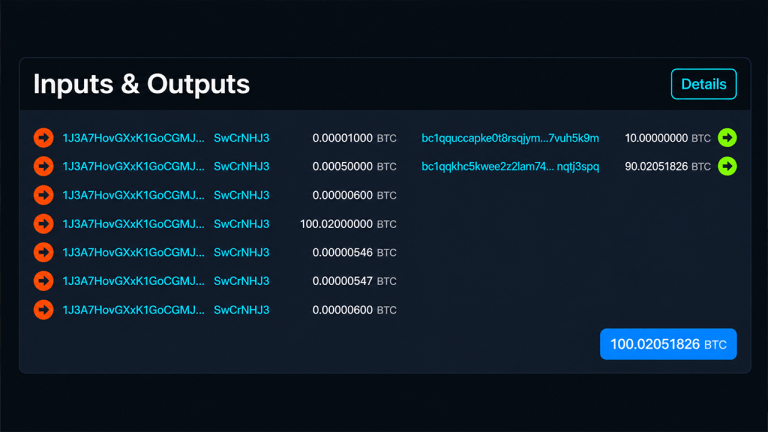
From Zero to $8 Million: Satoshi-Era Bitcoin Awakens After 16 Years
On Oct. 7, Galaxy Research disclosed that it had identified a batch of 100 bitcoin mined in July 2010 that had finally stirred aft...