Miners Have Moved 30% of Their Equipment Out of Kazakhstan, Industry Organization Claims
Authorized crypto mining businesses have already taken a third of their coin minting hardware out of Kazakhstan, according to the country’s mining association. The news comes amid electricity shortages and upcoming tax h...
Archive context
Older archive item. Useful for background and entity history, but not a fresh market-moving signal.

Authorized crypto mining businesses have already taken a third of their coin minting hardware out of Kazakhstan, according to the country’s mining association. The news comes amid electricity shortages and upcoming tax hikes that are turning miners away from the Central Asian nation.
Bitcoin Miners Start Pulling Machines Out of KazakhstanCompanies, legally operating mining facilities in Kazakhstan, have already relocated around 30% of their mining equipment elsewhere. The President of the National Association of Blockchain and Data Center Industry of Kazakhstan Alan Dorjiyev told Forklog about the migration.
The executive noted that miners have been influenced by the persisting issues with energy supply and an expected tax increase. His organization represents major companies involved in the extraction of digital currencies accounting for 70% of Kazakhstan’s crypto mining sector.
The report quotes legislative documents indicating that Kazakhstan’s parliament prepares to impose on miners a tax of 10 tenge (approx. $0.02) per kilowatt-hour (kWh) of electricity generated from domestic energy resources and 5 tenge per kWh for imported electrical energy.
The levy for electricity produced from natural gas and renewable sources, excluding hydropower, will be 3 tenge per kWh, if lawmakers adopt the proposed changes. In 2021, authorities in Nur-Sultan introduced a surcharge of 1 tenge ($0.0023 at the time) per kWh of electricity used to mint cryptocurrencies.
Kazakhstan became a mining hotspot following China’s decision to launch a nation-wide crackdown on the industry in May, and largely due to its capped electricity rates. The country initially welcomed mining companies but since then, their energy-intensive operations have been blamed for a growing power deficit.
To deal with the shortages, the government increased electricity imports from the Russian Federation and shut down legal mining farms amid winter blackouts. Instructed by President Kassym-Jomart Tokayev, the Ministry of Energy, the Financial Monitoring Agency and law enforcement have also gone after illegal miners.
Dorjiyev further commented that the country is gradually becoming an “unfavorable jurisdiction for the crypto mining business.” He also warned that Kazakhstan will lose its leading position in terms of the amount of computing power it controls in the bitcoin network. As of August 2021, the country’s share in the global hashrate had reached 18%, second only to that of the United States.
To quell protests over rising fuel prices in early January, Tokayev’s administration temporarily closed down banks and restricted access to the internet. The measures affected the mining sector as well. The political turmoil and power supply interruptions have already forced some mining companies to relocate to other countries such as the U.S.
Do you think the challenges in Kazakhstan will lead to another major migration of crypto miners? Tell us in the comments section below.
Why this matters
This mining story adds another data point to the current market tape and is useful when read alongside nearby source coverage.
Original source
Read on Bitcoin NewsRelated market context
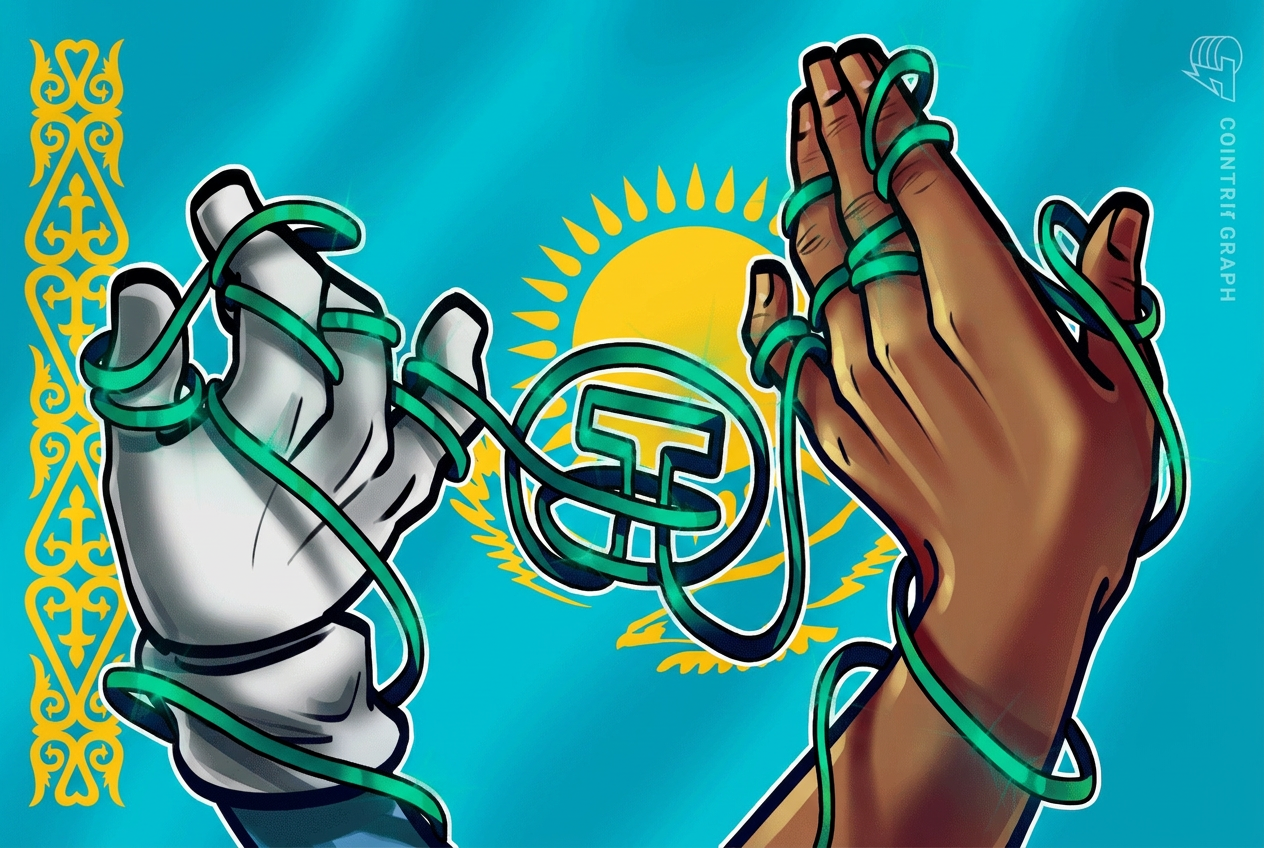
Tether, Kazakhstan cenbank mull tenge stablecoin and asset tokenization
The agreement will explore a tenge-backed stablecoin pilot and a framework for tokenizing real-world assets as Kazakhstan expands...
Kazakhstan Taps Tether to Explore a New Tenge Stablecoin Model
Kazakhstan already has a tenge stablecoin in a central-bank sandbox. Now it has brought Tether into the room to study another one....

Tether signs MoU with Kazakhstan’s central bank to explore tenge stablecoins and tokenized assets
Kazakhstan's collaboration with Tether could enhance its fintech landscape, potentially boosting local currency integration in dig...
CFTC Chair Says New Crypto Rulemaking Will Prevent Another FTX-Style Collapse
Bitcoin Magazine CFTC Chair Says New Crypto Rulemaking Will Prevent Another FTX-Style Collapse Pro-crypto regulator Mike Selig has...

SEC drops to 2 members, and 1 hidden rule shifts crypto power
Hester Peirce’s Oct. 2 resignation has left Paul Atkins and Mark Uyeda as the SEC’s two listed commissioners. A new rule permits o...

Tether Signs Deal With Kazakhstan's Central Bank to Explore a Stablecoin and Tokenized Assets
Tether, issuer of the USDT stablecoin, will help Kazakhstan's central bank study a tenge-pegged token and put real-world assets on...