US Congressman Calls for Probe Into Chinese Bitcoin Mining Firms Bitmain, Cango
A Republican lawmaker has urged the U.S. Treasury to launch a national security review of two China-linked companies involved in Bitcoin mining hardware, citing concerns over their growing footprint in the United States....
Archive context
Older archive item. Useful for background and entity history, but not a fresh market-moving signal.

A Republican lawmaker has urged the U.S. Treasury to launch a national security review of two China-linked companies involved in Bitcoin mining hardware, citing concerns over their growing footprint in the United States.
Key Takeaways:
- Lawmaker Zachary Nunn is calling for a review of Chinese mining firms Bitmain and Cango over security concerns.
- Bitmain controls over 80% of the global Bitcoin mining hardware market.
- Nunn warns that opaque ownership and potential state ties warrant a CFIUS probe.
In a letter dated September 2 and reviewed by Bloomberg, Representative Zachary Nunn of Iowa asked Treasury Secretary Scott Bessent to investigate Bitmain Technologies Ltd. and Cango Inc., pointing to opaque ownership structures and potential links to foreign state actors.
Nunn sits on the House Select Committee on the Chinese Communist Party, a panel tasked with assessing Beijing’s influence in key sectors.
Bitmain Controls 80% of Global Bitcoin Mining Machine Market, Cango RisingBitmain, based in Beijing, is the world’s leading supplier of Bitcoin mining machines, accounting for over 80% of global distribution, according to a University of Cambridge report.
Cango, a Nasdaq-listed company headquartered in China, has recently been linked to Bitmain as a potential acquisition target, claims Bitmain has publicly denied.
“Bitmain and Cango appear to be scaling operations in the U.S. through complex ownership structures and financing arrangements that may not be fully transparent to regulators or the public,” Nunn wrote.
The congressman’s letter specifically requests that the Committee on Foreign Investment in the United States (CFIUS) open an inquiry into the two companies.
CFIUS has been central to previous high-profile reviews, including the TikTok investigation and the halted acquisition of Grindr.
Last year, a CFIUS review led to President Biden prohibiting a crypto mining facility near a strategic Air Force base in Wyoming over surveillance concerns.
#WeeklyUpdate News in: Cango mined 150.3 new #BTC, bringing our total holdings to 5,277.1 BTC.
Fresh from our Q2 results, we're not just growing our holdings. We're building for the future with HPC and energy infrastructure in mind.#CryptoMining #Bitcoin $CANG pic.twitter.com/RyNrYxlc0C
Nunn’s appeal arrives just weeks after American Bitcoin Corp, a mining firm backed by Eric Trump, purchased over $300 million worth of mining machines from Bitmain’s US subsidiary.
Bitmain later clarified that it is not pursuing ownership of US power infrastructure, countering reports that the company may be expanding into energy markets.
Nunn cited risks related to Cango’s energy usage, possible affiliations with foreign governments, and broader concerns over surveillance using foreign-made chips.
Bitmain and Cango both told Bloomberg they comply with U.S. law and maintain no ties to government entities.
While both firms rejected speculation surrounding a merger, Nunn insisted a review is necessary to protect “American energy, digital asset markets, and financial sovereignty.”
Chinese Roots Still Dominate Global Bitcoin MiningAs reported, over half of the world’s Bitcoin mining operations still trace their origins to China, with 55% to 65% of mining linked to Chinese capital, hardware, or expertise, according to Uminers CEO Batyr Hydyrov.
Despite China’s 2021 mining ban, key Chinese players have maintained influence by relocating operations overseas.
Major Chinese manufacturers Bitmain, Canaan, and MicroBT, responsible for 99% of Bitcoin mining hardware, have shifted production to the U.S. to avoid tariffs, helping boost America’s share of Bitcoin’s total hashrate from 4% in 2019 to 38% today.
Hydyrov added that former Chinese miners have often increased capacity after moving abroad, with some expanding by up to 150%, and noted that limited mining still persists within China’s remote regions where enforcement is lax.
The post US Congressman Calls for Probe Into Chinese Bitcoin Mining Firms Bitmain, Cango appeared first on Cryptonews.
Why this matters
This mining story adds another data point to the current market tape and is useful when read alongside nearby source coverage.
Original source
Read on CryptonewsRelated market context
Fortitude Bets Up to $100 Million on Bitmain Zcash Mining Hardware
Fortitude Mining has signed a non-binding agreement for up to $100 million of Bitmain’s next-generation zcash mining hardware, sec...

3 countries control 66% of Bitcoin mining, but 1 rival is gaining
Bitcoin's estimated US mining footprint shrank as Russia's grew, with little change in top-three country concentration. Hashrate I...
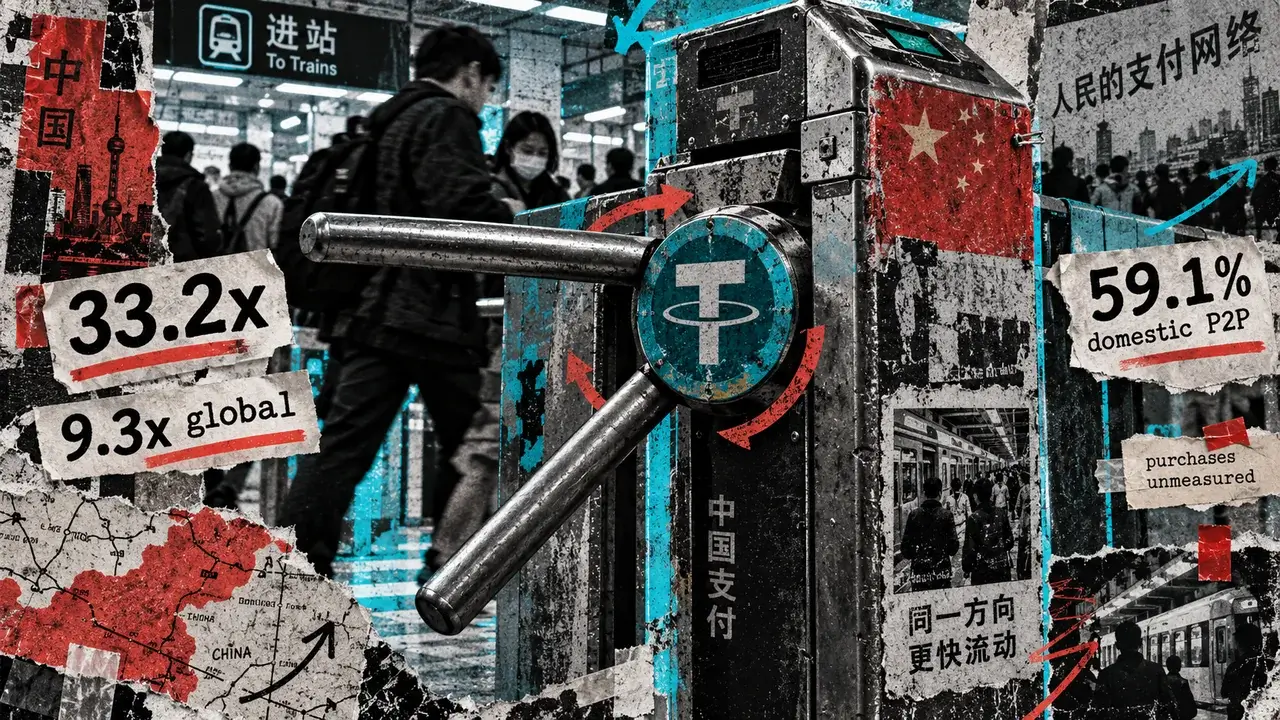
China’s crypto ban Is failing to stop a $176 billion P2P economy
China’s underground crypto economy is increasingly shifting toward peer-to-peer stablecoin payments despite Beijing’s longstanding...

ESMA orders MiCA firms to halt services for non-compliant stablecoins
The EU's deadline for crypto firms to drop non-compliant stablecoins like USDT may reshape market dynamics and regulatory strategi...

ESMA gives crypto firms 3 months to exit non-compliant stablecoins
ESMA urged EU crypto firms to halt services involving non-MiCA-compliant stablecoins, giving regulators three months to address ex...

Hyperliquid confirms Singapore base, but MAS says it is not the regulator
Hyperliquid's unregulated status in Singapore highlights the challenges and risks in the evolving decentralized finance landscape....