An actual NFT success story? Tascha Labs’ shattered diamond
In 2021, during the height of NFT-mania, an angel investor and macroeconomist named Tascha Che (aka Tascha Labs) announced her plan to buy a $5,000 diamond, create an NFT of it, then smash it to pieces. The stunt, intend...
Archive context
Older archive item. Useful for background and entity history, but not a fresh market-moving signal.

In 2021, during the height of NFT-mania, an angel investor and macroeconomist named Tascha Che (aka Tascha Labs) announced her plan to buy a $5,000 diamond, create an NFT of it, then smash it to pieces.
The stunt, intended to prove that, while physical objects can be destroyed, digital footprints can forever retain value, was widely criticized by most outside of cryptocurrency and NFT circles.
But since the complete collapse of the NFT markets and liquidity falling to near all-time lows, how has the shattered diamond NFT performed?
Diamond backgroundChe came up with the idea after posting a hypothesis to Twitter:
Once the tweet got enough traction, she pursued the concept. In August of 2021 she purchased a 1.3 carat diamond online, had it delivered, and then started to work on ways she could destroy it.
If you make a NFT of a real diamond, and the diamond itself gets destroyed in a fire tomorrow, you still have the same asset.
Because the token still exists and is in limited supply just as before. Nothing has changed.
What NFT is doing to the concept of asset, few understand.
Her initial plan — to hit the diamond with a hammer — failed miserably, but she was eventually able to go to a mechanic who used some type of drill to obliterate it for free.
The next step was to mint the now-destroyed gem on an NFT marketplace so that people could bid on it.
This proved to be successful.
In September of 2021 a user purchased the NFT for 5.5 ETH, valued at +$17,000 at the time and over three times the price Che paid for the diamond.
While Che instantly took to social media to proclaim that her hypothesis had been proved correct, the reality was that a single sale couldn’t possibly prove that all digitized assets could retain value in spite of their destruction.
Read more: NFT firm founder indicted for using treasury to support ‘DJ hobby’
Diamond handsAfter purchasing the NFT, Ivan Zhang, a decentralized finance proponent and investor, held it until finally selling in October of 2025 — for an astounding 11 ETH, or $43,000 at the time.
The destroyed diamond NFT had once again nearly tripled in value, despite one carat diamond prices plummeting in value nearly 40% over that same time period.
So, was Che’s hypothesis correct after all?
Not at all.
Not value retention, an internet artifactAs admitted to by Zhang when posting about the sale, diamond prices will continue to go down as synthetics become easier to make and demand from retail dries up.
But somehow the NFT has continued to gain value.
If the NFT was simply designed to retain the value of a destroyed physical good, one would expect to see an equal rise or decline in value.
However, a similar 1.3 carat diamond available for purchase on the same website that Che purchased hers from is now worth between $3,500-$4,000, a decline of over 20%.
Over that time period, the destroyed diamond’s value has ballooned to $43,000, or an increase of 760%.
If anything, Che’s experiment has proven positively that there’s little to no expectation of value retention of real world, physical goods that are digitized and made into an NFT. One just has to be lucky and hope that their idea goes viral.
Got a tip? Send us an email securely via Protos Leaks. For more informed news and investigations, follow us on X, Bluesky, and Google News, or subscribe to our YouTube channel.
The post An actual NFT success story? Tascha Labs’ shattered diamond appeared first on Protos.
Why this matters
Ethereum is showing up inside the NFT Market theme, so this story is worth tracking for follow-through rather than treating it as a one-off headline.
Original source
Read on ProtosRelated market context
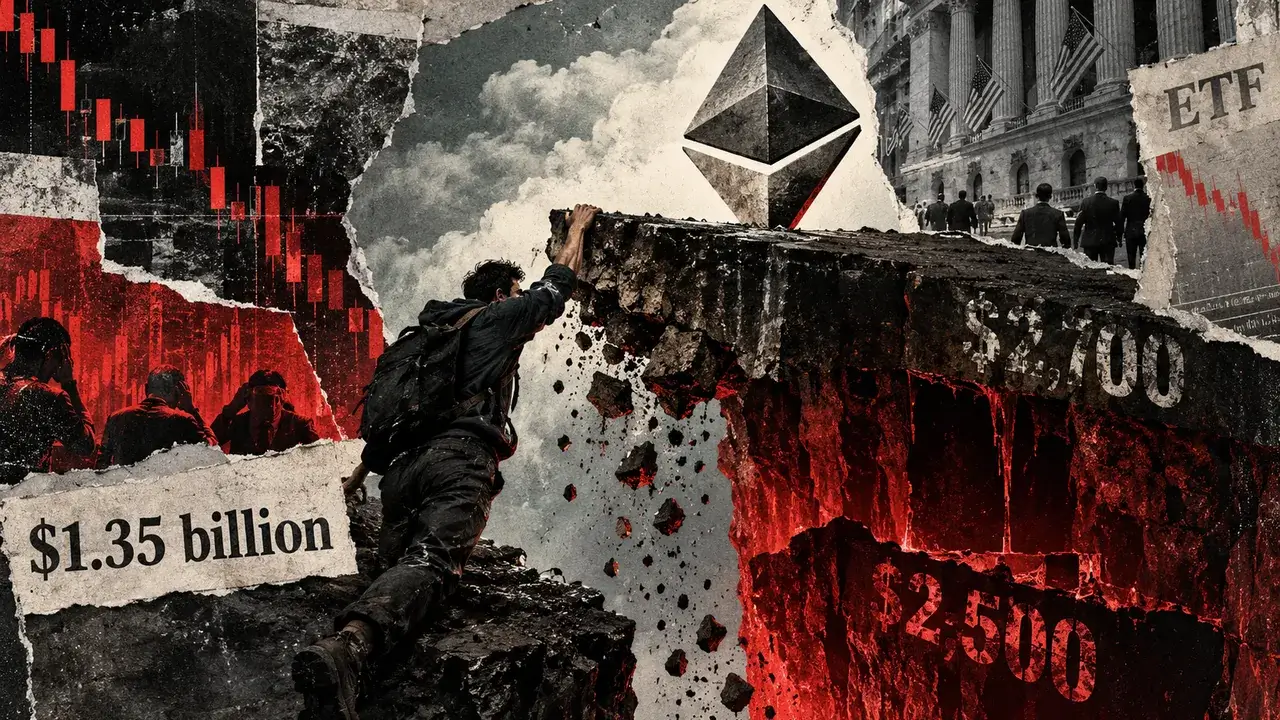
Ethereum falls 6%, leaving $1.35 billion in long bets at risk of liquidation
Ethereum’s slide toward $2,500 has put about $1.35 billion of leveraged long positions at increasing risk of liquidation. CoinMark...
Why Abstract is killing its Ethereum L2 instead of launching a token to save it
Abstract will shut down on Dec. 15 despite onboarding more than 400,000 users, hosting 144 apps, and landing brands including Disn...
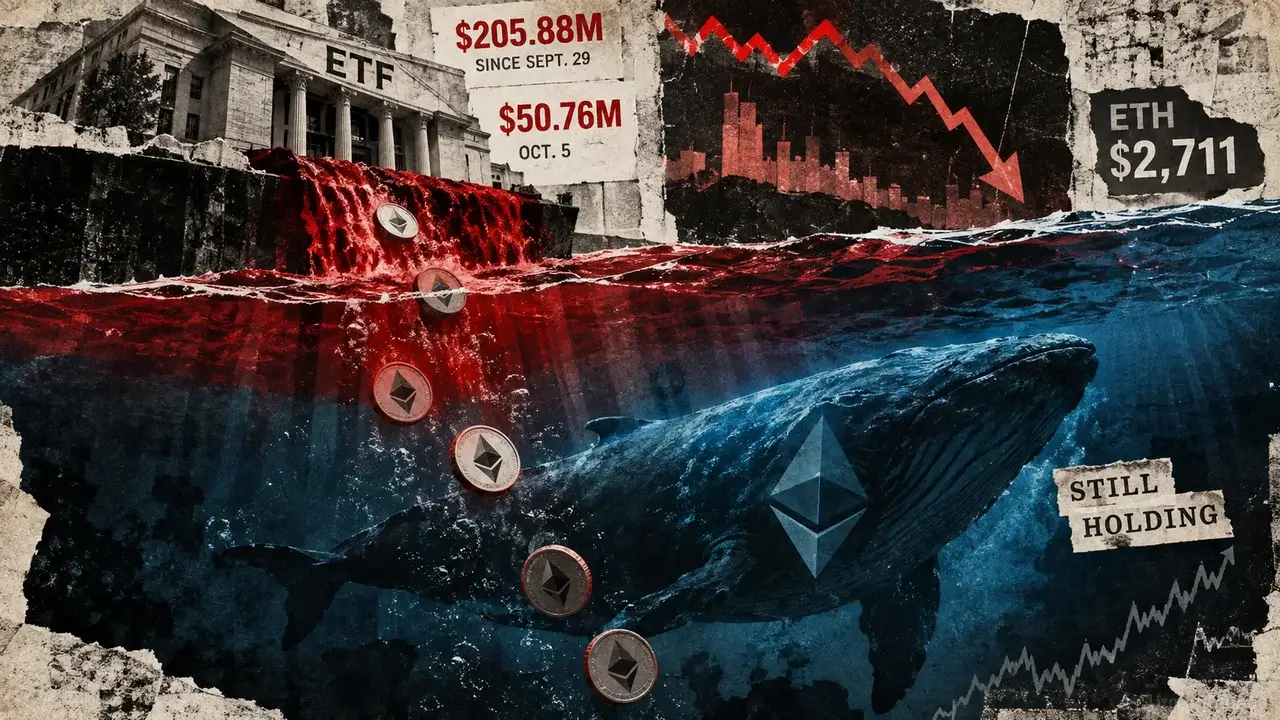
Ethereum bears keep selling but ETH price stays near $2,700 as US spot ETFs record $206M in outflows
Ethereum’s institutional demand is weakening around the same time derivatives positioning shows traders are selling aggressively w...

Ethereum (ETH) Price Prediction: ETH Eyes Recovery From $2,600 as $2,666-$2,689 Becomes Resistance
Ethereum price is holding around $2,618 as buyers attempt to preserve the latest recovery, but the market is approaching a decisiv...

Ethereum Price Prediction: Layer-2 Trouble Deepens as Another Network Shuts Down
Blast’s decision to close its Layer-2 network sharpens the question of Ethereum price and prediction: does activity ultimately con...

BlackRock ETF clients pull $202M from Ethereum as outflow streak hits six days
The shift from Ethereum to Bitcoin ETFs indicates a strategic reallocation of crypto investments, impacting market dynamics and in...