A Deep Dive into $MSTR’s Financial Leverage Over Time
As of December 2, 2024, the company’s balance sheet reveals a conservative yet opportunistic approach to leveraging assets, making it an intriguing case study for both Wall Street analysts and Bitcoin enthusiasts. Here’s...
Archive context
Older archive item. Useful for background and entity history, but not a fresh market-moving signal.

As of December 2, 2024, the company’s balance sheet reveals a conservative yet opportunistic approach to leveraging assets, making it an intriguing case study for both Wall Street analysts and Bitcoin enthusiasts.
Here’s a breakdown of the key takeaways and why $MSTR’s financial strategy has defied the doubters, evolving into a model of calculated risk and strategic positioning as analyzed by Jeff Walton.
1. A Robust Balance Sheet: 5x More Assets Than LiabilitiesAs of the latest reporting, $MSTR boasts assets that are five times its liabilities. This ratio is akin to taking out a 20% mortgage on a house—an extraordinarily conservative approach in the world of corporate finance. Such financial health underscores a strong capacity to weather market downturns and capitalize on future opportunities.
Source: X
2. Leverage Ratios Improving Amid Bitcoin’s SurgeNovember 2024 was a banner month for Bitcoin, and this price surge, combined with $MSTR’s At-The-Market (ATM) issuance activity, improved its overall leverage ratios. The company’s leverage, calculated as liabilities divided by assets, fell from 31% at the end of 2023 to just 20% today. This substantial improvement reflects the company’s ability to grow its asset base faster than its liabilities, creating more room for future debt issuance if needed.
3. Bitcoin’s Safety Margin: The $18,826 Threshold$MSTR’s balance sheet remains resilient against potential Bitcoin drawdowns. For the company’s assets to fall below its liabilities, Bitcoin would need to plummet to $18,826—a staggering 80% drop from today’s levels. This provides an ample safety margin, dispelling concerns that the company is overly exposed to Bitcoin’s volatility.
4. Debt vs. Bitcoin: A Hypothetical IllustrationIf $MSTR’s debt were secured by its Bitcoin holdings (which it is not), the debt would represent just 79,000 of its 402,000 Bitcoin. This leaves a significant 322,800 “free Bitcoin” on the balance sheet. Crucially, $MSTR’s debt is unsecured, convertible into equity, and lacks restrictive covenants, giving the company unparalleled flexibility.
Michael Saylor, co-founder and Executive Chairman of MicroStrategy, emphasized this in past statements:
“Our strategy is long-term, and our debt structure reflects that. We prioritize financial flexibility while holding Bitcoin as the ultimate scarce asset.”
5. ATM Issuance: A Source of Permanent CapitalThe ATM equity issuance strategy adds a permanent infusion of capital to $MSTR’s balance sheet. Unlike debt, which requires repayment, these equity issuances strengthen the company’s financial position without adding to liabilities. This approach enables the company to maintain low leverage ratios while preparing for future debt issuance, if necessary.
6. Leverage Falls as Bitcoin RisesOne of the most fascinating aspects of $MSTR’s strategy is its inverse leverage effect relative to Bitcoin’s price. As Bitcoin appreciates, the company’s financial leverage ratios decline rapidly. This creates a self-reinforcing dynamic where the rising value of assets improves the company’s ability to take on more debt or withstand market turbulence.
7. Dispelling Ponzi Scheme MythsCritics often label $MSTR’s strategy as a “Ponzi scheme” or “pyramid scheme,” but the numbers tell a different story. The company’s leverage ratio—just 20%—compares favorably to giants like Apple (85%), Tesla (41%), and even JPMorgan Chase (92%).
When compared to the overleveraged chaos of FTX (110%), $MSTR’s balance sheet appears significantly underutilized in terms of leverage potential.
Final Thoughts: A Strategic Masterclass in LeverageMicroStrategy has turned its Bitcoin holdings into a formidable financial weapon. The company’s conservative leverage ratios, innovative use of ATM equity issuance, and ability to capitalize on Bitcoin’s appreciation position it as a pioneer in Bitcoin-centric corporate strategy.
The $MSTR balance sheet isn’t just a testament to the company’s resilience—it’s a rebuttal to critics who fail to see the strategic nuances. As Bitcoin continues its upward trajectory, MicroStrategy’s financial model could become a blueprint for other companies seeking to integrate Bitcoin into their balance sheets while maintaining financial health.
Why this matters
This research story adds another data point to the current market tape and is useful when read alongside nearby source coverage.
Original source
Read on Brave New CoinRelated market context

Peter Schiff Surprised by Bitcoin’s Strength as Michael Saylor’s Strategy Boosts BTC Holdings to 848,250
Schiff continues to expect further declines, but Strategy’s latest purchases highlight the company’s commitment to Bitcoin as a lo...

Metaplanet plans $328M bond sale to cut Bitcoin-backed debt and buy back shares
Metaplanet's bond strategy aims to optimize its balance sheet, potentially enhancing shareholder value and evolving its financial...
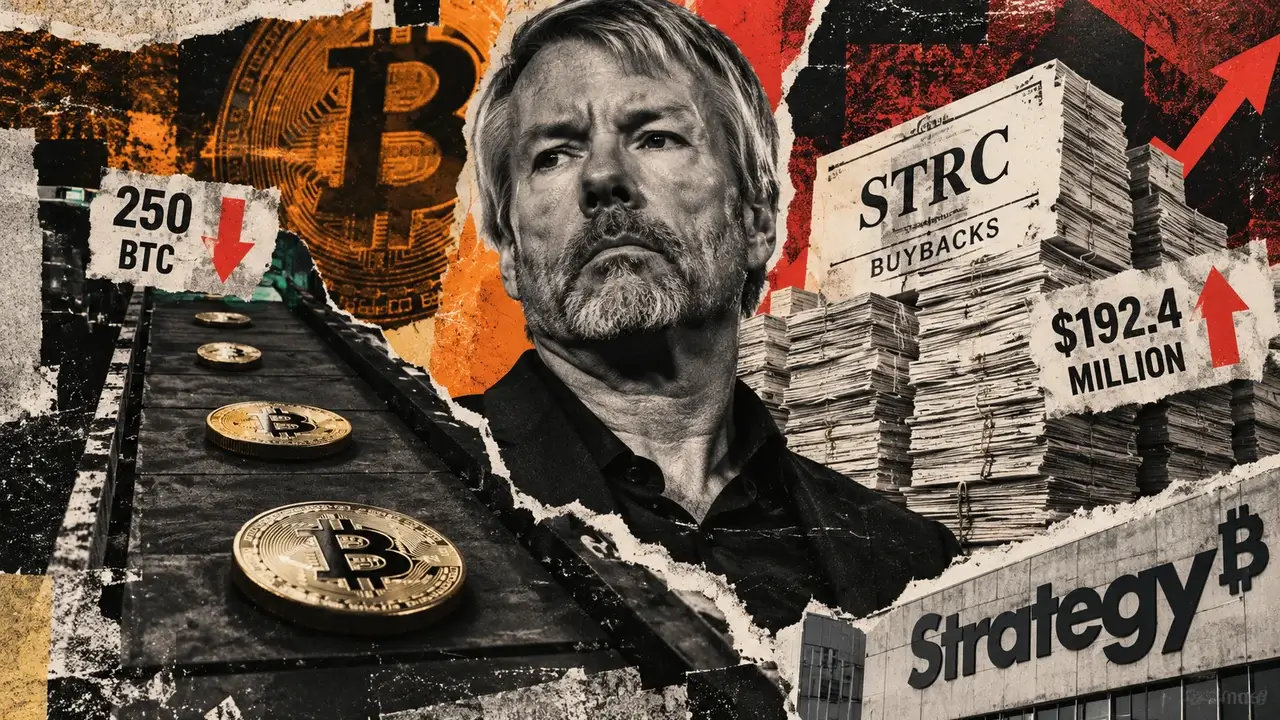
Strategy spent nearly nine times as much on STRC buybacks as Bitcoin last week
Strategy (formerly MicroStrategy) bought 250 Bitcoin for $21.5 million last week while spending $192.4 million to repurchase its S...

Bitcoin Price Prediction: Strategy Chairman Calls $100K BTC
Bitcoin is trading near $83,500 after recovering from a liquidation-driven slide toward $81,000. Strategy executive chairman Micha...
Strive Adds $280M in Bitcoin, Outpacing Strategy With Biggest Buy Since January
Strive has acquired another 3,311 bitcoin for approximately $280 million, marking its largest weekly purchase since January and it...

South Korea clears way for courts to seize and sell Bitcoin for unpaid debts under new November rules
South Korea has established procedures for courts to seize and sell debtors' cryptocurrency to satisfy civil claims. On Oct. 12, t...