Bank of England: Upcoming CBDC System Will Not Share Personal Data With Authorities
During a recent podcast interview, Tom Mutton, the leader of the Bank of England’s central bank digital currency (CBDC) initiative, stated that the CBDC system will not divulge its users’ personal information to the gove...
Archive context
Older archive item. Useful for background and entity history, but not a fresh market-moving signal.

During a recent podcast interview, Tom Mutton, the leader of the Bank of England’s central bank digital currency (CBDC) initiative, stated that the CBDC system will not divulge its users’ personal information to the government.
Mutton shared the Bank of England’s CBDC plans with reporter Emily Nicolle. He pointed out that all electronic payment methods, whether CBDC or not, have a degree of transparency and are not completely confidential or anonymous.
“First of all, the anonymity of cash is not something that somebody chose to do. It’s just a function of the format of cash. And cash will be available as long as people want to use it. But I don’t think cash is the right comparison.”
The notes continued and stated this:
“I think a better comparison is… 90%+ of the money we use today is electronic. All electronic money creates a data footprint. And it’s really a choice of – who do you want to have that data, and how do you want them to protect it?”
It has also been revealed that Mutton says that the Bank of England is proposing that under the proposed CBDC system, the central bank will see the history of each transaction, but not the actual individual behind them.
“The really crucial thing is that there will be no data shared with The Bank of England – no personal data shared with The Bank of England or the government. We’ll know what transactions happened, but we’ll have no idea who did them. The private wallet you use will know who the person is, but they won’t know what the transactions were.”
We suggest that you check out the latest reports about this in the original article.
Bitcoin price predictions are outPlanB explained that in the past, when the price has risen above the two-year realized cost price, it has typically resulted in significant upward movements.
“The important thing that we see is that the Bitcoin price, the red dots, crossed over the two-year realized cost price, and it already crossed the realized cost price, and it already crossed the five-month, short-term cost price. So now, it’s a new thing… It crossed the two-year realized price, and that’s an important signal. Of course, the month is not over, so we’ll wait and see how [June] closes.”
Why this matters
This research story adds another data point to the current market tape and is useful when read alongside nearby source coverage.
Original source
Read on CryptoGazetteRelated market context
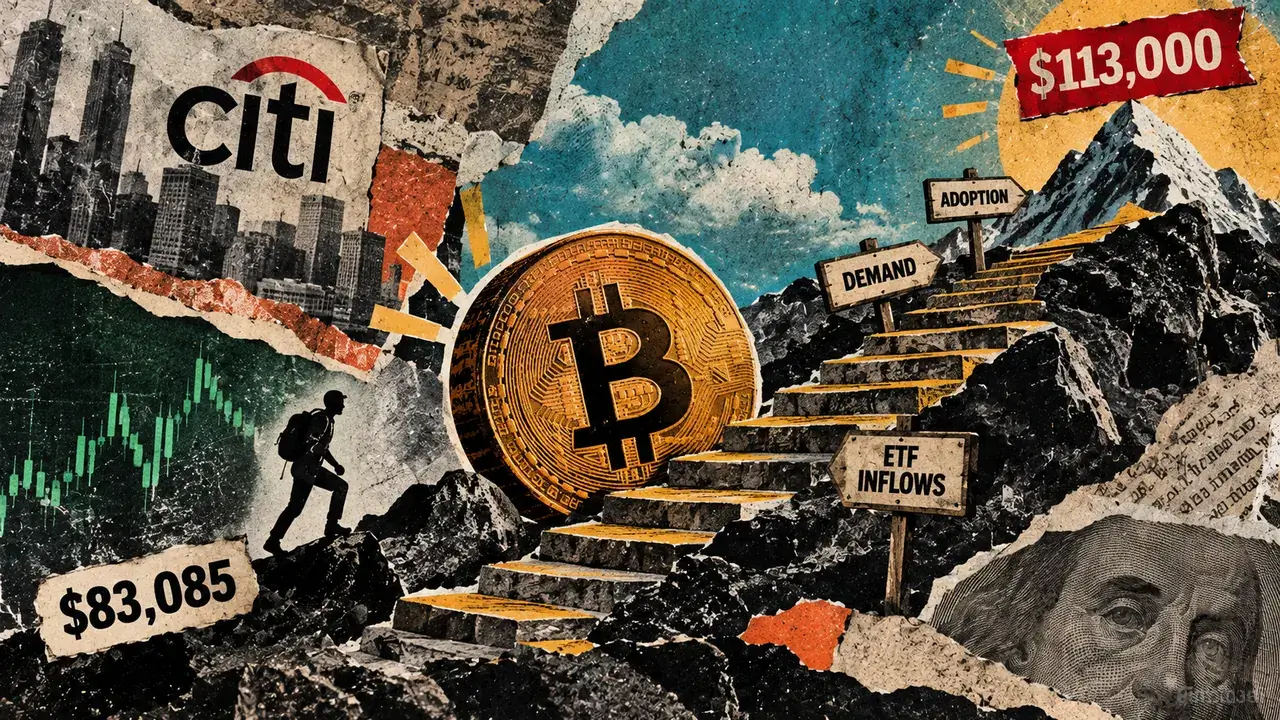
Citi predicts Bitcoin going back to $113,000. Here’s what the buying data shows
Citi's $113,000 Bitcoin target would require a roughly 36% rise from the Oct. 7 reference price, keeping it below its previous rec...

Securitize’s Chongwu Du says tokenized finance will run on a few blockchains, not one
Tokenized finance's reliance on multiple blockchains could enhance resilience and innovation, fostering a more diverse financial e...

Winklevoss twins pitch a low-fee spot Zcash ETF at Token2049
The Winklevoss twins' low-fee Zcash ETF proposal could intensify competition, potentially driving down costs in the cryptocurrency...
Banking Giant Standard Chartered Expands Crypto Custody to Singapore
Standard Chartered is preparing to bring institutional crypto custody to Singapore, expanding its digital asset operations into an...

Bitcoin’s slide below $81,000 exposes why a Fed pause may not save the crypto market
Bitcoin slid below $81,000 on Oct. 8, with an intraday low near $80,800, even as traders expect the Fed to hold in October. The Se...

Coinbase puts DATA-USD into auction mode after Story token migration
The auction mode for DATA-USD aims to stabilize initial trading by gauging market sentiment, potentially reducing volatility and e...