Beijing Flirts With Stablecoins: A Policy Shift That Could Reshape Global Finance
According to Reuters, Beijing’s State Council will review a roadmap this August that includes yuan-backed stablecoins as part of its broader strategy to internationalize the renminbi. In plain English: China wants the yu...
Archive context
Older archive item. Useful for background and entity history, but not a fresh market-moving signal.

According to Reuters, Beijing’s State Council will review a roadmap this August that includes yuan-backed stablecoins as part of its broader strategy to internationalize the renminbi. In plain English: China wants the yuan to go global, and it’s starting to realize that blockchain rails—not endless state decrees—might be the way to get there.
From Ban Hammer to Blockchain DiplomacyThe move would be a dramatic about-face. Since the 2021 crypto ban, China has doubled down on its state-run digital yuan (e-CNY) experiment, but global adoption has been tepid at best. Meanwhile, dollar-backed stablecoins—Tether (USDT), Circle’s USDC, and a growing crop of challengers—have quietly become the de facto plumbing of crypto markets, and increasingly, cross-border payments.
Here’s the uncomfortable reality for Beijing:
- The U.S. dollar already dominates global payments (47% share) and 98% of the stablecoin market.
- The yuan sits in sixth place at just 2.9% of global transactions, according to SWIFT.
- Washington is now openly using stablecoins as a financial weapon, with President Trump (yes, he’s back) promising to expand U.S. dollar dominance via tokenization.
In that light, yuan-backed stablecoins aren’t a “crypto experiment” for Beijing—they’re a defensive maneuver in the great currency wars.
Cross-Border Play: SCO Summit SpotlightThe first battlefield? Cross-border trade. Sources say the yuan-stablecoin playbook is designed for payments between China and its trading partners, potentially softening the dollar’s chokehold on global commerce. Expect this to be front and center at the Shanghai Cooperation Organization (SCO) Summit in Tianjin (Aug 31–Sept 1)—a bloc that includes China, Russia, India, and other nations hungry to de-dollarize.
Priority rollout hubs are already rumored: Hong Kong and Shanghai. Hong Kong, with its new stablecoin regulations launched Aug. 1, is the perfect halfway house—under Beijing’s thumb, but with just enough international credibility to onboard non-Chinese capital.
The Bigger Picture: Weaponizing StablecoinsIf this plan gets the green light, it’s not about catching up to crypto. It’s about building a parallel financial system where U.S. sanctions and dollar liquidity don’t dictate who trades with whom. Think Belt and Road, but in tokenized form.
This wouldn’t be the Wild West of decentralized crypto—it would be carefully managed, highly permissioned, and tightly integrated with China’s existing monetary strategy. But the optics matter: a yuan stablecoin is still a stablecoin, and it signals China conceding that blockchain rails are too powerful to ignore.
Final Thought: The Irony of HistoryLet’s call it what it is: ironic. Beijing banned crypto to maintain control, only to discover that crypto’s infrastructure is the fastest on-ramp for its own global ambitions. Stablecoins are now statecraft. And in a geopolitical tug-of-war where the U.S. is tokenizing its dominance, China has no choice but to tokenize its resistance.
This isn’t just a policy tweak. If yuan stablecoins take off, it could be the most significant development in digital money since Satoshi hit “publish.”
Why this matters
This research story adds another data point to the current market tape and is useful when read alongside nearby source coverage.
Original source
Read on Brave New CoinRelated market context

State of TRON Q3 2026 Report Highlights $2.21 Trillion in Stablecoin Settlement Amid Network Activity Growth
Geneva, Switzerland, October 12, 2026 — TRON DAO, the community-governed DAO dedicated to accelerating the decentralization of the...

China Crypto Strategy Expands as Beijing Backs National Blockchain Network
China announced crypto plans for a national blockchain network. The proposal appeared in a policy document from the Communist Part...
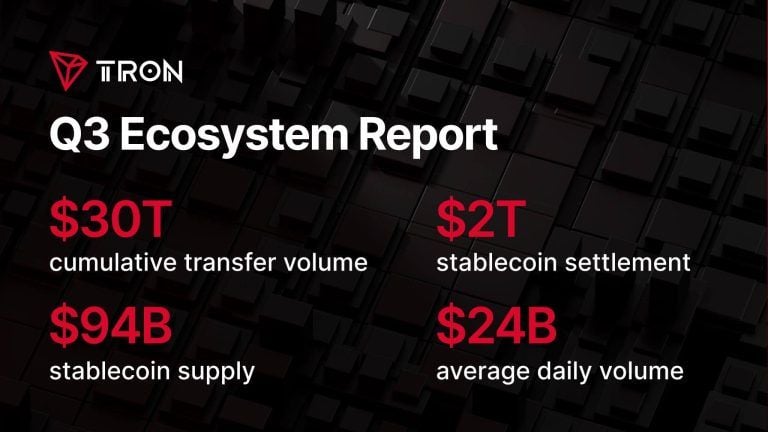
State of TRON Q3 2026 Report Highlights $2.21 Trillion in Stablecoin Settlement Amid Network Activity Growth
Geneva, Switzerland, October 12, 2026 — TRON DAO, the community-governed DAO dedicated to accelerating the decentralization of the...

America’s Credit Unions takes on crypto policy as stablecoin rules take shape
Credit unions' involvement in crypto policy could reshape their competitive landscape, impacting deposit retention and regulatory...

Justin Sun’s $2.25B Crypto Portfolio Includes $1.09B in SUSDS Across 10 Blockchains
Key Takeaways: Earlier, Arkham reported that it tracks around $2.25 billion worth of on-chain assets for Justin Sun, spanning 10 d...

Ark Invest’s Lorenzo Valente: Bitcoin’s 5-Year Forecast – Stablecoin & Gold Impacts
Bitcoin Magazine Ark Invest’s Lorenzo Valente: Bitcoin’s 5-Year Forecast – Stablecoin & Gold Impacts Bitcoin has been flat to down...