Crypto Week in Washington: Dictators, Dollar Coins, and Digital Power Plays
The House Committee on Rules, led by Republicans, is kicking things off with hearings on the Anti-CBDC Surveillance State Act, the CLARITY Act, and the GENIUS Act (a very Washington acronym for the Guiding and Establishi...
Archive context
Older archive item. Useful for background and entity history, but not a fresh market-moving signal.

The House Committee on Rules, led by Republicans, is kicking things off with hearings on the Anti-CBDC Surveillance State Act, the CLARITY Act, and the GENIUS Act (a very Washington acronym for the Guiding and Establishing National Innovation for US Stablecoins Act). If that sounds like a regulatory mouthful, it is. But behind the legislative jargon lies a battle for control over how (or if) the U.S. embraces digital currencies, and who gets to profit from them.
At the heart of this legislative showdown is a fundamental question: Should the U.S. government be in the business of issuing a central bank digital currency (CBDC)? And if not, who controls the infrastructure for stablecoins and digital payments?
While Republicans are championing the bills as pro-innovation, anti-surveillance, and pro-freedom, Democrats are warning of a crypto Trojan horse, one packed not with innovation, but self-dealing, industry capture, and political grift. And nobody is shouting louder than Representative Maxine Waters of California.
In a Monday op-ed for MSNBC, Waters pulled no punches: “They would be passing bills written by and for the crypto industry.” She’s not being metaphorical, she’s taking direct aim at what she sees as a cozy relationship between lawmakers and the crypto projects they stand to benefit from. Chief among them? Former President Donald Trump’s family-linked company, World Liberty Financial, which has launched its own stablecoin (USD1) and, because why not, a memecoin (Official Trump).
Waters has filed multiple amendments to the GENIUS Act, including a particularly spicy one: banning presidents, vice presidents, members of Congress, and their immediate families from holding or promoting crypto assets. It’s a direct challenge not only to Trump but to the broader pattern of political entanglement in the industry.
She’s also targeting U.S. recognition of foreign stablecoin regimes, proposing that any country whose leader has self-identified as a “dictator” should not be deemed comparable to the U.S. under the law. That’s a clear shot at El Salvador’s President Nayib Bukele, the crypto enthusiast who famously dubbed himself the “world’s coolest dictator” while making Bitcoin legal tender in his country.
Defense and OffenseMeanwhile, Republicans are playing defense and offense. Ohio Rep. Warren Davidson, a longtime crypto advocate, wants to codify the right for Americans to own and use personal crypto wallets (hardware or software), language lifted straight from the CLARITY Act. It’s a swipe at potential government overreach and aligns with the libertarian wing of the GOP that sees digital self-custody as a constitutional issue.
Arkansas Rep. French Hill, chair of the House Financial Services Committee and a key driver behind these bills, is painting the package as a patriotic duty: “These bills will protect investors, consumers, and make America, as President Trump wants, a leader in financial technology, crypto, and digital asset innovation.”
But time is short. The House is in session for just eight more days in July, and there’s no guarantee these bills make it to a full floor vote before lawmakers scatter for recess. Behind the scenes, industry lobbying is ramping up. Stand With Crypto, an advocacy group affiliated with Coinbase, is urging lawmakers to back the CLARITY Act. They’re betting this is the best shot at regulatory clarity in years, and they don’t want to miss it.
So here we are: A political theater where stablecoins, surveillance fears, and memecoins collide. Crypto Week isn’t just about tech policy, it’s about who controls the future of money, and who profits from that control. The next few days could help define America’s crypto trajectory for the rest of the decade.
And yes, somewhere in the middle of all this, a dictator got name-dropped in a bill. Welcome to U.S. crypto policy in 2025.
Bitcoin Steals the SpotlightAs all this legislative drama unfolds, Bitcoin is quietly stealing the spotlight, or not so quietly, given it’s just hit fresh all-time highs. Markets are surging, institutional capital is pouring in, and for the first time in crypto history, Washington doesn’t look like it’s gearing up to kill the golden goose. Instead, lawmakers on both sides of the aisle are signaling that crypto, once dismissed as a fringe experiment, is now a permanent fixture of America’s financial future. This is not 2017’s speculative mania or 2021’s retail-fueled frenzy. This is something bigger: regulated, normalized, and increasingly inevitable.
Bitcoin hit a new all-time high of $123,000 to kick off Crypto Week, Source: BNC Bitcoin Liquid Index
If you’ve been sitting on the sidelines waiting for a sign to buy Bitcoin or dip into the broader crypto market, this is that sign. The macro conditions are aligning: inflation concerns remain sticky, trust in traditional institutions is shaky, and the U.S. is finally putting the legal scaffolding in place to let digital assets thrive. Bitcoin isn’t just digital gold anymore, it’s becoming politically viable, Wall Street-friendly, and globally indispensable. Buying now isn’t chasing the top. It’s buying into the future while the scaffolding is still going up. Now is a good time to buy Bitcoin, folks.
Why this matters
This research story adds another data point to the current market tape and is useful when read alongside nearby source coverage.
Original source
Read on Brave New CoinRelated market context
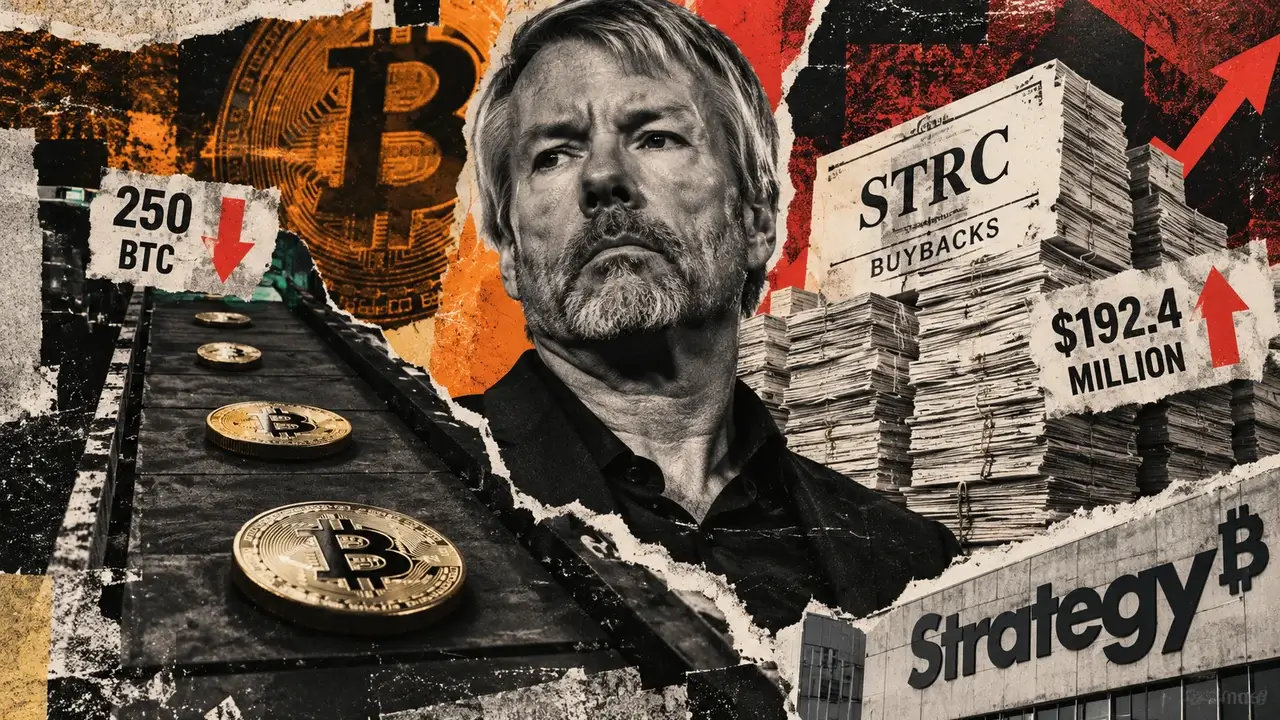
Strategy spent nearly nine times as much on STRC buybacks as Bitcoin last week
Strategy (formerly MicroStrategy) bought 250 Bitcoin for $21.5 million last week while spending $192.4 million to repurchase its S...

Justin Sun’s $2.25B Crypto Portfolio Includes $1.09B in SUSDS Across 10 Blockchains
Key Takeaways: Earlier, Arkham reported that it tracks around $2.25 billion worth of on-chain assets for Justin Sun, spanning 10 d...

XRPL branded ‘cheap’ for paying infinite XRP exploiter just $250K
Crypto sleuth ZachXBT says the XRP Ledger Foundation (XRPL) can potentially look forward to losing upwards of $100 million next ti...

Binance Closes Its Mining Pool and Cloud Mining, Gives Miners Four Weeks to Move Hashrate
Binance announced on Tuesday that it will shut down Binance Pool, its cryptocurrency mining pool, along with a set of related prod...

Now Accepting Bitcoin: Moonflower Coffee and 300+ Colorado Bitcoin Merchants
Bitcoin Magazine Now Accepting Bitcoin: Moonflower Coffee and 300+ Colorado Bitcoin Merchants Table of ContentsFirst Up: Moonflowe...

1inch hosts Groundwork forum in Washington to tackle DeFi policy and education
The forum's collaboration between DeFi leaders and policymakers could shape future regulations, impacting the industry's growth an...