Trump Signs Executive Order to Stop Financial Discrimination Against Crypto Companies and Conservatives
President Donald Trump signed a major executive order on August 7, 2025, that aims to stop banks from cutting off customers based on their political beliefs or business activities. What Is Debanking? Debanking happens wh...
Archive context
Older archive item. Useful for background and entity history, but not a fresh market-moving signal.

President Donald Trump signed a major executive order on August 7, 2025, that aims to stop banks from cutting off customers based on their political beliefs or business activities.
What Is Debanking?Debanking happens when banks close customer accounts or refuse services without clear reasons. The executive order defines it as banks restricting access to accounts, loans, or other financial services based on customers’ political or religious beliefs, or lawful business activities the bank disagrees with.
Many crypto companies have complained about losing banking services during the Biden administration. Conservative groups have also said banks targeted them for their political views. The Trump administration claims this practice violates Americans’ rights to fair treatment in the financial system.
Key Rules in the New OrderSource: @WhiteHouse
The executive order sets strict deadlines for banking regulators to make changes:
Removing “Reputation Risk” Rules: Within 180 days, all federal banking regulators must remove guidance that allows banks to consider “reputation risk” when deciding whether to serve customers. Crypto companies argue this vague concept was used to deny them services.
Investigating Past Actions: Banking regulators have 120 days to review whether financial institutions engaged in political discrimination. Banks found guilty could face fines, legal agreements, or other penalties.
Reviewing Religious Discrimination: Regulators must check their records for cases where banks discriminated based on religion. These cases will be sent to the Attorney General for possible legal action.
Bringing Back Old Customers: The Small Business Administration must require banks under its oversight to find and restore customers who were unfairly denied services. These banks have 120 days to complete this task.
Background of the ProblemThe order references government surveillance programs after January 6, 2021, where federal agencies asked banks to flag customers who shopped at stores like Cabela’s and Bass Pro Shop or made payments with terms like “Trump” or “MAGA.” The order also mentions “Operation Chokepoint,” a previous government program that pushed banks to avoid certain legal industries.
Trump claims he experienced debanking personally. He told CNBC this week that JPMorgan Chase and Bank of America rejected his business after his first term ended. “The banks discriminated against me very badly, and I was very good to the banks,” Trump said.
Impact on Crypto IndustryThe crypto industry has been vocal about debanking issues. Many crypto executives have shared stories about losing banking services. Companies like Coinbase, Kraken, and others faced difficulties getting basic banking services during the previous administration.
The Blockchain Association CEO Summer Mersinger praised the new order. She said ending discriminatory debanking “sends a clear message: the era of ‘reputation risk’ being used to justify financial exclusion is over.”
Some crypto companies have already seen improvements. Banking regulators under Trump have taken a friendlier approach to the industry compared to the Biden administration. The Federal Reserve and Office of the Comptroller of the Currency had already started removing reputation risk from their examination programs before this order.
Banking Industry ResponseBanks have given mixed reactions to the new order. Some banking insiders told CNN they disagree with claims about political discrimination but welcome reduced regulatory pressure. “Banks are not closing accounts for political reasons,” one banker said. “But [Trump’s] right that regulators historically have been relentless to get us to close accounts.”
Major banking groups, including the Bank Policy Institute and Financial Services Forum, thanked the administration for reducing what they called “runaway regulations.”
Banks argue that account closures usually happen for legitimate reasons like compliance with anti-money laundering laws or risk management. They say they don’t discriminate based on politics but must follow complex regulations that sometimes make serving certain customers difficult or unprofitable.
Timeline and Next StepsThe executive order sets a 180-day deadline for the Treasury Secretary to create a comprehensive plan to fight debanking. This plan may include recommendations for new laws or regulations.
The order also directs the Small Business Administration to review how its loan guarantee programs work with banks. The goal is to ensure fair access to financial services for all legal businesses.
Banking regulators must also review their current data to find cases of religious discrimination and report serious violations to the Department of Justice for possible legal action.
What This Means Going ForwardThis executive order represents a major shift in how the government approaches financial regulation. It aims to protect political and religious freedom in banking while ensuring crypto companies can access traditional financial services.
The success of this order will depend on how well regulators enforce the new rules and whether banks change their practices. For crypto companies, this could mean easier access to banking services that are essential for their operations. For conservative groups, it may provide protection against what they see as political targeting by financial institutions.
Why this matters
This research story adds another data point to the current market tape and is useful when read alongside nearby source coverage.
Original source
Read on Brave New CoinRelated market context

Standard Chartered brings Ripple’s RLUSD into banking custody after $765 million quarterly surge
Standard Chartered has launched custody for Ripple's RLUSD stablecoin as it prepares to expand its use as collateral for instituti...

EU targets MiCA loophole that lets crypto exchanges serve 27 countries with one license
EU finance ministers agreed to shift oversight of major crypto companies to a central watchdog, reshaping supervision under MiCA....

Kalshi Reviews Three Sub-$100 Bets That Called Trump’s Press Secretary Pick Early
None of the three wagers topped $100, but each backed Katie Zacharia for White House press secretary before her selection was repo...

South Korea’s Jeonbuk Bank Lends Won Against Bitcoin, Using Court Sales for Defaults
Jeonbuk Bank, a regional South Korean lender, has extended a corporate loan in won secured by Bitcoin, under a setup in which the...
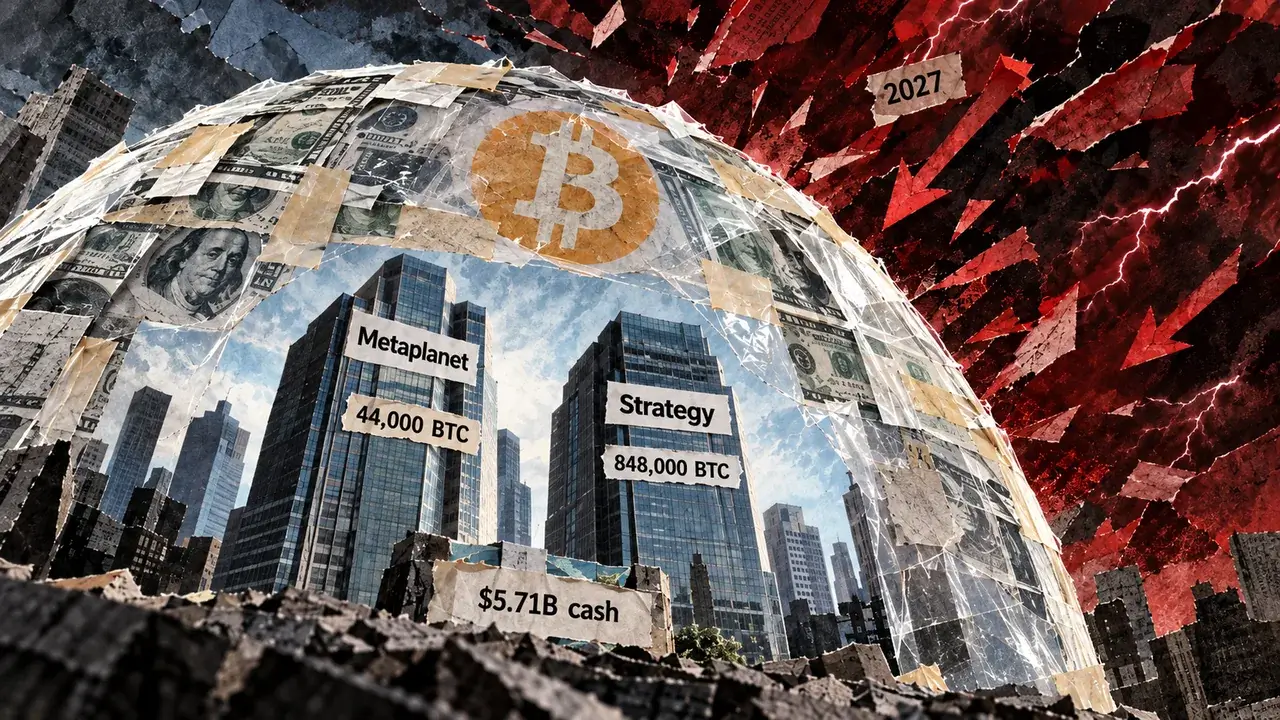
Bitcoin companies are learning that holding forever takes cash
Metaplanet sold 10,000 BTC and bought back 11,000 at a higher average price to show it was willing to sell its Bitcoin. The Japane...

Stealing $1.5B in crypto is easy, cashing out is the trap
North Korean hackers stole around $1.5 billion from Bybit in February 2025. While the hack itself has been widely covered and anal...