Trump’s AI Doctrine: Deregulate, Dominate, and Ditch Copyright Claims
“You can’t be expected to have a successful AI program when every single article, book or anything else that you’ve read or studied, you’re supposed to pay for,” he said. “We appreciate that, but just can’t do it, becaus...
Archive context
Older archive item. Useful for background and entity history, but not a fresh market-moving signal.
“You can’t be expected to have a successful AI program when every single article, book or anything else that you’ve read or studied, you’re supposed to pay for,” he said. “We appreciate that, but just can’t do it, because it’s not doable.”
This comment, delivered at a flashy AI summit hosted by the All-In Podcast crew and the Hill & Valley Forum, offered a sharp rebuke to the copyright maximalism gaining traction in Washington. It also marks the first time the Trump White House has publicly laid out its stance on the high-stakes question of how generative AI intersects with intellectual property.
Alongside Trump’s remarks, the administration dropped a sprawling 28-page “AI Action Plan” detailing over 90 policy recommendations. Think: deregulation with a vengeance. The report frames AI as a geopolitical arms race, a domain the U.S. must dominate to hold off China. And if that means bulldozing state laws, scrapping Biden-era oversight, and letting AI companies hoover up content with impunity, so be it.
“We believe we’re in an AI race, and we want the United States to win that race,” said David Sacks, the Trump administration’s AI and crypto czar, and a co-host of the All-In Podcast. He’s also the ideological architect behind much of the plan.
Bulldozers, Not GuardrailsWhere Biden’s 2023 executive order on AI emphasized safety, ethics, and regulation, Trump is taking a blowtorch to it. On his first day back in office, he rescinded Biden’s EO. A few days later, he signed three new ones, including one to fast-track AI exports and another to purge “woke” or “ideologically biased” models from government contracts.
“The American people do not want woke Marxist lunacy in the AI models,” Trump said, doubling down during his keynote. “We are getting rid of woke.”
The new policy roadmap instructs federal agencies to review and repeal any rules that might be slowing down AI development. It pushes for massive investments in data centers and computing infrastructure, and recommends denying federal funds to any state that tries to regulate AI “too much.” One scrapped provision in Trump’s recent budget proposal even attempted to ban states from regulating AI at all, for a decade.
Critics Say: This Is a Tech Billionaire Manifesto“The White House AI Action Plan was written by and for tech billionaires, and will not serve the interests of the broader public,” said Sarah Myers West, co-executive director of the AI Now Institute.
Her critique mirrors growing concern that Trump’s AI doctrine privileges Big Tech above everyone else, workers, creators, the public, even national security.
“Accelerating innovation is essential,” said Jim Secreto, a former Biden official who worked on tech policy at the Commerce Department. “But dismantling responsible guardrails risks turning America’s AI revolution into a reckless gamble.”
Secreto pointed to Trump’s recent decision to allow Nvidia to resume high-end AI chip sales to China, undoing a ban his own administration had previously enacted, as evidence of a confusing, contradictory China policy.
IP? Barely Mentioned.Incredibly, the 28-page AI Action Plan barely mentions intellectual property. The omission seems intentional, perhaps to avoid sparking more litigation or regulatory blowback while laying the groundwork for a hands-off approach.
But Trump’s comments Wednesday make the administration’s position clear: they’re siding with OpenAI, Meta, Google, and anyone else building frontier models on copyrighted data, regardless of legal challenges from authors, publishers, musicians, or visual artists.
That’s at odds with a bipartisan bill introduced just this week by Senators Josh Hawley and Richard Blumenthal, which would prohibit AI firms from training on copyrighted material without permission. The Trump camp sees that kind of restriction as an innovation-killer.
“AI is far too important to smother in bureaucracy at this early stage,” the report argues, urging agencies like the FTC to stop using “novel theories of liability” that “unduly burden AI innovation.” Translation: keep regulators out of it.
The End Game: Win the AI Race, Kill Woke TechAt its core, Trump’s AI plan is less about algorithmic transparency or digital civil rights, and more about power, economic, geopolitical, and cultural. It’s about ensuring America, not China, builds the best AIs. It’s about preventing “woke” values from being embedded in foundational models. And it’s about giving tech giants a wide berth to run fast and break things, copyright law included.
This is AI policy as culture war, and as industrial strategy. The battle lines are clear. Trump’s bet is that deregulation, aggressive exports, and a rollback of “ideological bias” will supercharge American dominance in AI. Critics fear it could lead to a Wild West that benefits a handful of corporations while leaving the rest of society in the dust.
Why this matters
This research story adds another data point to the current market tape and is useful when read alongside nearby source coverage.
Original source
Read on Brave New CoinRelated market context
Kalshi Reviews Three Sub-$100 Bets That Called Trump’s Press Secretary Pick Early
None of the three wagers topped $100, but each backed Katie Zacharia for White House press secretary before her selection was repo...
Former Story Blockchain Plans to Shut Down and Rebuild Its AI Data Registry on Sui
The DATA Network, the blockchain formerly known as Story, will shut down its own chain and rebuild as a protocol running on Sui, w...

China Crypto Strategy Expands as Beijing Backs National Blockchain Network
China announced crypto plans for a national blockchain network. The proposal appeared in a policy document from the Communist Part...

Microsoft integrates Anthropic models into Copilot, diversifies AI strategy
Microsoft's diversified AI strategy may enhance competitive dynamics, influencing AI model market rankings and future tech collabo...

EU targets MiCA loophole that lets crypto exchanges serve 27 countries with one license
EU finance ministers agreed to shift oversight of major crypto companies to a central watchdog, reshaping supervision under MiCA....
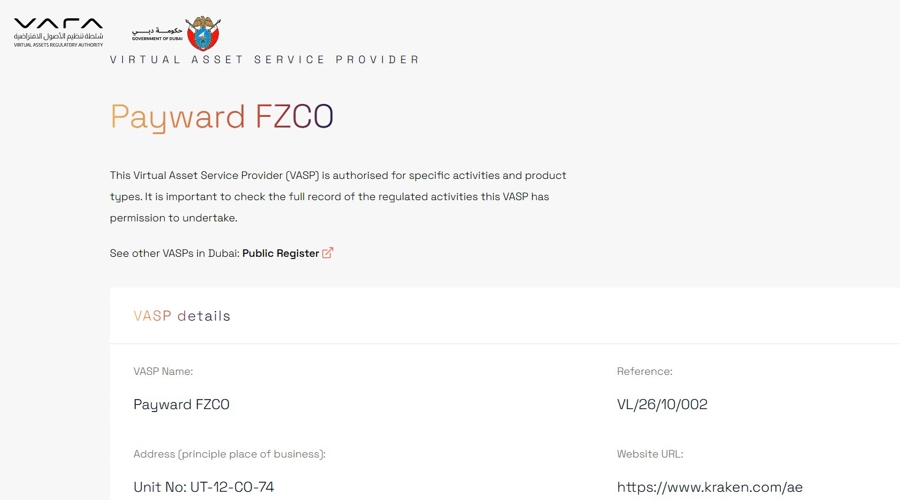
Kraken Gets Final Dubai Crypto License, Plans UAE Launch Within Weeks
Kraken's parent Payward received Full Market Approval from Dubai's Virtual Assets Regulatory Authority (VARA) today (Monday). Krak...