Visa cuts reported stablecoin volume but there’s no proof payments fell
Visa’s September 18 data refresh lowered its adjusted stablecoin volume measure, while its adjusted transaction count fell by less than 2%. The divergence reflects a change in how recorded activity is classified, leaving...
Archive context
Older archive item. Useful for background and entity history, but not a fresh market-moving signal.

Visa’s September 18 data refresh lowered its adjusted stablecoin volume measure, while its adjusted transaction count fell by less than 2%. The divergence reflects a change in how recorded activity is classified, leaving payment trends unanswered.
The Visa Onchain Analytics changelog attributes the reset to a fuller set of address labels and revised filters. Its underlying Allium identity set grew from about 15 million labeled addresses to roughly 600 million. Visa says the definition of adjusted volume stayed the same: it aims to exclude labeled exchanges, contracts, bots, bridges, other infrastructure, and minting and burning. With more addresses identified, more transfers now fall outside the adjusted measure. The refresh also added heuristics for short-term routing and changed how organic and payment activity is identified.
The live transaction methodology still describes “over 3 million” labeled addresses, a figure that does not match the dated changelog’s roughly 600 million in the new full identity set. Visa’s public text does not say whether the older wording refers to a different subset or has yet to be updated. The 3 million figure therefore cannot serve as the previous baseline for this reset.
The classification changed while the underlying recorded transfers remained on-chain; the release offers no direct measure of how real-world activity changed. Visa does not publish comparable pre- and post-refresh adjusted stablecoin volume totals in its changelog, so the size of the value revision cannot be calculated from that disclosure. The published pages also do not provide matched-window, same-definition chain results that would show how much of the revision fell on Ethereum, Tron, Solana or any other network.
Why adjusted stablecoin volume can shift while counts barely moveA transfer count gives each included event one unit, whether it moves a small sum or a large one. Dollar volume weights those events by value. Removing a limited number of high-value transfers can therefore have a much bigger effect on the volume series than on the count. Visa’s figures establish the direction of each change, although they do not break out how much each new label or heuristic contributed.
Visa offers a concrete example: one automated program on Solana cycled the same stablecoins through thousands of throwaway wallets. The company says that pass-through pattern moved very large amounts in relatively few transactions and is now excluded from adjusted volume across multiple chains. The example illustrates the mechanism; it does not establish that the same program operated on every chain, or quantify the revision for Solana or the broader market.
Related Reading Solana DEX volume spike hides circular trades, and automated bots are blamedThis distinction is especially important when comparing networks. An apparent lead in raw transfer value could reflect routing, exchange activity or contract interactions as well as end-user transfers. The revised adjusted series could sharpen comparisons, but the reviewed material does not quantify a change in chain rankings under matched dates and filters. Allium’s stablecoin documentation describes chain-aware daily volume tables, including organic adjusted volume where available. The documentation is a description of data fields, not a published before-and-after table for this Visa reset, and it does not promise adjusted coverage for every chain.
A September Bank for International Settlements study makes a related measurement point: the same stablecoin can serve different purposes on different blockchains. Its analysis associates Ethereum use more closely with smart-contract interactions and Tron use more commonly with holdings outside contracts, consistent with transactional and store-of-value motives. Those findings give context for why like-for-like use-case comparisons matter; they are not a measurement of Visa’s September revision.
Related Reading Why TRON’s $30 trillion lifetime volume could become a trap A surviving transfer is not necessarily a paymentVisa’s transaction methodology separates payments from DeFi, centralized-exchange flows, investment and trading, store of value, minting and burning, short-term routing, infrastructure and other categories. A transfer can be included in adjusted activity without being classified as a payment; the two labels are not interchangeable. Its “retail sized” bucket covers adjusted transfers below $250, but a small transfer is not automatically a purchase, a merchant settlement or a distinct user.
The difference between blockchain records and economic actions also appears inside individual transactions. A separate BIS study of 2025 Ethereum activity involving USDT, USDC and PYUSD found that nearly 60% of transfer events occurred within complex transactions. Its point is that one transaction can involve multiple token movements and financial operations; counting each transfer event as a standalone payment can misstate the activity. That nearly 60% result applies to the study’s Ethereum sample, not to every chain or to the share of Visa’s adjusted volume that is payment-related.
Related Reading Why standard Bitcoin transfer figures are off by up to six times, according to the BISEven the size of the stablecoin market is a different measurement. CryptoSlate listed USDT market capitalization at about $183.79 billion on September 26. That is the value of tokens outstanding at a moment in time, whereas Visa’s volume measures value transferred over a period. CryptoSlate’s 24-hour trading-volume figure on the same page is another distinct measure; neither can fill the gap in Visa’s before-and-after adjusted series.
For now, the defensible reading is narrower than either a collapse or a boom in stablecoin payments. Visa says its revised classification removes more high-value pass-through activity from adjusted stablecoin volume while leaving the adjusted transfer count nearly intact. Establishing whether payment use itself changed, or whether one chain gained ground on another, would require comparable, dated payment-category and adjusted-volume data under the same definitions.
The post Visa cuts reported stablecoin volume but there’s no proof payments fell appeared first on CryptoSlate.
Why this matters
Visa is showing up inside the Stablecoins theme, so this story is worth tracking for follow-through rather than treating it as a one-off headline.
Original source
Read on CryptoSlateRelated market context

Circle’s USDC overtakes Tether’s USDT in euro trading as MiCA rules reshape market
MiCA's regulatory framework reshapes the stablecoin market, favoring compliant tokens like USDC, impacting trading dynamics and li...

USDC overtakes USDT in euro stablecoin trading as EU rules reshape market: Kaiko
USDC’s share of euro stablecoin trading has climbed to 56% since January 2024, with deeper liquidity as exchanges restrict USDT un...
Monad Wins a Stablecoin Card Infrastructure Deal With Reap and Meru
TL;DR: Reap announced on October 26 that it would add the Monad blockchain to its stablecoin-linked card infrastructure, with Lati...

Bitget Wallet Gives Users USD and EUR Account Numbers That Convert Deposits to Stablecoins
Bitget Wallet, the self-custodial crypto wallet, is giving its users personal USD and EUR account numbers that can take in bank tr...
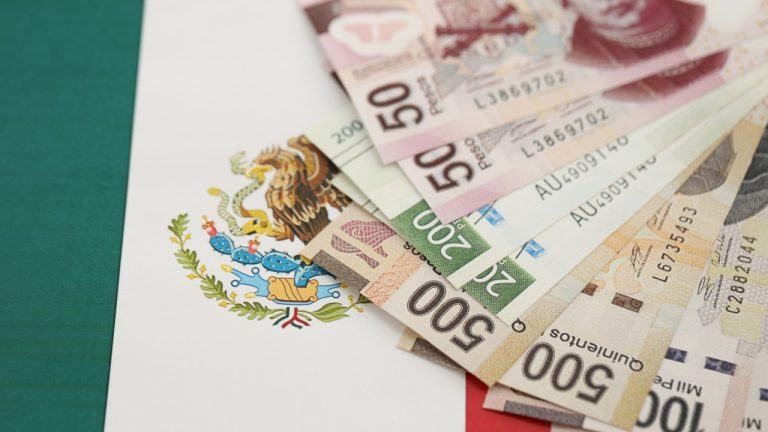
Mexican Peso Stablecoin Gains Anchorage Custody on Ethereum and Beyond
Anchorage Digital Bank has expanded its partnership with the Latin American financial services and cryptocurrency platform Bitso,...

Bitcoin must hold $75,500 to preserve bull market structure, Hilbert Group analyst says
Hilbert Group's Jesse Marre warns Bitcoin must hold $75,500 to preserve its bull market structure amid tight liquidity and Fed unc...