War games: how we built Kraken to handle 10x the load
TL;DR During the worst moments of the largest volume spike our platform had ever seen (in July 2025), about 11% of requests to our platform failed. That was unacceptable. We now run at an error rate of 0.111%, while carr...
Archive context
Older archive item. Useful for background and entity history, but not a fresh market-moving signal.

- During the worst moments of the largest volume spike our platform had ever seen (in July 2025), about 11% of requests to our platform failed. That was unacceptable. We now run at an error rate of 0.111%, while carrying more than ten times the load.
- We set a standard for load testing: the platform has to survive at least twice the heaviest load we have ever handled in production, on demand, every time we test for it.
- Kraken sustains more than 230,000 successful requests per second in production, across five separate full-scale tests with zero incidents.
- On February 5, 2026, one of the sharpest selloffs of past twelve months, every major service held with no incidents.
No trading platform is judged on an average Tuesday. It is judged on the day Bitcoin sets a record, or the day a token sale opens and everyone arrives in the same minute. Those are the moments that tell you what a platform can actually carry.
The quality and stability of our platform is the product.
In mid-July 2025, Bitcoin broke through $120,000 for the first time, part of a rally that carried it above $123,000 within days. On Kraken, roughly 135,500 clients hit errors during that window, about 40,000 of them while funding an account. At the worst moments, around 11% of requests failed outright.
Three months later, the first token offering on Kraken Launch saw somewhere between 60% and 80% of active sessions drop for two and a half hours. Even after things stabilized we were still losing about a third of requests during traffic spikes.
Over the past year we changed how we test for load, so we find those limits ourselves instead of discovering them mid-rally.
War gamesThe standard we set: the platform had to survive at least twice the heaviest load it has ever handled in live trading, on demand, whenever we choose to test it. Double the record, as the floor.
To test against that we built full-scale load tests, known internally as war games, that throw a manufactured flood of trading activity at production systems. It’s basically a fire drill, run on our schedule rather than the market’s, so we find the constraints that give way first and fix them before a client ever notices. Capacity moved quickly once we could generate the pressure on demand.
The markets didn’t wait for us to finish. In February, crypto experienced one of its sharpest selloffs of the past 12 months, with a wave of forced liquidations sending Bitcoin down hard over several days.
Trading activity and platform load climbed together, with request volumes hitting new all-time highs. Every major service continued to run with no incidents. We estimated a full outage that day would have cost $719,000 an hour. It stayed an estimate.
Moving the bar consistently higherBetween July 2025 and June 2026, our peak failure rate fell from around 11% to 0.111%, while the load the platform carries went up more than tenfold.
But we’ve still got work to do.
The 2x standard now stands permanently. Each time real client activity sets a new record on the platform, that record becomes the load we test against next, so the bar continues to rise with the market.
When a price moves hard and everyone jumps into the market at the same moment, the platform needs to be there.
Coming soon: If you want the engineering detail, what the tests actually do, what broke along the way, and what the team learned building them, look for our companion post written for a technical audience.
Explore engineering careers at KrakenThe post War games: how we built Kraken to handle 10x the load appeared first on Kraken Blog.
Why this matters
Kraken is a tracked market entity in the DigitalMoneyBox archive, making this useful context for readers monitoring repeated mentions and follow-up coverage.
Original source
Read on Kraken BlogRelated market context

OKX Eyes 63 U.S. Stocks in Major Tokenized Trading Expansion
Key Takeaways: OKXICE informed the SEC about its plan to establish an online platform called “Tokenized Securities Venue” that wou...

BTCC Exchange Launches Refreshed Trust Center: Alex Hung on 15 Years of Earning Traders’ Trust
GEORGE TOWN, Cayman Islands, October 7th, 2026, Chainwire BTCC, the world’s longest-serving cryptocurrency exchange and Platinum S...

XRP Whales Dominate Exchange Outflows as Bitcoin Shorts Rise on Hyperliquid
The contrasting flows highlight a market where some large investors are moving XRP away from exchanges even as leveraged traders p...
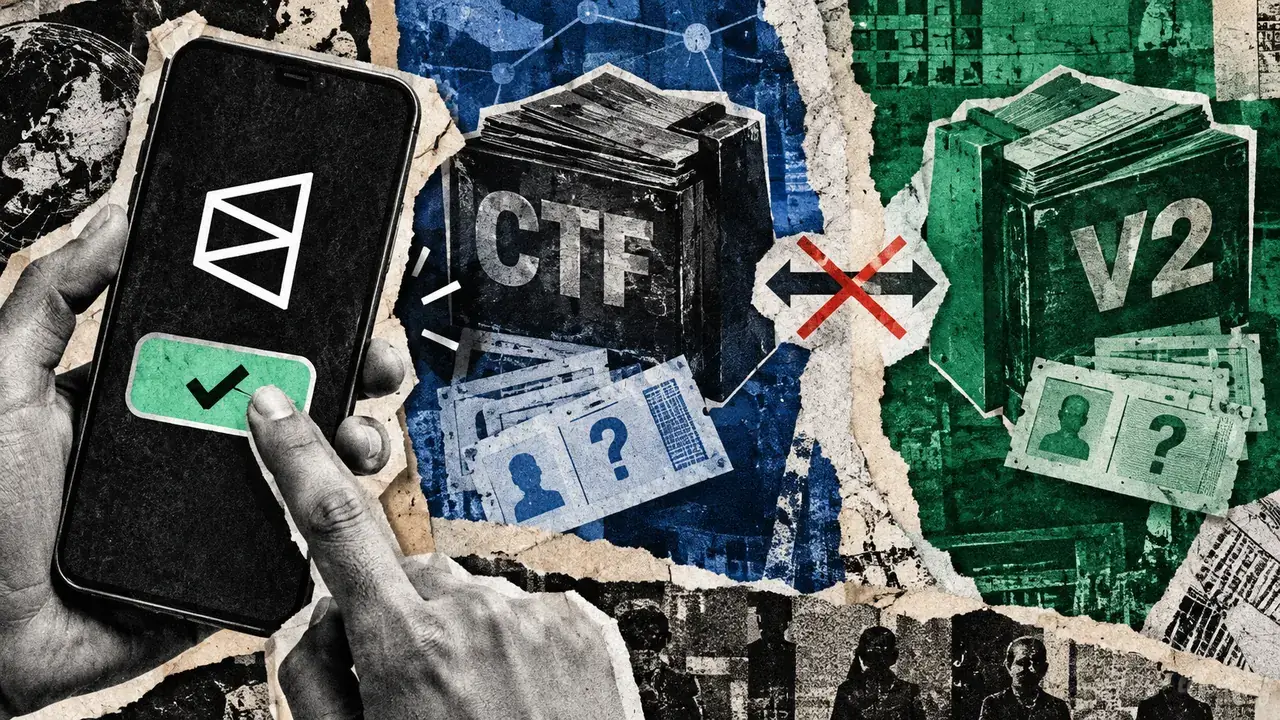
Polymarket’s upgrade won’t automatically move existing bets to new contracts
Polymarket’s Protocol V2 rollout does not automatically move existing bets held under its older Conditional Tokens Framework, or C...

Ethereum (ETH) Price Prediction: ETH Eyes Recovery From $2,600 as $2,666-$2,689 Becomes Resistance
Ethereum price is holding around $2,618 as buyers attempt to preserve the latest recovery, but the market is approaching a decisiv...

Cardano’s Programmable Token Standard Goes Live With Built-In KYC and Freeze Controls
The Cardano Foundation announced on Wednesday at TOKEN2049 that CIP-0113, Cardano’s programmable token standard, is live on Cardan...