Crypto Payments May Not Help Russia Bypass Sanctions, Experts Say
Russia is preparing to authorize international crypto payments but people involved in the industry doubt this would allow the country to circumvent sanctions. At the same time, the United States has been tightening the n...
Archive context
Older archive item. Useful for background and entity history, but not a fresh market-moving signal.
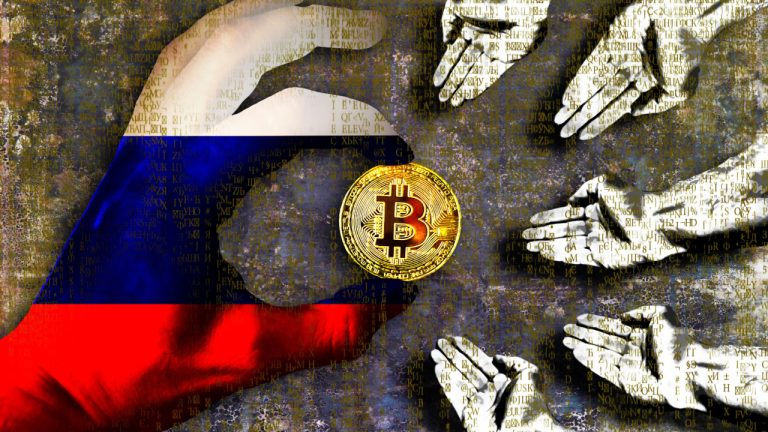
Russia is preparing to authorize international crypto payments but people involved in the industry doubt this would allow the country to circumvent sanctions. At the same time, the United States has been tightening the noose, recently targeting the use of cryptocurrencies to dodge the financial restrictions imposed by the West with new legislation in Congress.
Russian Crypto Experts Claim Circumventing Sanctions With Cryptocurrency Is a ‘Great Illusion’
This week, Russian authorities announced they had started developing a mechanism for cross-border settlements with crypto assets, with the goal to reduce the sanctions pressure on the Russian economy and trade. The Ministry of Finance said that a bill legalizing such transactions has been agreed upon with the Central Bank of Russia.
Moscow is now in a rush to adopt regulations for the issuance, circulation, and various operations with digital currencies, particularly payments for imports and exports restricted by Western sanctions over its invasion of Ukraine. Meanwhile, the House of Representatives of the U.S. Congress approved a new bill with measures aimed at curbing the use of cryptocurrencies to circumvent them.
On this backdrop, experts with knowledge of the industry have shared with Russian media their opinions on how realistic it is to bypass the sanctions with the help of cryptocurrencies. The crypto page of the Russian business news portal RBC has compiled them in an article, the title of which starts with the expression “Great Illusion.”
The introduction of a crypto payment system under sanctions is exactly that, a big illusion, according to Maria Stankevich, director of development at the digital asset exchange Exmo (Exmo.com). She reminded that many state-owned companies were discussing this option back in 2014, amid earlier sanctions adopted after the Russian annexation of Crimea.
Mikhail Zhuzhzhalov, a senior lawyer at the Tomashevskaya & Partners law firm, agreed with the crypto executive that the idea of overcoming financial obstacles with the help of crypto is not new. In 2018, Russian authorities considered permitting international companies established in the country’s special administrative regions to use digital coins in settlements with partners but the proposal was rejected by regulators who had a very negative attitude at the time.
Regulatory pressure is usually exerted on institutional players such as cryptocurrency exchanges, peer-to-peer platforms, and issuers of digital and tokenized assets, Zhuzhzhalov noted. While the circulation of cryptocurrencies itself is not regulated, it is easy to go after legally operating licensed companies, he pointed out and emphasized:
If such market participants are subjects of unfriendly jurisdictions, they are obliged to comply with the sanctions. And if they are located in neutral countries, then they may be pressured by secondary sanctions, as was recently the case with Turkish banks.
Two of five Turkish lenders working with Russia’s Mir cards decided to suspend operations with the payment system widely used by Russian tourists visiting the country. The move followed clear indications earlier this month that Washington was likely to impose sanctions on nations conducting transactions with Mir. According to local media reports in Turkey, a new Turkish-Russian payment system is in the making.
It’s almost impossible to hide large volumes of transactions, Maria Stankevich admitted, and everyone who still wants to work with Russia using cryptocurrencies will be placed under sanctions. The number of those who choose to continue to do that will decrease, she is convinced. Tracking crypto transactions is even easier than bank transfers, Stankevich added. “In the current conditions, you just have to accept that interaction with the West will be limited,” she concluded.
Do you think Russia will be able to reduce the sanctions pressure by employing cryptocurrencies for cross-border payments? Share your thoughts on the subject in the comments section below.
Why this matters
This security story adds another data point to the current market tape and is useful when read alongside nearby source coverage.
Original source
Read on Bitcoin NewsRelated market context

UK sanctions crypto platforms suspected of supporting Russian financial networks
The UK sanctioned Cryptomus, Heleket and TokenSpot in a Russia sanctions package, with TRM Labs identifying links to Grinex and Ga...
WhiteBIT Integrates Lightning Network for Fast and Cheap Bitcoin Transactions
Bitcoin Magazine WhiteBIT Integrates Lightning Network for Fast and Cheap Bitcoin Transactions The Lightning Network continues to...

Money20/20 USA 2026: How Bitcoin, Stablecoins and AI Are Reshaping the Future of Finance
Bitcoin Magazine Money20/20 USA 2026: How Bitcoin, Stablecoins and AI Are Reshaping the Future of Finance Fintech has moved beyond...

USDC Transfers Are Coming to Samsung Wallet
Samsung Electronics America plans to add USDC transfers to Samsung Wallet in the last week of October 2026, extending the stableco...

USDT’s grip on Asia-Pacific stablecoin payments loosens to 91%
The shift towards compliance-focused stablecoins in Asia-Pacific may signal a broader trend of regulatory integration influencing...

Europol says crypto’s quantum upgrade could take years and urges work to start now
Europol, the EU’s law enforcement agency, is urging the cryptocurrency industry to begin preparing wallet and protocol upgrades fo...