Fake AI crypto software is secretly replacing browser wallet extensions
HP Wolf Security, the company's threat-research team, said a fake AI crypto-trading assistant distributed malware that could replace browser crypto wallet extensions on an infected Windows computer and turn the familiar...
Archive context
Older archive item. Useful for background and entity history, but not a fresh market-moving signal.
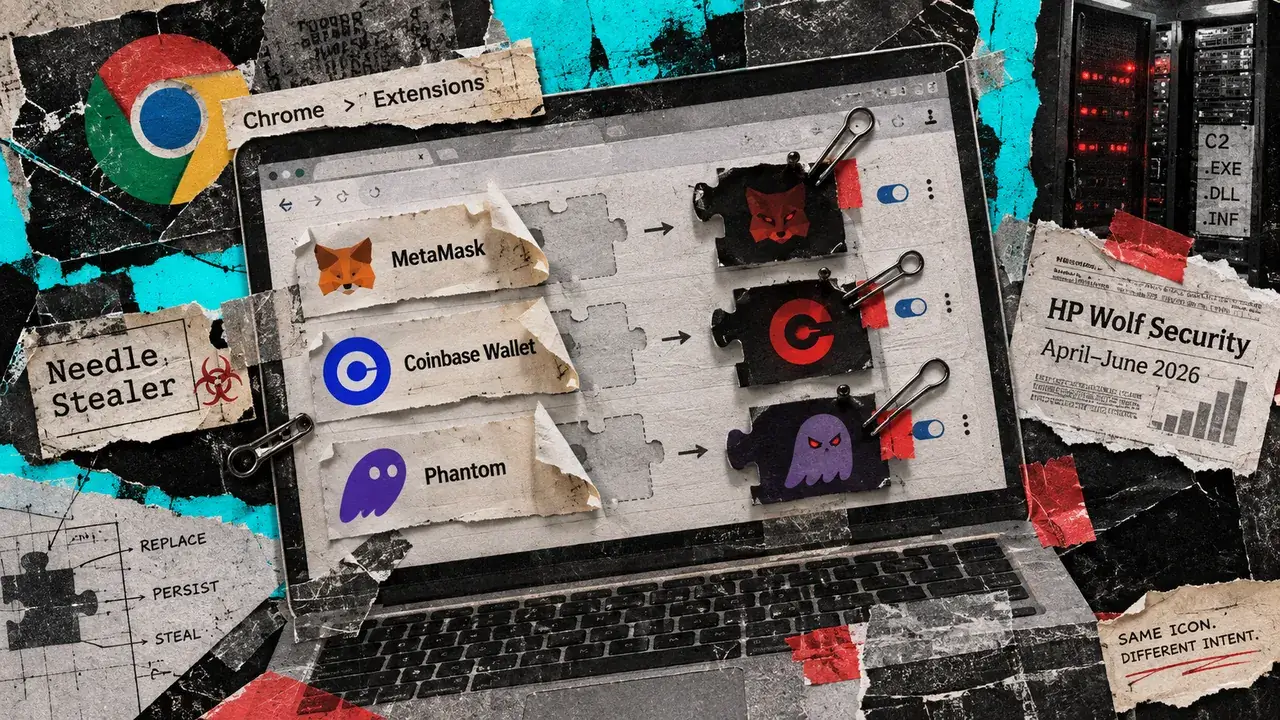
HP Wolf Security, the company's threat-research team, said a fake AI crypto-trading assistant distributed malware that could replace browser crypto wallet extensions on an infected Windows computer and turn the familiar wallet interface into a credential trap.
The campaign appeared in HP's September threat report, published Sept. 17 and based on threats observed from April through June 2026. HP described a compromise that began on a user's endpoint after a counterfeit trading tool was downloaded and run, not a breach of Coinbase, MetaMask, or their official extensions.
Malwarebytes had documented the TradingClaw campaign in April and found that Needle Stealer also circulated through other malware loaders. The fake AI assistant was one route into a broader malware operation.
Related Reading Hackers sneak crypto wallet-stealing code into a popular AI tool that runs every timeAttackers promoted tradingclaw[.]pro as an AI assistant that could follow a personalized strategy and trade around the clock, according to the full HP report. Search-engine poisoning and paid advertisements directed prospective victims to a ZIP file presented as the software's installer.
The archive contained an executable named Trading Agent.exe and a DLL named iviewers.dll. HP identified the executable as OLEView, Microsoft's legitimate, digitally signed OLE/COM Object Viewer. HP said the signed program helped bypass Microsoft's SmartScreen reputation check, while the malicious payload remained in the accompanying DLL.
Running the trusted-looking program caused it to load that DLL. The code then decrypted Needle Stealer and used process hollowing, a technique that runs malicious code inside a newly launched legitimate process.
A fake AI trading tool delivered Needle Stealer through a malicious ZIP, targeting seven wallet extensions and stealing credentials from compromised devices. How the crypto wallet swap workedNeedle Stealer enumerated Chromium browser extensions and checked their 32-character IDs against a hardcoded list covering Phantom, Trust Wallet, Atomic Wallet, Coinbase Wallet, OKX Wallet, MetaMask, and Tonkeeper.
When it found a target, the malware shut down the browser and extracted a corresponding malicious extension into the existing extension folder.
On its first launch, the replacement connected to a command-and-control server used by the attacker and loaded backup domains. HP said the attackers had built realistic login screens, and a crypto wallet ID and password entered into a counterfeit interface could be sent to the operator.
MetaMask's guidance says that, for crypto wallets created with a Secret Recovery Phrase, the password unlocks MetaMask locally and cannot restore the wallet elsewhere. Even so, the substituted extension was operating on an already compromised device, leaving locally accessible funds at risk.
Neither HP's report nor its newsroom summary disclosed a campaign-wide victim count or aggregate crypto-loss figure, leaving the operation's scale unknown.
The post Fake AI crypto software is secretly replacing browser wallet extensions appeared first on CryptoSlate.
Why this matters
MetaMask is showing up inside the Security Incidents theme, so this story is worth tracking for follow-through rather than treating it as a one-off headline.
Original source
Read on CryptoSlateRelated market context

US Government Moves $103M in Seized Bitcoin and BNB to Coinbase Prime, Raising Sale Questions
The Bitcoin and BNB transactions drew attention because Coinbase Prime provides institutional custody and trading services for dig...

U.S. Government Moves $103 Million in Seized Bitcoin and BNB, Sending BTC to Coinbase Prime
Wallets linked to the U.S. government moved $103.19 million in seized and forfeited crypto on Tuesday, Onchain Lens said in an X p...
US Government Moves $103 Million in Seized Bitcoin and BNB, But Hasn't Said Why
Government-labeled wallets sent 833.6 BTC to Coinbase Prime deposit addresses and shuffled 40,285 BNB. No sale is confirmed, but t...
Coinbase Completes Deribit Integration and Says Coinbase Pro Returns by Year-End
Coinbase said it has completed its integration of Deribit, creating what it calls the Coinbase Global Exchange, and that Coinbase...

US government moves $470M in seized Bitcoin and Tether to Coinbase Prime
The transfer highlights the government's active management of crypto assets, potentially impacting market dynamics and policy perc...
Cybersecurity consultant found guilty of stealing $55M in crypto from Uranium Finance
The conviction highlights the vulnerabilities in DeFi systems and underscores the effectiveness of blockchain forensics in tracing...