India, Russia Mull Payment System Integration in Face of US Sanctions
The governments of India and Russia are considering integrating part of their payment systems, in order to counter the possible future effect of US sanctions on the capital flows of each country. The deal would include t...
Archive context
Older archive item. Useful for background and entity history, but not a fresh market-moving signal.
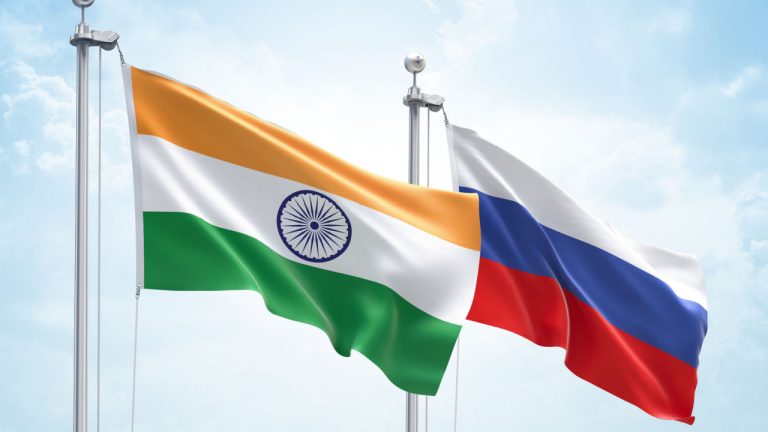
The governments of India and Russia are considering integrating part of their payment systems, in order to counter the possible future effect of US sanctions on the capital flows of each country. The deal would include the integration of India’s Rupay card system and its Russian counterpart, Mir Cards, to allow seamless payments between the two countries.
Russia and India Consider Integration of Payment StacksRussia and India are mulling the integration of their debit payment stacks in order to prevent negative affects on their common payment flows by a hypothetical extension of U.S. sanctions in the future. In a recent high-level meeting, in which India’s External Affairs Minister Subrahmanyam Jaishankar and Russian Deputy Prime Minister Denis Manturov were present, the countries agreed to explore this integration to facilitate capital flows.
The agreement included considering the acceptance of Russia’s Mir Cards system in India, and India’s Rupay system in Russia, allowing citizens of both countries to make cross-border payments using debit cards natively.
There were also talks about a higher integration at the event, with authorities agreeing to further explore the interaction of the Unified Payments Interface (UPI), the Indian payment stack, and the Faster Payments System (FPS), its Russian counterpart.
India has been active in integrating its payment system with other countries. In February, it linked Singapore’s payments system, called Paynow, into its payment stack, allowing cross-border payments between the two countries without using additional payment bridges.
Preventing US Sanction EffectsThe main objective behind this exploration is to prepare for a possible extension of U.S. sanctions that would cut the connection between the banking systems of the two countries, making the possibility of direct payments unfeasible. While this is being projected into the future, some Indian companies have already been unable to collect payments linked to dividends of Russian oil companies due to the sanctions enacted by the U.S. government on Moscow.
According to local reports, ONGC Videsh Ltd, Oil India, Bharat Petroleum Corp, and Indian Oil Corp — four Indian companies — have had payments of between $300 and $400 million blocked since last year due to the disconnection of Russian banks from the Society for Worldwide Interbank Financial Telecommunication (SWIFT) system, that allows for cross-border payment using the current banking system.
What do you think about the possible integration of the Indian and Russian payment systems to minimize the effect of US sanctions? Tell us in the comment section below.
Why this matters
This security story adds another data point to the current market tape and is useful when read alongside nearby source coverage.
Original source
Read on Bitcoin NewsRelated market context

UK sanctions crypto platforms suspected of supporting Russian financial networks
The UK sanctioned Cryptomus, Heleket and TokenSpot in a Russia sanctions package, with TRM Labs identifying links to Grinex and Ga...

USDT’s grip on Asia-Pacific stablecoin payments loosens to 91%
The shift towards compliance-focused stablecoins in Asia-Pacific may signal a broader trend of regulatory integration influencing...

UK sanctions crypto payment processors Cryptomus, Heleket, and exchange TokenSpot
The UK's sanctions highlight the increasing scrutiny on crypto's role in evading financial restrictions, impacting global complian...

Polygon Open Money Stack Expands to TRON, Extending Network Access to Regulated U.S. Payment Rails
Dubai, UAE – October 8, 2026 – Polygon Labs today announced that Polygon Open Money Stack now supports the TRON network, giving fi...

Spiral is adding Bitcoin payments to Mesh LLM so machines can buy AI compute
Integrating Bitcoin payments into AI networks could revolutionize decentralized compute markets, enhancing autonomy and efficiency...

Gate Partners with Visa to Launch Crypto-linked Card Across 40+ Countries and Territories
Gate has announced a collaboration with Visa to launch a crypto-linked card, further expanding the use of digital assets in everyd...