OKX Halts DEX Aggregator Amid EU Scrutiny Over Bybit Hack Money Laundering Allegations
Crypto exchange OKX has temporarily suspended its decentralized exchange (DEX) aggregator in response to concerns over its alleged misuse by the North Korean hacking group Lazarus.The move comes amid heightened regulator...
Archive context
Older archive item. Useful for background and entity history, but not a fresh market-moving signal.

Crypto exchange OKX has temporarily suspended its decentralized exchange (DEX) aggregator in response to concerns over its alleged misuse by the North Korean hacking group Lazarus.
The move comes amid heightened regulatory scrutiny from European authorities investigating the platform’s role in laundering funds from a major crypto heist.
In a statement on March 17, OKX confirmed that it had detected a coordinated effort by Lazarus Group to exploit its DeFi services.
“After consulting with regulators, we made the proactive decision to temporarily suspend our DEX aggregator services. This move allows us to implement additional upgrades to prevent further misuse,” the company said.
OKX Maintains Wallet Services Despite DEX SuspensionWhile OKX has not provided a specific timeline for reinstating the service, the exchange’s helpdesk assured users that crypto wallet functionalities would remain active.
However, it noted that new wallet creation would be paused in select markets during the suspension period.
On March 11, Bloomberg reported that European financial regulators were investigating OKX’s DEX aggregator, OKX Web3, over allegations that it facilitated money laundering linked to the Bybit hack.
The attack, which resulted in $1.5 billion in stolen funds, allegedly saw nearly $100 million laundered through OKX’s Web3 proxy, according to Bybit CEO Ben Zhou.
In response, OKX dismissed the accusations as misleading, emphasizing its proactive approach to countering financial crime.
“Over the past few days, we’ve faced targeted media attacks questioning our integrity and operations,” the company stated in a blog post.
“We can’t ignore the fact that these attacks are happening at a time when we are actively fighting against financial crime.”
OKX clarified that when Bybit was hacked, it took immediate action by freezing related funds entering its centralized exchange (CEX) and developing new security measures to prevent similar incidents.
The firm also criticized media reports for inaccurately identifying its DEX aggregator as the origin of illicit trades rather than merely a liquidity access point.
We are temporarily pausing our DEX aggregator to address incomplete tagging on blockchain explorers while we also roll out new security features. This is to address the recent coordinated attacks by media along with unsuccessful efforts by Lazarus group to misuse our DeFi… pic.twitter.com/r6oHNIaalT
— OKX (@okx) March 17, 2025 Enhanced Security Measures to Combat MisuseTo address regulatory concerns and strengthen its defenses, OKX has rolled out enhanced security protocols.
These include a hacker address detection system to track and block malicious addresses in real-time on its CEX and a system to ensure that blockchain explorers correctly identify the actual DEX processing transactions.
“We already rolled out a lot of controls for OKX Web3 to combat misuse, including prohibited market IP blocking and real-time black address detection,” said OKX CEO Star Xu on March 17.
OKX also reaffirmed that its Web3 DEX aggregator does not act as a custodian of user assets.
Instead, its primary function is to provide access to liquidity across multiple protocols.
“Some have deliberately misrepresented our platform,” the company stated, defending its role in the DeFi space.
As reported, Chainflip, a cross-chain DEX, is preparing a protocol upgrade aimed at preventing hackers responsible for the recent $1.4 billion Bybit hack from using its platform to launder stolen assets.
The upcoming 1.7.10 upgrade introduces enhanced screening tools that allow broker operators—including platforms like SwapKit and the Rango DEX aggregator—to reject suspicious deposits of ETH and ERC-20 tokens.
The post OKX Halts DEX Aggregator Amid EU Scrutiny Over Bybit Hack Money Laundering Allegations appeared first on Cryptonews.
Why this matters
This security story adds another data point to the current market tape and is useful when read alongside nearby source coverage.
Original source
Read on CryptonewsRelated market context
Wallet linked to 2016 Bitfinex hack transferred 12,267 BTC valued at $1.01 billion to new addresses
The transfer of BTC linked to the 2016 hack may signal future market volatility and strategic shifts, impacting Bitcoin's price st...
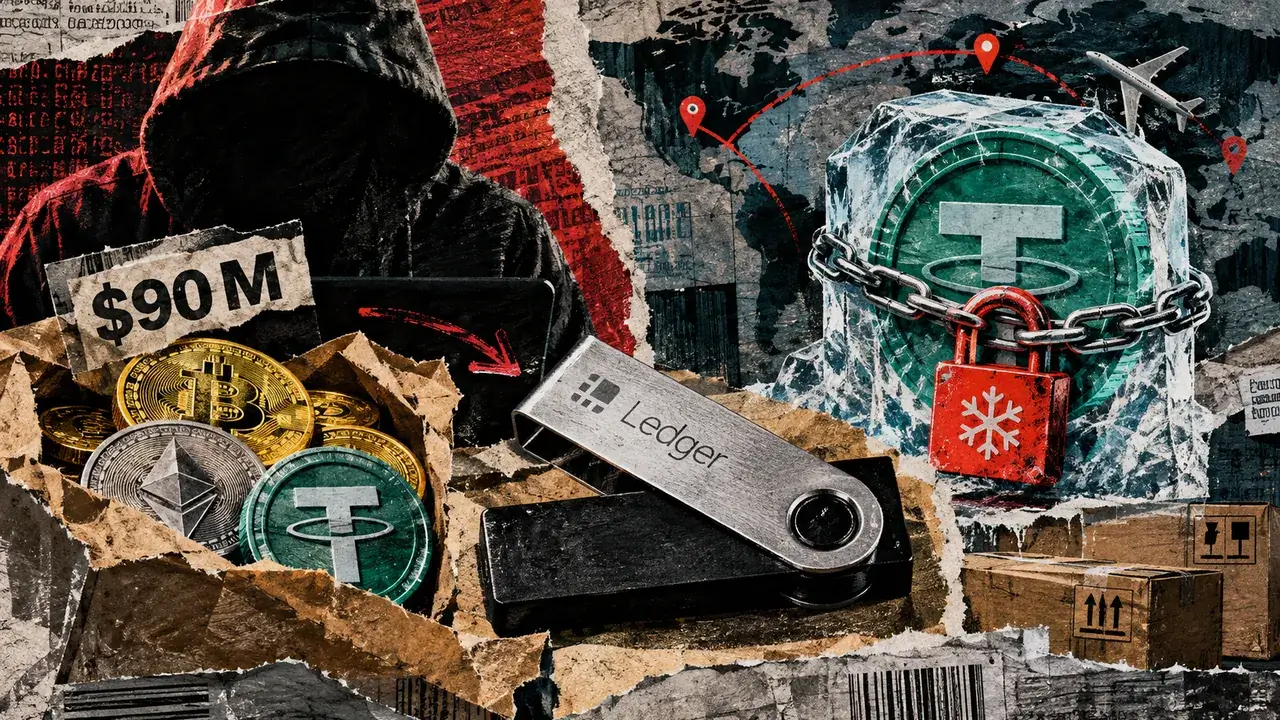
Ledger hack scare nears $90 million as Tether moves to freeze stolen USDT
Suspected Ledger wallet thefts are approaching $90 million as Tether freezes USDT stablecoin linked to the incident, according to...

Bitcoin address reuse leaves 4.33M BTC with exposed public keys
Increased Bitcoin address reuse heightens security risks and regulatory scrutiny, prompting potential shifts in storage practices...

Polygon Opens Its Money Stack To TRON’s $94 Billion USDT Market
TL;DR: Polygon Open Money Stack now supports TRON, giving payment and fintech businesses a single infrastructure layer for bank tr...

Dormant Ethereum address holding 12,746 ETH wakes up after 10.2 years
The reactivation of dormant Ethereum wallets highlights potential market shifts, as early holders may choose between selling or st...
‘We Know Where It Is’: Treasury Secretary Threatens To Freeze $1B of Iran’s Crypto
Bitcoin Magazine ‘We Know Where It Is’: Treasury Secretary Threatens To Freeze $1B of Iran’s Crypto U.S. Treasury Secretary Scott...