Russian spies using crypto and Telegram to incite chaos across Europe
Russian spies are using Telegram and crypto to entice teenagers and young adults across Europe to carry out acts of sabotage and violence. That’s according to a study released by the Institute for Strategic Dialogue (ISD...
Archive context
Older archive item. Useful for background and entity history, but not a fresh market-moving signal.

Russian spies are using Telegram and crypto to entice teenagers and young adults across Europe to carry out acts of sabotage and violence.
That’s according to a study released by the Institute for Strategic Dialogue (ISD) and shared with the i Paper.
The study revealed that Russian actors are targeting teenagers and young adults via a network of Telegram groups called “com networks” in which participants compete for clout by uploading harmful content.
I Paper discovered two clips shared in these groups took place in the UK. In one instance, someone filmed themselves smashing a car that belonged to a care worker.
Russia says Ukraine is using Telegram dating bot for terrorismRead more: Russia offered crypto to firebomb Sir Keir Starmer’s home, report
Another showed what appears to be the same person throwing a brick through the window of a house.
One week after these incidents, Ukrainian police arrested two young boys, aged 11 and 15, who were allegedly planning to attack their school with guns and explosives “on the orders of the Russian Federation.”
The Security Service of Ukraine described these incidents as a Russian intelligence operation.
According to the ISD, there are “multiple indicators suggesting possible Russian state-linked support” for parts of the network, and organizers “mirror established Russian methods for recruiting ‘disposable agents’ for violence abroad.”
The study’s author, Steven Rai, claims they’ve seen the Russia-linked Telegram chats offer crypto for arson attacks, and that these payments within the com networks are “completely new.”
An all-encompassing umbrella group made up of a collection of these Telegram networks claims it wants to bring participants of different views together with “one goal” to cause chaos.
One part of this collective claims to be allied with Direct Action, a Russian-manufactured far-right group that organised the fire bombing of former UK Prime Minister Sir Keir Starmer’s house.
In this case, thousands of dollars worth of the stablecoin USDT was reportedly offered to a 22-year-old Ukrainian in return for carrying out the attacks in the hopes of attracting press coverage.
Got a tip? Send us an email securely via Protos Leaks. For more informed news and investigations, follow us on X, Bluesky, and Google News, or subscribe to our YouTube channel.
The post Russian spies using crypto and Telegram to incite chaos across Europe appeared first on Protos.
Why this matters
Tether is showing up inside the Stablecoins theme, so this story is worth tracking for follow-through rather than treating it as a one-off headline.
Original source
Read on ProtosRelated market context
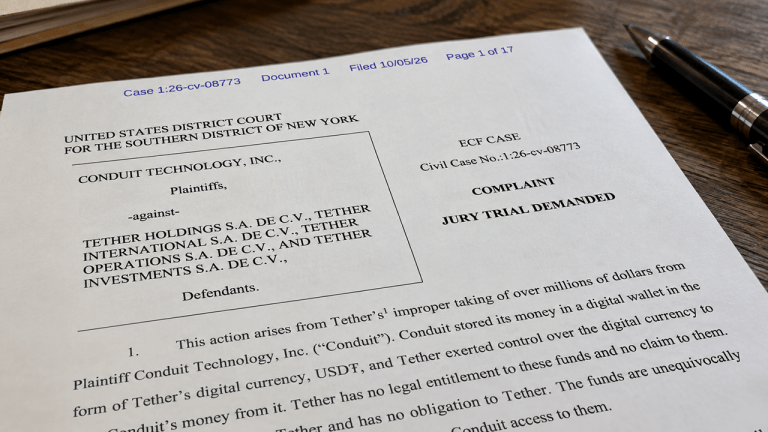
Conduit Sues Tether Over a $2.76M USDT Wallet Frozen for a Year
Conduit Technology has sued Tether after the stablecoin issuer froze $2.76 million in the company’s USDT and allegedly kept it loc...

Conduit sues Tether over $2.8M USDT freeze
A lawsuit filed by crypto payments firm Conduit has accused Tether of unlawfully freezing $2.76 million worth of its USDT and refu...

Tether Celebrates 12 Years, USD₮ Surpasses 700M Users
Key Takeaways: Tether marked the 12th anniversary of the world’s largest stablecoin by market cap, USD₮. The company claims that U...

Tether signs MoU with Kazakhstan’s central bank to explore tenge stablecoins and tokenized assets
Kazakhstan's collaboration with Tether could enhance its fintech landscape, potentially boosting local currency integration in dig...

Senate Democrats put Tether’s USDT under the microscope over Iran sanctions evasion
Increased scrutiny on Tether's USDT could lead to stricter regulations on cryptocurrency to prevent sanctions evasion and illicit...

Conduit sues Tether over $2.76 million in frozen USDT
The lawsuit highlights potential counterparty risks in stablecoin transactions, raising concerns about asset control and legal rec...