Secret Service & Canada Target $4.3 M Ethereum Phishing Scam in “Operation Avalanche”
Key Takeaways: U.S. Secret Service partnered with Canadian law enforcement and financial regulators to combat an Ethereum blockchain-based scam.” The operation targeted an approval phishing scam responsible for defraudin...
Archive context
Older archive item. Useful for background and entity history, but not a fresh market-moving signal.

Key Takeaways:
- U.S. Secret Service partnered with Canadian law enforcement and financial regulators to combat an Ethereum blockchain-based scam.”
- The operation targeted an approval phishing scam responsible for defrauding victims of approximately $4.3 million, by identifying compromised wallets and warning affected users.
- The initiative showcases how international cooperation and blockchain forensics can help disrupt transnational crypto scams.
In an April 16 press release, the U.S. Secret Service collaborated with Canadian officials on a project dubbed “Operation Avalanche” with the goal of identifying compromised wallets on the Ethereum blockchain.
U.S. Secret Service Tackles Crypto CrimeWorking with the BC Securities Commission, forensic analysts with the United States Secret Service Washington Field Office worked to warn crypto fraud victims about the loss and potential loss of their assets due to an ongoing approval phishing scam.
According to the press release, “Operation Avalanche” utilized “securities regulators, multiple Canadian police agencies, crypto trading platforms and a blockchain analysis firm” in its efforts to curb crypto crime and assist victims affected by the $4.3 million scheme.
Breaking:
U.S. Secret Service & Canadian authorities just cracked down on an Ethereum “approval phishing” scam in Operation Avalanche.
They traced wallets that lost $4.3M to the scheme.
Scammers beware — the blockchain never forgets.#Ethereum #CryptoSecurity #Web3 #ScamAlert pic.twitter.com/u1muN872aD
“Our analysts from the Washington Field Office provided Canadian officials with the help needed to disrupt this scheme and prevent bad actors from continuing to receive stolen funds,” said WFO Special Agent in Charge Matt McCool.
“We will continue working with Canadian law enforcement and financial partners to identify and seize stolen assets to return to victims,” he added.
Canadian And U.S. Officials Counter Ethereum ScamAccording to blockchain analytics firm Chainalysis, Approval Phishing occurs when a scammer convinces a victim to sign illicit blockchain transactions, giving the crypto fraudster access to the user’s wallet.
From there, the scammer can send and drain coins from the victim’s account – in this case, on the Ethereum blockchain.
“The operation is an example of how the U.S. Secret Service’s investigative expertise, resources, and long-standing global law enforcement partnerships can aid in disrupting cryptocurrency scams orchestrated by transnational organized crime,” the press release continued.
The post Secret Service & Canada Target $4.3 M Ethereum Phishing Scam in “Operation Avalanche” appeared first on Cryptonews.
Why this matters
This security story adds another data point to the current market tape and is useful when read alongside nearby source coverage.
Original source
Read on CryptonewsRelated market context
‘We Know Where It Is’: Treasury Secretary Threatens To Freeze $1B of Iran’s Crypto
Bitcoin Magazine ‘We Know Where It Is’: Treasury Secretary Threatens To Freeze $1B of Iran’s Crypto U.S. Treasury Secretary Scott...

U.S. Government Sends $1 Billion in Seized Bitfinex Bitcoin to Unlabeled Wallets
A wallet holding bitcoin stolen in the 2016 Bitfinex hack sent 12,267 BTC, worth about $1.01 billion, to new addresses on Thursday...
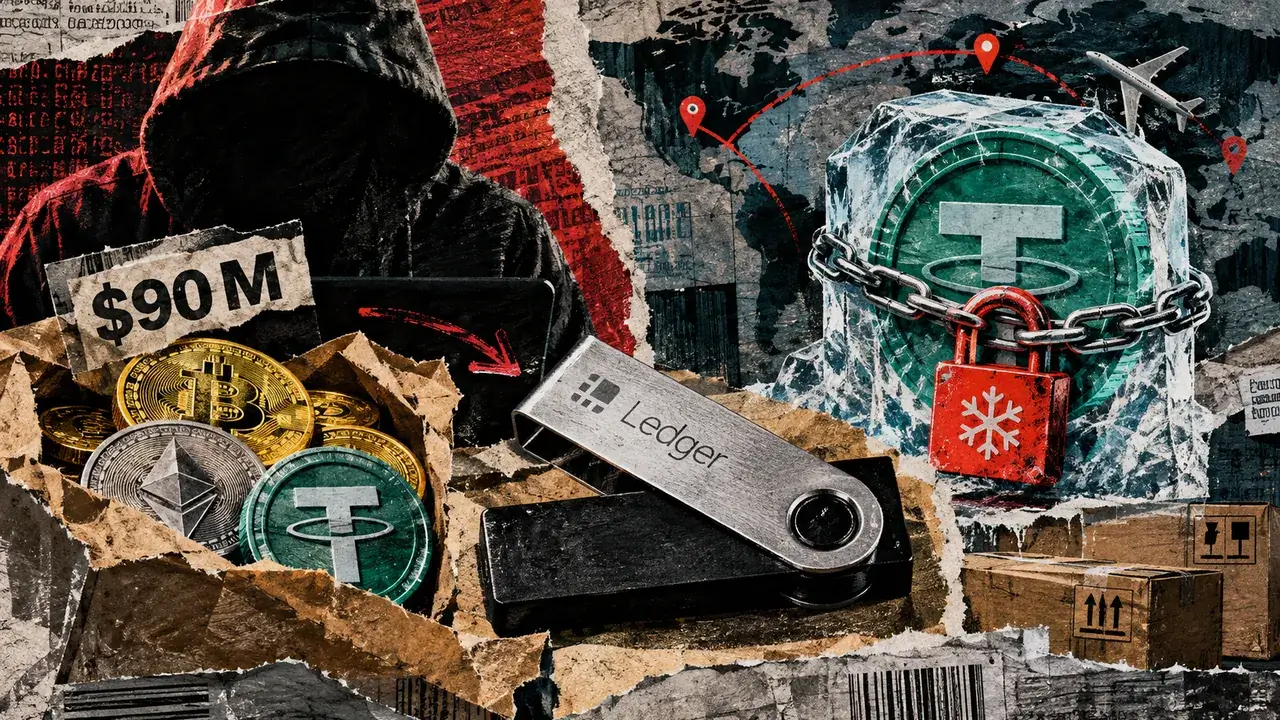
Ledger hack scare nears $90 million as Tether moves to freeze stolen USDT
Suspected Ledger wallet thefts are approaching $90 million as Tether freezes USDT stablecoin linked to the incident, according to...

MiCA rejection forces German crypto platform into operational overhaul
Bitcoin.de is rebuilding its operating model after German regulators rejected its MiCA authorization, forcing it to outsource trad...

A $1,000 MetaMask incident could turn Ethereum’s staking queue into a $5 billion traffic jam
MetaMask's precautionary validator exits are turning a roughly $1,000 reward diversion into a test of Ethereum's staking capacity....
Blockchain.com Seeks CFTC Approval for Prediction Markets, Crypto Derivatives
Blockchain.com is seeking regulatory approval to launch prediction markets and cryptocurrency derivatives trading in the United St...