Tether Freezes USDT In 131 TRON Wallets After OFAC Sanctions Update
Tether has again shown how much control stablecoin issuers can exercise when sanctioned wallets enter the picture. Following an updated OFAC action, USDT connected to 131 TRON addresses was frozen, putting stablecoin com...
Archive context
Older archive item. Useful for background and entity history, but not a fresh market-moving signal.

Tether has again shown how much control stablecoin issuers can exercise when sanctioned wallets enter the picture. Following an updated OFAC action, USDT connected to 131 TRON addresses was frozen, putting stablecoin compliance back at the center of the crypto policy debate.
The addresses were tied to a sanctions update involving crypto-linked funding networks. Chainalysis also published analysis of the action, noting the role of blockchain addresses in the enforcement trail.
For more details, visit the official OFAC platform.
TL;DR- USDT linked to 131 TRON wallets was frozen after an OFAC sanctions update.
- The broader identifier list included 134 crypto addresses, including Monero addresses.
- The action highlights how centralized stablecoin issuers can enforce blacklists directly at the token level.
The freeze is a reminder that major stablecoins are not neutral bearer assets in the same way as native coins like Bitcoin. Issuers such as Tether can block specific addresses from moving tokens when those wallets appear on sanctions lists or are linked to criminal-finance investigations.
That ability is often controversial inside crypto, but it is also one reason stablecoins have remained usable at scale across regulated exchanges, payment firms, and trading venues. The trade-off is clear: stablecoins offer speed and liquidity, but the issuer still has a compliance lever.
TRON’s Role Comes From Stablecoin VolumeTRON has become one of the most active networks for stablecoin transfers, especially USDT. That makes it a natural place for enforcement actions to show up when sanctions lists include crypto addresses.
The key point is scope. This does not mean TRON itself is sanctioned, nor does it mean every USDT user on the network is affected. The action concerns specific addresses identified in the sanctions process. For market participants, the wider takeaway is that stablecoin rails are increasingly part of traditional financial enforcement, not sitting outside it.
The Trade-Off Behind Stablecoin ScaleUSDT’s scale depends partly on its usefulness for fast dollar transfers. But the same scale means enforcement actions have market-wide visibility when an issuer freezes funds. Every blacklist update becomes a reminder that stablecoins sit between crypto infrastructure and the traditional financial system.
That is not necessarily bad for adoption. Institutions and payment firms often want assurance that issuers can respond to sanctions, hacks, and law-enforcement requests. Many crypto users, however, remain uncomfortable with the idea that an address can be blocked by issuer action.
The market is unlikely to resolve that tension soon. Stablecoins are too useful to ignore, and regulators are increasingly clear that issuers will be expected to police sanctioned activity where they can.
For traders, the market impact is usually indirect. Freezes like this do not necessarily move USDT’s peg or TRON’s price, but they do affect how exchanges, payment processors, and institutional desks think about stablecoin risk. Compliance capacity has become part of the product itself.
The cleaner takeaway is to treat this as a specific development inside Tether, not as a blanket prediction for the whole market. It gives readers a concrete data point to watch while keeping the limits of the story clear.
This report is based on information from OFAC’s SDN list materials and analysis from Chainalysis.
This article was written by the News Desk and edited by Samuel Rae.
Why this matters
Tether is showing up inside the Stablecoins theme, so this story is worth tracking for follow-through rather than treating it as a one-off headline.
Original source
Read on NewsBTCRelated market context
Tether signs MoU with Kazakhstan’s central bank to explore tenge stablecoins and tokenized assets
Kazakhstan's collaboration with Tether could enhance its fintech landscape, potentially boosting local currency integration in dig...

Securitize Teams With Korea’s LG CNS to Explore Tokenized Funds and Stablecoins
Securitize and Korean technology company LG CNS announced a strategic partnership, set out in a memorandum of understanding, aimed...

Polygon taps TRON’s $94 billion stablecoin supply for seamless cross-border transfers
Polygon said businesses can also move the world’s largest stablecoin USDT between TRON and EVM networks without connecting to a wa...

Tether Celebrates 12 Years, USD₮ Surpasses 700M Users
Key Takeaways: Tether marked the 12th anniversary of the world’s largest stablecoin by market cap, USD₮. The company claims that U...

Cardano News: CIP-0113 Upgrade Could Change ADA Future
Good news coming from The Cardano Foundation as it launched CIP-0113 on mainnet, giving issuers of regulated stablecoins, funds, a...
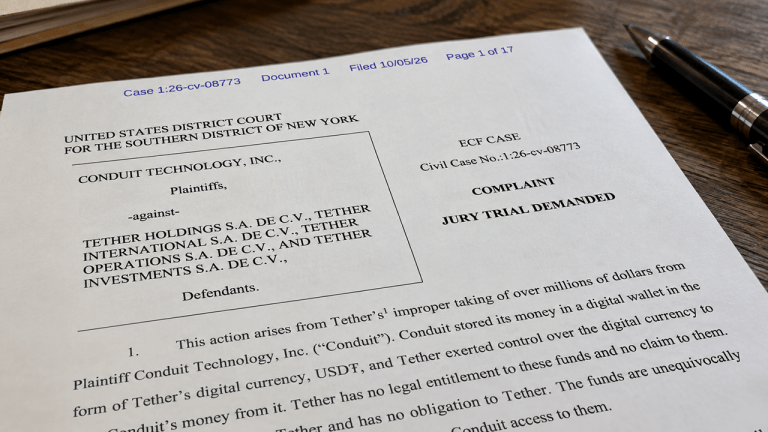
Conduit Sues Tether Over a $2.76M USDT Wallet Frozen for a Year
Conduit Technology has sued Tether after the stablecoin issuer froze $2.76 million in the company’s USDT and allegedly kept it loc...