US sanctions Iranian crypto exchange and its software developer over alleged IRGC Bitcoin transfers
The US sanctioned Iranian crypto exchange BitBank, widening its campaign against digital-asset infrastructure allegedly used to finance the Islamic Revolutionary Guard Corps (IRGC). On Sept. 17, the Treasury Department’s...
Archive context
Older archive item. Useful for background and entity history, but not a fresh market-moving signal.
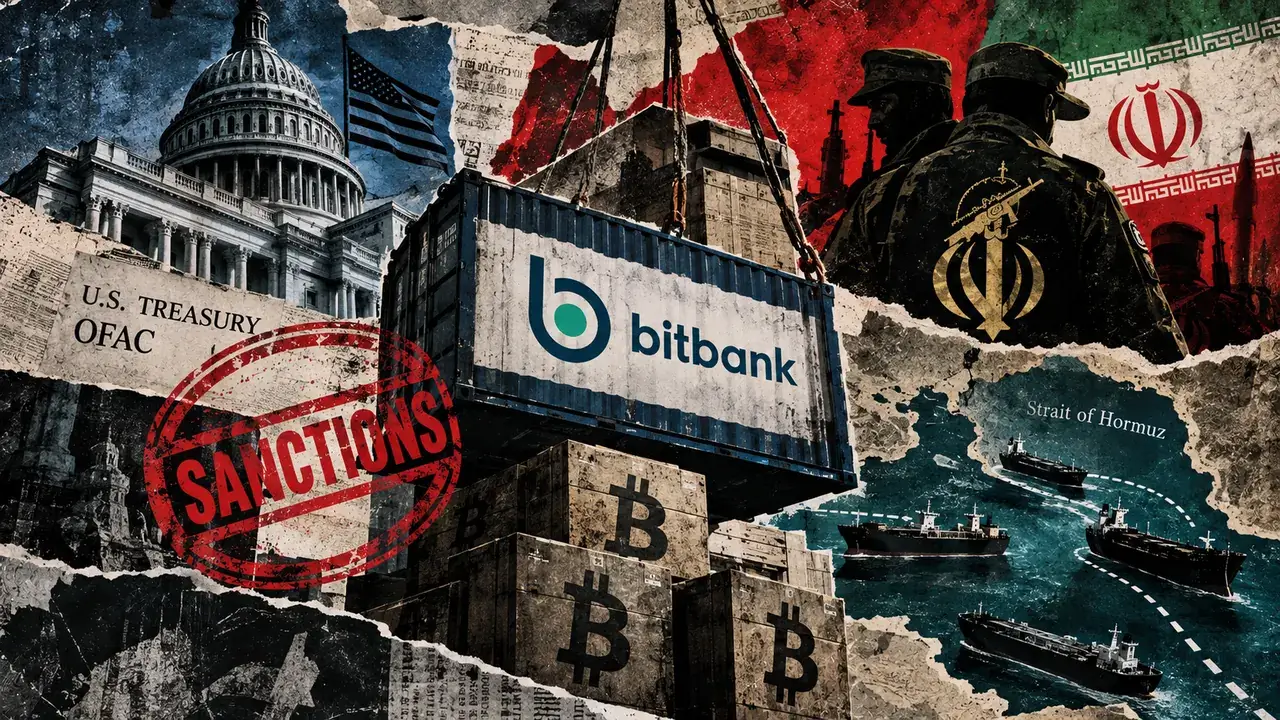
The US sanctioned Iranian crypto exchange BitBank, widening its campaign against digital-asset infrastructure allegedly used to finance the Islamic Revolutionary Guard Corps (IRGC).
On Sept. 17, the Treasury Department’s Office of Foreign Assets Control (OFAC) said that the sanctioned Iranian financier Babak Zanjani used BitBank between June and July to facilitate hundreds of millions of dollars in Bitcoin transfers to the IRGC.
Treasury also said Hormuz Safe Marine Services Authority, previously sanctioned over an alleged maritime-payment scheme in the Strait of Hormuz, had used the exchange since June to move receipts to the Iranian government.
The action reaches beyond BitBank to Pishtaz Simorgh Electronic Trade Company, which developed the exchange’s software, and three people tied to Zanjani’s broader corporate network. OFAC described the group as part of Iran’s digital-asset sanctions-evasion infrastructure and designated them under Executive Order 13902, which Treasury has expanded to cover Iran’s digital-asset sector.
Treasury Secretary Scott Bessent said the move demonstrates that crypto-based financing is “not beyond OFAC’s reach,” warning that parties supporting the Iranian government could also become sanctions targets.
The designations deepen Operation Economic Outcast, a campaign Treasury launched Aug. 24 to cut Iran off from financial channels used to move oil revenue, evade sanctions and fund the IRGC. The program also widened secondary-sanctions exposure for companies outside the US that continue doing business with targeted Iranian entities.
BitBank is the latest Iranian crypto platform swept into that effort. In June, OFAC sanctioned Nobitex, Wallex, Bitpin and Ramzinex as part of its earlier Economic Fury campaign. The pressure expanded again in August when OFAC designated Shelbit and Aban Tether.
Related Reading US sanctions exposed a $6.3 billion crypto pipeline linking Iran and RussiaThe accumulating designations show Washington increasingly treating Iranian crypto venues as parts of interconnected financing networks rather than isolated trading businesses.
Treasury follows Zanjani’s crypto network beyond the exchangeThe BitBank action pushes that strategy further by targeting the developers, executives, and corporate infrastructure Treasury says allowed Zanjani’s network to move funds.
Zanjani, a longtime Iranian businessman already under US sanctions, publicly promoted BitBank beginning in at least 2024, Treasury said. Several other companies tied to his sanctions-evasion network also listed the exchange as a partner.
Pishtaz Simorgh, BitBank’s software developer, is a subsidiary of Dot One Value Creation Group, which OFAC sanctioned in July as part of another action against Zanjani’s commercial network. Treasury said Dot One sits within a portfolio spanning financial services, digital assets, transportation and infrastructure that Zanjani used to obscure ownership and move money.
TRM Labs said the latest designations extend an investigation it began around Zedcex and Zedxion, two crypto exchanges sanctioned with Zanjani in January. The blockchain-intelligence firm said it initially identified about $1 billion in IRGC-linked activity tied to those platforms before broadening its analysis into the companies, payment systems and digital infrastructure surrounding them.
That work eventually mapped a wider ecosystem that included Dot One, ZedPay, transportation companies and other businesses subsequently targeted by Treasury in July. TRM said BitBank and Pishtaz Simorgh sit within that same network, alongside the MyDot social platform, DOTO digital asset and Dot One Smart Chain.
Zanjani's Extensive Network (Source: TRM Labs)The pattern gives investigators more targets than blockchain addresses alone. Corporate ownership, software development, payment relationships and executive control can connect entities that may otherwise appear separate on-chain.
Treasury’s inclusion of BitBank’s software company reflects that broader approach.
Mohammad Mahdi Zaker Hossein, chief executive of Pishtaz Simorgh and a Dot One manager, was sanctioned for acting on behalf of the software company. Seyed Adel Heidari, vice chairman of Dot One’s board, was designated for acting on behalf of Dot One.
Hossein Ali Zaker Hossein was sanctioned for acting for Zanjani. Treasury alleged he participated in much of Zanjani’s sanctions-evasion activity, including Iranian oil exports and digital-asset transactions, and brokered crypto transfers that ultimately reached the IRGC.
The post US sanctions Iranian crypto exchange and its software developer over alleged IRGC Bitcoin transfers appeared first on CryptoSlate.
Why this matters
Bitcoin is showing up inside the Institutional Adoption theme, so this story is worth tracking for follow-through rather than treating it as a one-off headline.
Original source
Read on CryptoSlateRelated market context

Circle’s USDC overtakes Tether’s USDT in euro trading as MiCA rules reshape market
MiCA's regulatory framework reshapes the stablecoin market, favoring compliant tokens like USDC, impacting trading dynamics and li...

RWA WEEK Singapore 2026 Brings Together Institutional Finance and Digital Asset Leaders as Tokenization Moves Toward Mainstream Adoption
Singapore, October 2026 — RWA WEEK Singapore 2026 has successfully concluded, bringing together institutional investors, financial...
Monad Wins a Stablecoin Card Infrastructure Deal With Reap and Meru
TL;DR: Reap announced on October 26 that it would add the Monad blockchain to its stablecoin-linked card infrastructure, with Lati...

Ripple Pushes RLUSD Into 24/7 Corporate Cash With AI Treasury Platform Expansion
Key Takeaways: Ripple Treasury introduced Returns 24/7, a program that lets qualified businesses get back 24/7 on their qualifying...
Ripple Prime Brings Round-the-Clock RWA Swaps Into Institutional Trading
TL;DR: Ripple Prime says eligible institutional clients can trade perpetual swaps referencing more than 100 traditional markets th...

Robinhood adopts Ripple’s RLUSD stablecoin, boosting institutional operations
Robinhood's adoption of RLUSD may drive institutional interest, potentially boosting Ripple's ecosystem and influencing future mar...