US Senator: China’s Digital Currency Could Subvert US Sanctions, Enhance Surveillance Capabilities
A U.S. senator has warned about China’s central bank digital currency. “Analysts have raised the eCNY’s potential to subvert U.S. sanctions, facilitate illicit money flows, enhance China’s surveillance capabilities, and...
Archive context
Older archive item. Useful for background and entity history, but not a fresh market-moving signal.
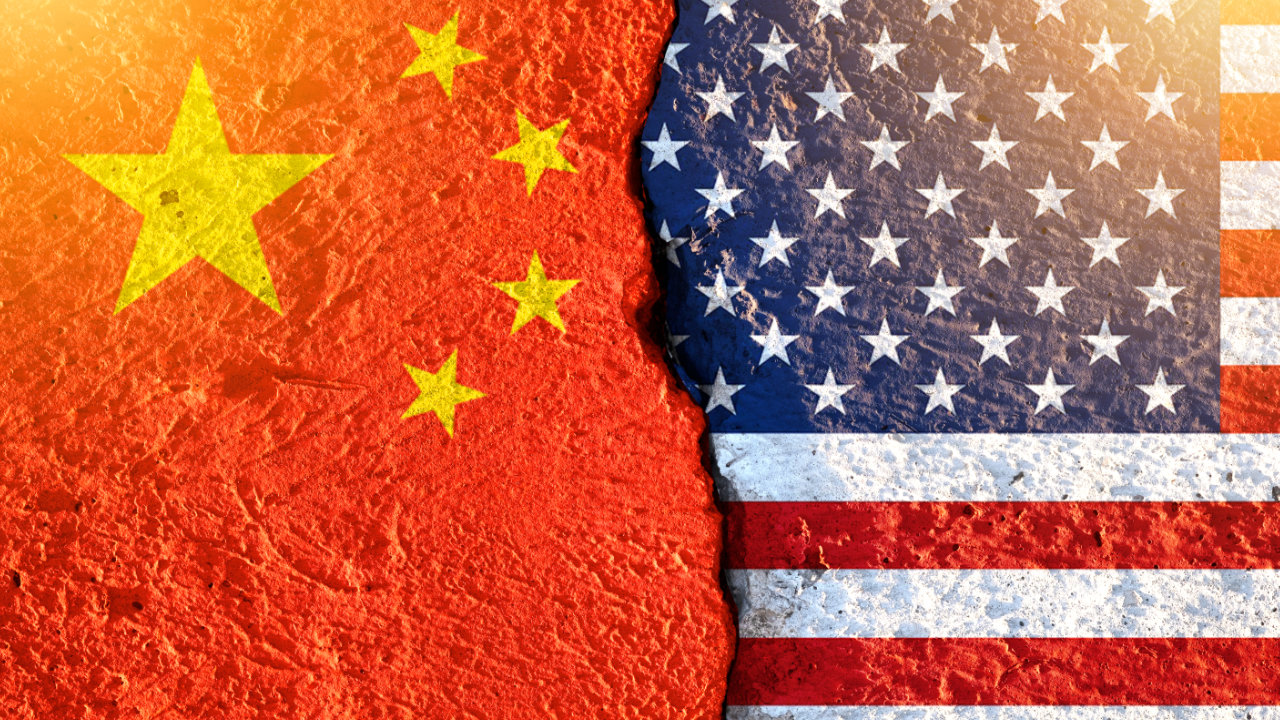
A U.S. senator has warned about China’s central bank digital currency. “Analysts have raised the eCNY’s potential to subvert U.S. sanctions, facilitate illicit money flows, enhance China’s surveillance capabilities, and provide Beijing with ‘first mover’ advantages,” the senator informed Treasury Secretary Janet Yellen.
U.S. Senator Pat Toomey sent a letter to Treasury Secretary Janet Yellen and Secretary of State Tony Blinken last week raising concerns about China’s central bank digital currency, the digital yuan.
“I write to request your engagement on a momentous development in Beijing this week: the rollout of the world’s first major central bank digital currency (CBDC) to a foreign audience,” he told Yellen and Blinken.
“While the United States is still evaluating the concept of a digital dollar, China is using the Beijing Winter Olympics as an international test for the digital yuan (eCNY), which has been piloted domestically since 2019,” the lawmaker from Pennsylvania described, elaborating:
Analysts have raised the eCNY’s potential to subvert U.S. sanctions, facilitate illicit money flows, enhance China’s surveillance capabilities, and provide Beijing with ‘first mover’ advantages, such as setting standards in cross-border digital payments.
The senator noted that “Beijing has also launched the first state-backed global distributed ledger infrastructure, the Blockchain-based Services Network (BSN).”
Furthermore, Senator Toomey commented on China’s cryptocurrency crackdown, stating: “China’s crackdown presents an opportunity for the United States to be the forerunner of crypto innovation, grounded in individual freedom, and other American and democratic principles.”
The senator continued:
Given the prospective threat to U.S. economic and national security interests, I request that the Treasury and State Departments closely examine Beijing’s CBDC rollout during the Olympic Games.
Senator Toomey also requested information on nine areas to be provided to his office by March 7.
They include how the digital yuan was distributed, strategies employed to advance eCNY adoption by Chinese and non-Chinese persons, eCNY adoption rate by foreigners, total issuance of the eCNY after the Olympic Games, lessons for the U.S. government, and possible challenges to U.S. interests.
In January, China’s central bank, the People’s Bank of China (PBOC), revealed that the digital yuan now has more than 261 million users, and transactions worth almost $14 billion have been made using the central bank digital currency. Last week, China designated 15 national pilot zones and 164 entities for blockchain projects.
Do you agree with Senator Toomey? Let us know in the comments section below.
Why this matters
This security story adds another data point to the current market tape and is useful when read alongside nearby source coverage.
Original source
Read on Bitcoin NewsRelated market context

Tether signs MoU with Kazakhstan’s central bank to explore tenge stablecoins and tokenized assets
Kazakhstan's collaboration with Tether could enhance its fintech landscape, potentially boosting local currency integration in dig...

Tether Signs Deal With Kazakhstan's Central Bank to Explore a Stablecoin and Tokenized Assets
Tether, issuer of the USDT stablecoin, will help Kazakhstan's central bank study a tenge-pegged token and put real-world assets on...

Tether tapped by Kazakhstan’s central bank to explore stablecoin and tokenization
The National Bank of Kazakhstan said it will study a local currency-linked stablecoin and tokenized real-world assets with Tether.
Russia’s Sberbank Given Green Light to Custody Bitcoin
Bitcoin Magazine Russia’s Sberbank Given Green Light to Custody Bitcoin Russia’s largest bank has announced it is the first in the...

Non-Custodial Crypto Exchanges: How Self-Custody Is Changing the Way Users Swap Digital Assets
For many users, the distinction comes down to custody. A centralized platform may hold assets on behalf of its customers, while a...

Chainlink’s Sergey Nazarov discusses digital assets and AI at Sibos 2026
The shift towards tokenized deposit chains by banks signifies a move from experimentation to infrastructure ownership, necessitati...