US Treasury Secretary Janet Yellen Acknowledges Sanctions Weaponization Could Hurt Dollar Hegemony
U.S. Treasury Secretary Janet Yellen talked about the dangers that sanctions based on the U.S. dollar might pose for the hegemony of the currency in international markets. According to Yellen, the government tries to use...
Archive context
Older archive item. Useful for background and entity history, but not a fresh market-moving signal.
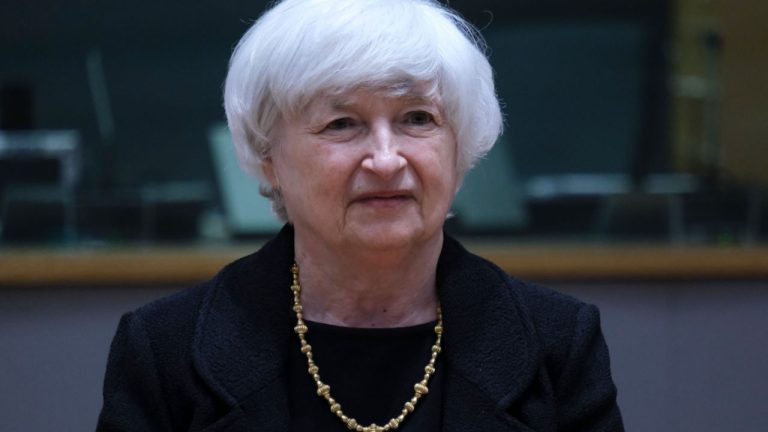
U.S. Treasury Secretary Janet Yellen talked about the dangers that sanctions based on the U.S. dollar might pose for the hegemony of the currency in international markets. According to Yellen, the government tries to use sanctions “judiciously,” as they can create a desire to find alternatives to the U.S. dollar.
U.S. Treasury Secretary Yellen Talks Dangers of Dollar WeaponizationJanet Yellen, Treasury Secretary of the United States, has referred to the possible effects that continued use of sanctions could exert on the hegemony of the U.S. dollar in international markets. In an interview reviewed by Reuters, Yelled acknowledged that such a danger does exist in the long term.
On the issue, she stated:
So, there is a risk when we use financial sanctions that are linked to the role of the dollar, that over time it could undermine the hegemony of the dollar, as you said. But this is an extremely important tool we try to use judiciously.
Yellen recognizes that such sanctions push countries like China and Russia to seek alternatives to the U.S. dollar, in order to conduct trades even when affected by these sanctions. However, she also explained that this is no easy task due to the unique traits of the dollar. Yellen expanded on this, declaring:
We haven’t seen any other country that has the basic infrastructure – institutional infrastructure – that would enable its currency to serve the world like this.
This is the same conclusion that a report from the Bank of Russia, titled “Review of the Russian Financial Sector and Financial Instruments” reached, stating that substituting the U.S. dollar will be difficult due to the current structure of foreign trade.
Sanctioned Countries Seek AlternativesEven with all the difficulties, countries with individuals and entities sanctioned by the Office of Foreign Asset Control (OFAC) like China, Russia, and Iran, are starting to develop integration policies that allow them to conduct trade away from the U.S. dollar.
China and Russia have already started to conduct settlement transactions using the Chinese yuan, leveraging specially designated banks as clearing entities to facilitate these payments. In his recent visit to China, Brazilian President Luiz Inacio ‘Lula’ da Silva called for developing nations to abandon the U.S. dollar and for BRICS to establish a new currency.
The insurance of a BRICS currency will be debated at the next BRICS summit, which will be held in South Africa in August, according to statements from a Russian State Duma official. Russia and Iran are also finalizing an agreement to deepen their trade collaboration, avoiding the crippling sanctions that the U.S. has enacted against them.
What do you think about U.S. Treasury Secretary Yellen’s stance on sanctions and the future of the U.S. dollar? Tell us in the comment section below.
Why this matters
This security story adds another data point to the current market tape and is useful when read alongside nearby source coverage.
Original source
Read on Bitcoin NewsRelated market context

UK sanctions crypto platforms suspected of supporting Russian financial networks
The UK sanctioned Cryptomus, Heleket and TokenSpot in a Russia sanctions package, with TRM Labs identifying links to Grinex and Ga...

Strategy Sets October 29 Date For Its Next Major Bitcoin Treasury Update
TL;DR: Strategy will report third-quarter 2026 results after US markets close on October 29 and hold a live webinar at 5 p.m. East...
UK sanctions crypto payment processors Cryptomus, Heleket, and exchange TokenSpot
The UK's sanctions highlight the increasing scrutiny on crypto's role in evading financial restrictions, impacting global complian...

China’s P2P stablecoin wallets surge 43x, Korea’s $450B crypto economy: Asia Express
Despite ongoing bans, China has seen a big surge in peer-to-peer stablecoin use. New figures show South Korea’s $450B crypto econo...

Sui’s Hashi Bitcoin Finance Network Launches With More Than $500 Million Committed
TL;DR: Hashi, Sui’s native Bitcoin finance infrastructure, will begin a phased mainnet rollout later this month with more than $50...

Coinbase And Samsung Bring USDC Directly Into Samsung Wallet
TL;DR: Coinbase is powering USDC inside Samsung Wallet, with the stablecoin feature due to reach 82 million compatible Galaxy devi...