DIY Bitcoin Nodes — A Project Anyone Can Do
Almost anyone can use one of these DIY Bitcoin node projects to participate in securing the network and to learn more about Bitcoin.This is an opinion editorial by Anthony Feliciano, a Bitcoin event organizer and Bitcoin...
Archive context
Older archive item. Useful for background and entity history, but not a fresh market-moving signal.

Almost anyone can use one of these DIY Bitcoin node projects to participate in securing the network and to learn more about Bitcoin.
This is an opinion editorial by Anthony Feliciano, a Bitcoin event organizer and Bitcoin Magazine contributor.
If you were one of the many thousands that attended or watched the livestream of Bitcoin 2022, then right about now the euphoric energy is starting to drop. There were so many great discussions covering home mining, running a node, the Lightning Network, payment systems and adoption — it felt like the big topics were being hit on constantly. Now if this is your first time down the rabbit hole it can seem overwhelming as well as exciting. You may be wondering, where do I start? Maybe home mining is a little too difficult for your skillset at the moment or cost prohibitive, but what about building your own node? Many people new to the Bitcoin space confuse bitcoin mining with running a node; however it is a completely separate process.
Home mining requires a lot of capital to purchase the necessary miners — as this one example shows — to operate an at-home process. There are many companies out there that provide home and/or work solutions such as Upstream Data. Also, here’s an example of the fun you can have with home mining if you wish to make the jump in feet first: “How To Heat Your Home With Bitcoin Mining.”
In contrast, building a DIY Bitcoin node at home can be achieved with just a few hundred dollars in hardware, a few days' time and no hammering of your thumb or excessive swearing.
If you didn't have the chance to catch this presentation on Bitcoin and Lightning, then I suggest you give this a watch.
Let's say you decide you want to participate in securing the Bitcoin blockchain by running your own node. Where do you start and what software project do you decide to go with? I'll mention a few projects out there and you can decide based on which suits your needs. These projects have a lot of overlapping services, so give each a lookover and decide based on your skillset that suits your needs.
RaspiBlitzThis is near and dear to my heart. This was a project I discovered four years ago. It has the look and feel that reminds me of green terminals back in the day. This isn't a knock on the RaspiBlitz project. Their approach is just different — they integrate services, you pick a service from the menu, do some command line code, and you are off and running. No bells and whistles, it just works. So, if you can look past the Skynet UI, or you’re an old dev who misses that look then give this project a try. All the services and features, as well as approximate hardware cost can be found on their GitHub repository in the link above.
Start9This is another node provider. Their EmbassyOS suite is fantastic in terms of the services offered and has a slick design. With Start9, you have a couple of options — you can get a custom prebuilt device found at the Start9 store or you can BYOH (bring your own hardware) and purchase their OS found in this DIY guide.
UmbrelThis is another neat project. They also have similar overlapping services as the two mentioned above. Umbrel offers a DIY on a Raspberry Pi, and has a friendly UI/UX experience that many are already accustomed to. Their look, their feel, as well as user experience is great.
VoltageNow this project is different from the others mentioned above. This project does all the heavy lifting inside a cloud service, so this way you don't have to buy hardware or be your own IT support when hardware fails. This is a “no hardware / no fuss” setup, just log in to your dashboard and manage your node. Pick the services you need, and you are on your way, pretty simple and easy.
This is a call to action to the people out there who have been sitting on the sidelines pondering the question, “Do I build a Bitcoin node or not?” Do it already. With the exception of Voltage, building a DIY Bitcoin node can vary on price based on the hardware. I would suggest budgeting $350 aside to cover hardware costs. These four projects I mentioned are just a handful of the many more out there that I didn't talk about. They all have similar services and features. Don't get hung up on the technical nuances of all the DIY projects. Pick one and do it already. Once you dig into the DIY Bitcoin node rabbit hole I guarantee you, your self-sovereign Bitcoin life will change forever.
This is a guest post by Anthony Feliciano. Opinions expressed are entirely their own and do not necessarily reflect those of BTC Inc or Bitcoin Magazine.
Why this matters
This bitcoin story adds another data point to the current market tape and is useful when read alongside nearby source coverage.
Original source
Read on Bitcoin MagazineRelated market context

Luxor’s reported 6–13% annualized Bitcoin yield depends on mining delivery
Luxor, a Bitcoin mining derivatives provider, reported a 6–13% annualized Bitcoin financing spread in its September lookback, publ...

Ethereum Price Prediction: Is Tom Lee’s $25K ETH Target Too Ambitious?
Tom Lee’s $10,000 Ethereum price prediction implies a 1000% move from ETH’s current price at around $2,500. BitMine’s accumulation...
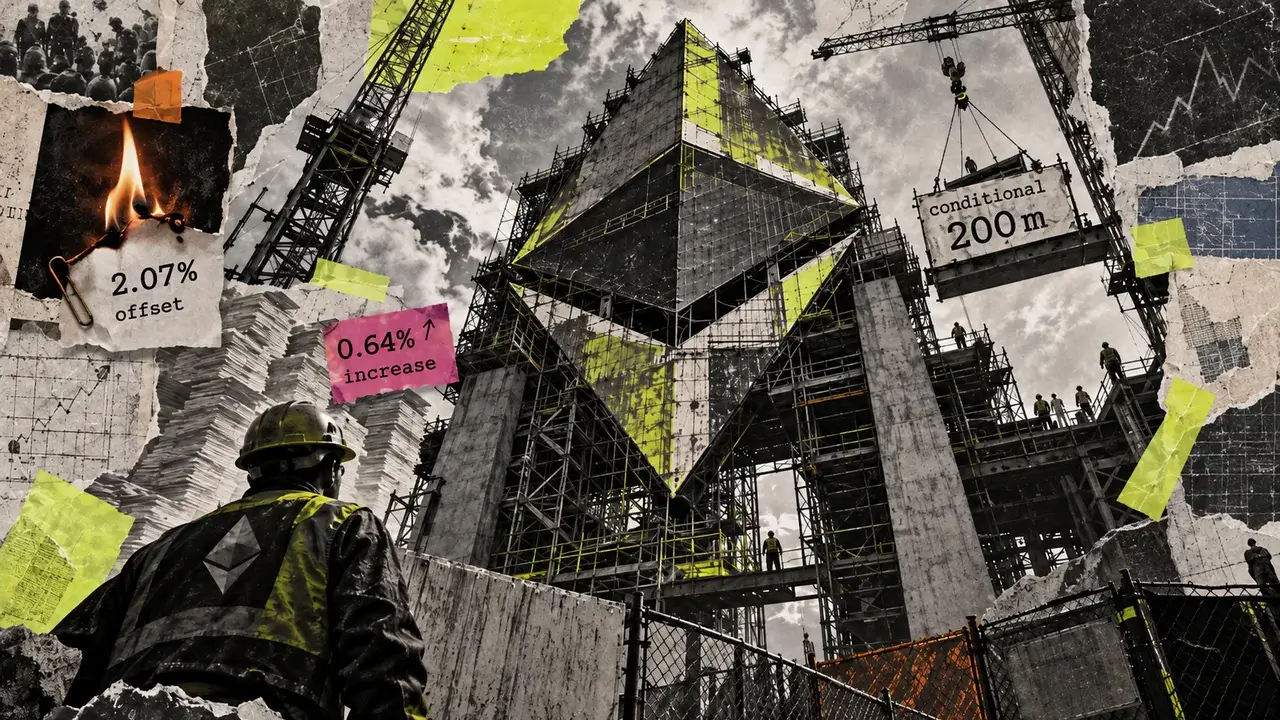
ETH fee burns cover just 2% of new coins printed in 2026
Ethereum's transaction fees have burned enough ETH to offset just 2.07% of the new coins issued in 2026, according to an Oct. 9 su...

What Is Crypto Spot Trading?
For example, a token can be up 70% and still be a terrible trade if you have no idea when to take profits. Likewise, a 30% dip can...
Here’s How Not To Screw up Your Bitcoin Privacy
Bitcoin Magazine Here’s How Not To Screw up Your Bitcoin Privacy Just one transaction can compromise years of discreet Bitcoin act...

Too Big to Supervise at Home: EU Limits Direct ESMA Rule to Crypto Giants
EU member states have rejected plans to put every digital-asset firm under direct ESMA supervision, drawing a line that leaves mos...