Why Bitcoin, Nasdaq, AI Stocks, and Chips Move Together? The Liquidity Machine Explained
Bitcoin can fall alongside Nvidia, and Nasdaq can rally while Ethereum follows. Semiconductor stocks can plunge as investors reassess AI spending, dragging crypto sentiment down with them. These markets appear to have li...
Watchlist
Published in the last two hours. Multiple named entities are involved.

Bitcoin can fall alongside Nvidia, and Nasdaq can rally while Ethereum follows. Semiconductor stocks can plunge as investors reassess AI spending, dragging crypto sentiment down with them. These markets appear to have little in common. Bitcoin was designed outside traditional banking, while chipmakers supply the infrastructure powering artificial intelligence.
Yet they increasingly respond to the same financial force: liquidity.
The Federal Reserve, US Treasury, Wall Street, and institutional investors form a financial network connecting these seemingly unrelated markets. Understanding that network explains why everything from Bitcoin and Ethereum to Nvidia, TSMC, and AI infrastructure can move together.
Bitcoin (BTC)24h7d30d1yAll timeThe Federal Reserve Controls the Financial WeatherThe Federal Reserve sits near the center of this relationship. Its interest rate decisions influence borrowing costs, bond yields, financing conditions, and investor appetite for risk.
When interest rates fall, investors generally become more comfortable holding riskier assets. Cheaper financing can support technology valuations, speculative investments, and crypto demand. When rates rise, the opposite can happen. Investors reassess expensive valuations, reduce leverage, and move toward safer assets.
Quantitative tightening adds another layer, and here’s why: the Fed reduces its balance sheet, and Treasury securities return to private investors. This can reduce available reserves and put pressure on short-term funding markets.
The US Treasury also influences liquidity through government borrowing and its Treasury General Account. Large changes in government cash balances can affect money circulating through the banking system.
Banks, money-market funds, hedge funds and primary dealers connect these policies to financial markets. Repo financing, Treasury yields and institutional funding costs help determine how much capital investors can deploy.
The Federal Reserve’s August 2026 research examined these connections directly. It found that Treasury issuance and dealer holdings can put upward pressure on repo rates.
“The overnight Treasury repo market is one of the most important funding markets in the world. It sees more than $8 trillion in daily trading volume and plays a vital role in broader Treasury market liquidity and price discovery.3 Repo rates also determine the secured overnight financing rate (SOFR)—now the primary reference rate for trillions of dollars of financial contracts—thereby affecting broader financial conditions.” – Fed’s Research
This is why Bitcoin does not need a Federal Reserve policy change to affect its network. A change in financing conditions can influence investors holding Bitcoin, Nasdaq stocks, and other risky assets simultaneously.
Discover: The Best Token Presales
AI, Data Centers and Chips Are Feeding the Same Capital MachineArtificial intelligence has created one of the largest investment cycles in modern technology. But the boom extends far beyond software companies. Nvidia supplies GPUs powering AI infrastructure. AMD competes in accelerated computing, while Broadcom supplies networking and custom silicon.
TSMC manufactures advanced chips used across the industry. ASML supplies the lithography equipment needed to produce increasingly sophisticated semiconductors. Samsung and Intel also compete across memory, manufacturing and chip technology. These companies sit at the beginning of an enormous infrastructure spending cycle.
Microsoft, Amazon, Alphabet, Meta and Oracle are investing heavily in data centers, cloud computing, power infrastructure and AI capacity. This spending requires capital from multiple sources. Companies issue bonds, borrow from banks, tap private credit and use operating cash flows to finance expansion.
Reuters reported on November 6 that US investment-grade corporate bond issuance reached $1.88 trillion through November 4. Amazon, Alphabet, Meta, Microsoft and Oracle raised more than $370.7 billion as they financed AI and data-center investment.
Goldman Sachs expects bonds to fund 35% of hyperscalers’ capital expenditure in 2027. The consequences extend across financial markets. Investors buying AI-related stocks, semiconductor shares and corporate bonds must constantly reassess financing costs and expected returns.
Equity capital will continue to play a supporting role in funding the AI investment boom in 2027.
Hyperscalers and other AI infrastructure companies accounted for roughly $65 billion in follow-on issuance (post-IPO equity offerings) this year, around 45% of the US total.
In… https://t.co/O9UBnu9S1Z pic.twitter.com/jsBX59xJnw
When investors question AI valuations or the profitability of massive data-center investments, Nvidia, AMD, Broadcom and their customers can face selling pressure.
That same risk-off sentiment can reach Bitcoin, Ethereum and speculative altcoins. Hedge funds and institutional investors may reduce exposure across several asset classes simultaneously.
The connection is not that Bitcoin depends on Nvidia’s earnings. Both markets are exposed to changes in capital availability, leverage, and investor confidence.
Wall Street Is Connecting Crypto to Traditional Finance, From Nasdaq to BitcoinInstitutional adoption has fundamentally changed how crypto like Bitcoin markets interact with traditional finance like Nasdaq. BlackRock, Fidelity, JPMorgan, Goldman Sachs, and other financial institutions now participate in digital asset markets through investment products, custody, trading, and infrastructure.
Spot Bitcoin ETFs have created another channel between traditional portfolios and crypto prices. When institutional investors adjust their allocations, those flows can influence Bitcoin demand.
Meanwhile, stablecoins connect crypto directly to traditional money markets. Tether and Circle issue dollar-backed stablecoins supported by reserve assets, including US Treasury securities. Their growing importance creates another link between government debt markets and crypto liquidity.
BREAKING: The total circulating supply of onchain tokenized equities surged by +$932 million last week, the biggest weekly jump on record.
This puts total supply above $4.7 billion, also a fresh record high.
Amid the US Midterm elections and the resulting volatility, tokenized… pic.twitter.com/nkAMG23PJv
Tokenized stocks and Treasury products push this integration further. The SEC issued guidance on tokenized securities in January 2026, clarifying how existing securities laws apply to blockchain-based ownership structures. In September, it also introduced temporary conditional exemptions facilitating certain tokenized stock trading venues.
The Depository Trust and Clearing Corporation (DTCC) is another important player in modernizing securities infrastructure through tokenization. Coinbase, Binance, and other crypto exchanges provide additional trading infrastructure connecting digital assets with global capital.
The irony is difficult to ignore. Bitcoin was created after the 2008 financial crisis as an alternative to central banks and traditional monetary systems. Yet its growing institutional ownership has exposed its market price to many of the same forces driving Wall Street.
Bitcoin, Nasdaq, and The Liquidity Machine Have One Big TestThe important gap is between Bitcoin’s technology and its financial market behavior. Bitcoin’s decentralized network still operates independently of the Federal Reserve. Its supply schedule does not change when Nvidia rallies or Treasury yields increase.
However, its market price is increasingly influenced by institutional positioning, leverage, ETF flows, and global risk appetite.
CME Group research found Bitcoin’s correlation with the Nasdaq-100 increased from virtually zero during 2014–2019 to 0.42 during 2020–2022. Its correlation remained around 0.30 between 2023 and April 2025. CME research also found crypto assets sometimes reached correlations of 0.35–0.60 with the Nasdaq during 2025 and early 2026.
This does not mean Bitcoin has become another technology stock. Correlation measures price behavior, not the underlying purpose or value of an asset.
But it raises an important question about Bitcoin’s original mission:
If Bitcoin rises when Wall Street has abundant liquidity and falls when institutional investors reduce risk, how independent is its market value from traditional finance?
Discover: The Crypto Presales This Q4 2026
The post Why Bitcoin, Nasdaq, AI Stocks, and Chips Move Together? The Liquidity Machine Explained appeared first on Cryptonews.
Why this matters
Bitcoin is showing up inside the Stablecoins theme, so this story is worth tracking for follow-through rather than treating it as a one-off headline.
Original source
Read on CryptonewsRelated market context

Coinbase Wins Federal Trust Charter, Launching National Trust Company
Key Takeaways: The OCC granted Coinbase final approval to form Coinbase National Trust Company. The federal charter confers on a u...

PNC and Coinbase Launch USDC Payments Pilot: What Changes for Businesses?
PNC’s USDC payments pilot offers a practical version of crypto adoption: a business can receive a stablecoin payment and end up wi...
Ether ETFs Shed $184.6M in a Day as BlackRock Leads Redemptions
The latest numbers from US spot Ether exchange-traded funds are another reminder that crypto’s institutional wrappers do not alway...

Binance Freezes Out MEXC Four Weeks Before U.S. Transfer Ban Applies
Binance announced Tuesday that it is refusing to move money to or from the crypto exchange MEXC and its affiliated companies. The...

Goldman, Citi and Other Banks Reportedly Fund $270 Million Stablecoin Initiative
The stablecoin venture that 21 financial firms unveiled in September has about $270 million in commitments from its backers, with...
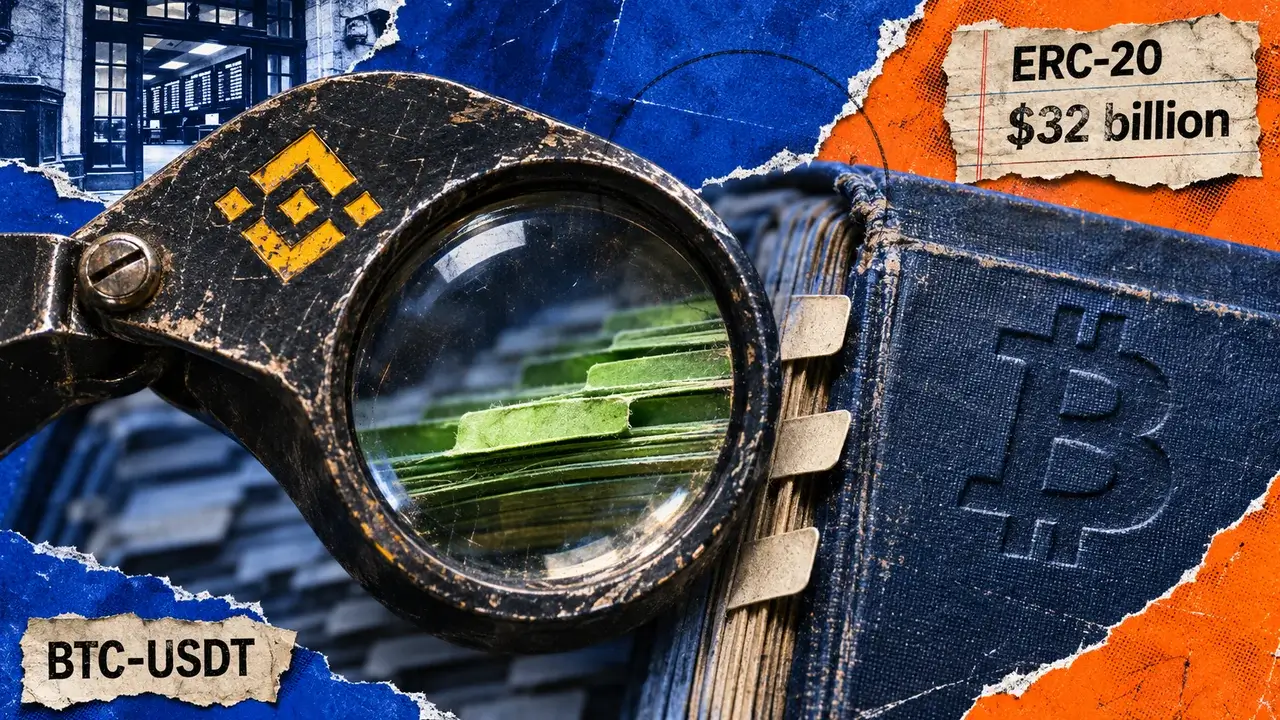
Any Bitcoin recovery faces a cash problem as Binance’s stablecoins fall to $32 billion
Binance showed greater nearby Bitcoin buy-order value than OKX in one November 10 sample, leaving persistent liquidity unproven. R...