Can Stronger Regulation Secure the Long Term Future of Stablecoins?
Stablecoin Interoperability: Challenges and SolutionsStablecoins, a form of digital currency pegged to a stable asset such as the U.S. dollar, have the potential to revolutionize the financial ecosystem. As major banks a...
Archive context
Older archive item. Useful for background and entity history, but not a fresh market-moving signal.
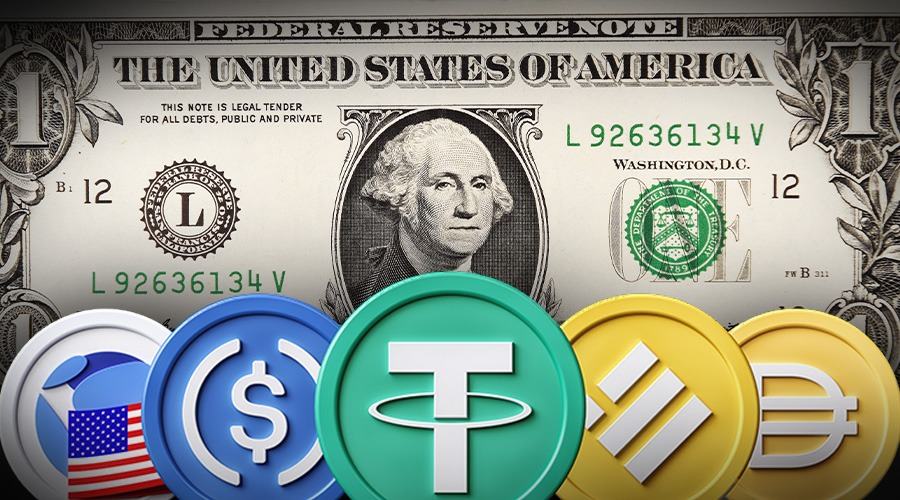
Stablecoin Interoperability: Challenges and Solutions
Stablecoins, a form of digital currency pegged to a stable asset such as the U.S. dollar, have the potential to revolutionize the financial ecosystem. As major banks and financial institutions begin to launch their stablecoins or tokenized deposit systems, the future of stablecoins is closely tied to interoperability.
However, due to the market's competitive nature, there is unlikely to be interoperability between these different stablecoins. This lack of interoperability also extends to DeFi and bank-issued stablecoins, as banks aim to advance the tokenization of their products. In the long run, the same way solutions such as decentralized exchanges or cross-chain interoperability protocols serve DeFi the same may emerge to provide interoperability between stablecoins. As the market matures, large players may also be acquisitions of smaller stablecoin issuers, consolidating the market and making it easier for users to move between different stablecoins and platforms.
Overcoming Regulatory Hurdles
The emergence of stablecoins has the potential to significantly transform the financial landscape. However, there are currently significant challenges related to regulation that need to be addressed. Policymaking surrounding stablecoins is often uncertain, which has led many major institutions to take a wait-and-see approach until regulators provide clear guidelines. It is important to note that strict regulation is not necessarily the answer to these challenges. Instead, what is needed is a comprehensive framework that addresses specific concerns and issues surrounding stablecoins. This will provide a sense of certainty and stability to the market, which, in turn, will attract more institutional players and investors. Blockchain technology can play a key role in this process by providing greater transparency and traceability, which can aid in regulatory compliance. By addressing these regulatory challenges and providing a clear framework for stablecoins, we can unlock their full potential and revolutionize the financial ecosystem.
Watch the recent FMLS22 session on "Forex and Crypto Trends 2023."
Stablecoins Contradictions in the World of Cryptocurrency
The current stablecoin market goes against the foundational principles of cryptocurrencies. Most stablecoins lack clear obligations and collateral, which makes it necessary for the public to put their trust in the issuer as no infrastructure can be independently verified. This undercuts the fundamental tenet of cryptography, "Verify, Don’t Trust." Additionally, most stablecoins suffer from severe centralization problems, with centralized exchange partners, custodians, and investment decisions. This violates another fundamental, which is decentralization. Stablecoin issuers also rely on their risk and compliance, and often those of exchanges, to issue their stablecoin. Many of them will have users onboard through their platform or their exchange platform, requiring issuance to their custody on their terms, which often come with lock-ups restricting withdrawals, undermining the principle of "not your keys, not your coins," another core principle of crypto.
Ensuring Stability for Stablecoins
To ensure the stability of the market and protect the interests of investors, regulators need to provide clear guidance and oversight for the stablecoin market. It's also important for stablecoin issuers to be transparent and accountable in their operations by providing clear information about the assets that back the stablecoin, the methods used to maintain its stability, and any risks associated with the stablecoin. They should also adhere to crypto principles, such as decentralization, transparency, and security. This will help to build trust in the stablecoin among users and investors. Only then can stablecoins truly revolutionize the financial ecosystem and provide the benefits of instant, low-cost transactions and increased transparency to users.
Bradley Allgood is the CEO & Co-Founder of Fluent Finance
This article was written by Bradley Allgood at www.financemagnates.com.Why this matters
This cryptocurrency story adds another data point to the current market tape and is useful when read alongside nearby source coverage.
Original source
Read on Finance MagnatesRelated market context

XRP News: Ripple Challenges Wall Street for a Slice of $256B ETF Market
The U.S. leveraged ETF market has 593 funds and more than $256 billion in assets, including XRP, and Ripple Prime is making itself...

XRPL’s $1.34 billion stablecoin base doesn’t tell us how much XRP users need
Tracked stablecoins on the XRP Ledger totaled $1.338 billion on Oct. 7. For XRP holders, the critical question is how much activit...

Base creator Jesse Pollak says equities and non-dollar stablecoins will lead upcoming ‘tokenization supercycle’
Coinbase launched tokenized stocks on Base six weeks ago, with about $70 million to $100 million in daily volume, according to Pol...

Base creator predicts tokenization supercycle led by equities, non-dollar stablecoins
The predicted tokenization supercycle could reshape financial markets, influencing Base's strategic direction and broader crypto a...

EU Securities Regulator Wants Crypto Platforms to Wind Down Non-MiCA Stablecoin Services
The European Securities and Markets Authority (ESMA) issued an opinion dated Oct. 8 saying licensed crypto platforms should stop s...

Sui’s Hashi Launches With $500M to Turn Bitcoin Into Productive DeFi Collateral Markets
Key Takeaways: With more than $500 million in locked-in tokens, Hashi will launch its phased mainnet launch. The protocol enables...