Coinbase Ireland Hit With €3.25 Million Regulatory Penalty
TL;DR: The Central Bank of Ireland announced on October 22 that it had fined Coinbase Ireland Limited €3,252,618 for breaches of safeguarding and outsourcing obligations between November 2020 and August 2025. Readers sho...
Watchlist
Published in the last two hours. A tracked entity is involved.
TL;DR: The Central Bank of Ireland announced on October 22 that it had fined Coinbase Ireland Limited €3,252,618 for breaches of safeguarding and outsourcing obligations between November 2020 and August 2025. Readers should consult the Central Bank’s detailed statement and subsequent court confirmation when assessing the outcome.
The latest development in Irish’s corner of the digital-asset market is worth examining beyond the headline. A 2026-10-22 announcement describes a concrete change, but the investment consequences will depend on how it works in practice. The original record is available in the original company statement; here is what it establishes, why the distinction matters and what remains unproven.
What the source actually saysThe Central Bank of Ireland announced on October 22 that it had fined Coinbase Ireland Limited €3,252,618 for breaches of safeguarding and outsourcing obligations between November 2020 and August 2025. The figure reflects a 30-percent settlement discount from an assessed penalty of €4,646,597, according to the regulator. Coinbase Ireland admitted the prescribed contraventions and agreed the underlying facts in the settlement. The sanctions require High Court confirmation to take effect, an important legal qualification to the public announcement.
The case concerns an e-money institution rather than a claim that cryptocurrency blockchain transactions themselves were compromised. Coinbase Ireland issues and redeems electronic money, which customers can then use through the wider group platform. Safeguarding rules require firms to protect relevant customer funds, while outsourcing rules address how responsibilities and oversight are maintained when services are provided by other organisations. These controls are ordinary financial infrastructure obligations, even where a customer ultimately uses the platform to trade digital assets.
The regulator emphasised the importance of an appropriate compliance culture and warned that poorly managed outsourcing can undermine operational resilience. A multinational financial app may depend on banks, payment processors, cloud systems and specialist service providers; the operating company must still understand and supervise those dependencies. The fact that a service is technologically sophisticated does not relieve the licensed entity of the duty to account for customers’ funds correctly.
For cryptocurrency investors, the central point is to distinguish an announced milestone from an immediate change in asset value. The underlying development can strengthen a company’s product, legal position or operating capacity without determining what a token will trade for tomorrow. The linked source establishes what was disclosed; the valuation question requires a separate assessment of customers, costs, execution and market conditions. That gap between a confirmed fact and a forecast is where much of the investment risk sits.
What matters for the market nextA settlement can identify regulatory shortcomings without establishing that every individual customer suffered a financial loss. Public discussion should distinguish the findings in the enforcement notice from unproven allegations about the exchange’s current operations. The breaches covered a historic period, and the appropriate follow-up questions concern remedial controls, governance and the regulator’s continuing expectations. The seriousness lies in weaknesses in legally prescribed protection arrangements, not in a sensational claim of missing crypto assets.
Readers should consult the Central Bank’s detailed statement and subsequent court confirmation when assessing the outcome. The broader lesson is that mainstream crypto firms are increasingly judged against familiar payment and e-money standards. Effective custody, outsourcing oversight and record keeping are not optional administrative extras; they are part of earning and maintaining trust when customers bridge conventional money and digital-asset services.
Market watchers should also avoid treating a company’s or regulator’s headline as a substitute for terms and conditions. Tokens, shares and regulated service agreements create different rights, even when they coexist in one wallet or platform. A reliable follow-up should ask which entity is responsible, what a holder can actually redeem or transfer, and whether the claimed advantages appear in live activity. Those questions are more informative than an unsupported price target or an assumption that adoption is inevitable.
Primary source: original company statement (2026-10-22).
Written by the News Desk and edited by Samuel Rae.
Why this matters
Coinbase is showing up inside the Regulation theme, so this story is worth tracking for follow-through rather than treating it as a one-off headline.
Original source
Read on NewsBTCRelated market context
Coinbase Converts GYEN Balances to USDC as Stablecoin Winds Down
TL;DR: Coinbase has told customers that support for the yen-linked GYEN stablecoin is being wound down as its issuer, GMO-Z.com Tr...
Ripple Receives Final OCC Trust Bank Approval as RLUSD Expands
TL;DR: Ripple said on October 26 that the Office of the Comptroller of the Currency had granted final approval to charter Ripple N...
Monad Wins a Stablecoin Card Infrastructure Deal With Reap and Meru
TL;DR: Reap announced on October 26 that it would add the Monad blockchain to its stablecoin-linked card infrastructure, with Lati...
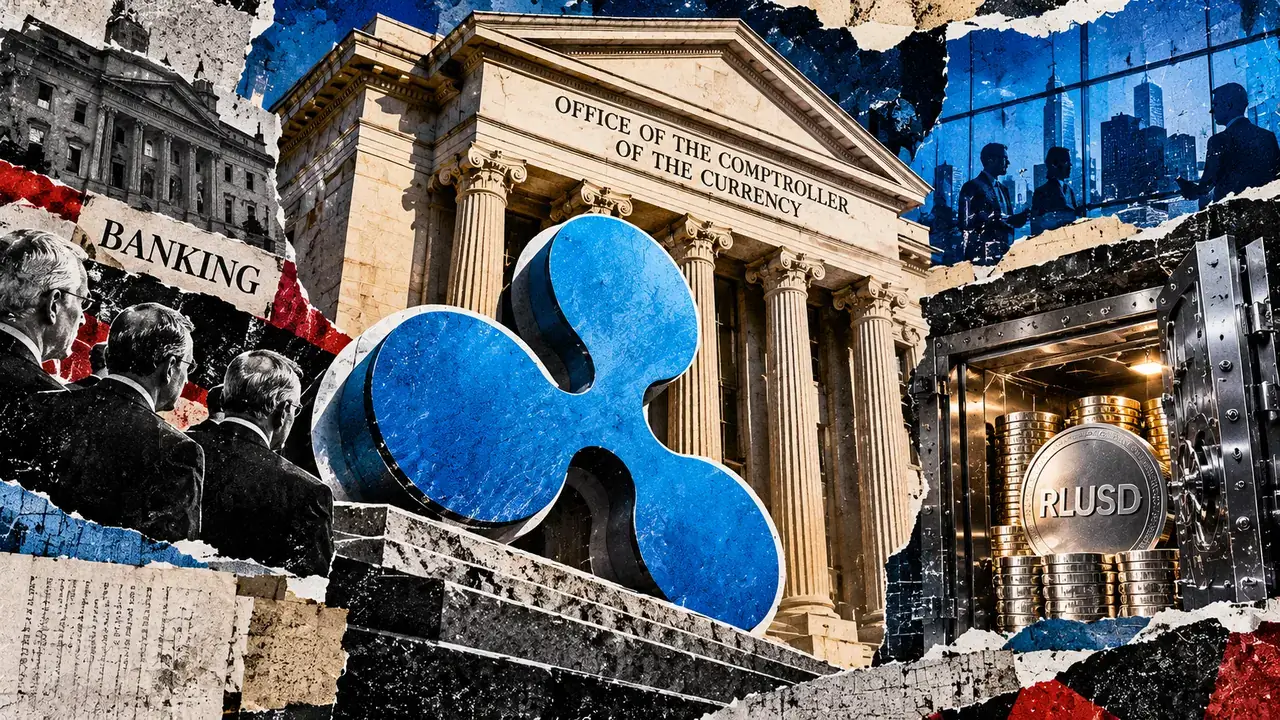
Ripple gets final US trust bank approval. What does XRP gain?
Ripple said it secured final US approval for a national trust bank despite objections from traditional banking groups concerned ab...
EDX Markets Signs Apex Fintech Deal to Broaden Crypto Trading Access
TL;DR: EDX Markets and Apex Fintech Solutions announced a strategic relationship on October 26 to connect institutional digital-as...
Aviva Tokenises Part of £22 Billion Sterling Fund on XRP Ledger
TL;DR: Aviva Investors and Ripple announced a tokenised share class for the Aviva Investors Sterling Liquidity Fund on October 26....