House of Cards: Money Laundering in Crypto and Real Estate in the UAE
Thunder only happens when it's raining, and players only love you when they're playing. Fleetwood Mac could not have been more fitting and even more precise regarding the recent money laundering trend in the UAE. Payment...
Archive context
Older archive item. Useful for background and entity history, but not a fresh market-moving signal.

Thunder only happens when it's raining, and players only love you when they're playing. Fleetwood Mac could not have been more fitting and even more precise regarding the recent money laundering trend in the UAE. Payment agents and real estate brokers are cashing in on the unreported crypto funds of investors, making them the darlings of the UAE FIU, who are trying to locate these facilitators.
In light of the recent BBC expose, the overwhelming criticism towards the regulators has shed light on one form of fraud conducted in the European Union and the United Kingdom. Yet, a similar method of money laundering has been highlighted by the UAE Ministry of Economics, which has made the UAE Government very wary due to the FATF gray listing a year ago.
The #UAE has imposed a monetary penalty of Dh115 million ($31.3M) in the first quarter (Q1) of 2023 to combat #financial fraud, such as money laundering and terrorism financing. For more information click here: https://t.co/ZdIunxdcmUpic.twitter.com/WIEEGL109E
— Shufti Pro (@Shufti_Pro) May 2, 2023Many investors wish to catch the wave and purchase property there as part of the real estate boom in the golden city of Dubai and the marble city of Abu Dhabi. Many of these investors hold cryptocurrencies, hoping to liquidate their virtual assets into tangibles. The real estate brokerage market in the UAE has picked up on this trend. Many brokerages follow this route and allow access to purchase apartments, housing, and office space in the UAE using cryptocurrencies.
The problem arises when the main actors of the transaction: the buyers, real estate brokers, and liquidity providers, work unregulated. This has been highlighted by the UAE Ministry of Economics, which stated that such companies will now be in the spotlight for money laundering indicators. Facilitators of such transactions usually cover their money laundering schemes with claims of focusing on financial markets, analytics, and extensive development while serving as a liquidity provider for holders of cryptocurrencies vis-à-vis a third-party provider.
Serving as a point of contact for the third-party provider and later providing the real estate opportunity creates a façade that the broker does not fall under any liability for money laundering and KYC checks. Yet, this is precisely the root cause of a money laundering indicator, facilitating a transaction for a third party, even though the ultimate beneficiary owner will be the original client.
Crypto issues pop up increasingly in other committees of jurisdiction, and there are policy vectors to watch closely beyond the Banking and Ag committees. In this instance, Sen. Warren talking about her currently stalled validator KYC/AML bill in front of the Senate Armed… pic.twitter.com/rUNwHrRt87
— Alexander Grieve (@AlexanderGrieve) May 5, 2023This trend, such as the ICO and NFT trends at the beginning of 2020 and 2021, will soon reach its melting point. The Governmental law enforcement agencies will have to enforce the FATF Recommendations, such as Recommendation 15 on virtual assets, and implement the risk-based approach for real estate as listed in the 2022 report.
As the report highlights, the use of the real estate as a means to launder criminal and unreported profits allows criminals to pump the pricing of housing and commercial real estate to dump illicit funds, leaving the real estate market at a cliff, actual potential buyers at an abyss, and the facilitators of the liquidity at a win at their expense.
This issue is then expected to be raised and dealt with towards the newly scheduled rounds of the FATF negotiations with the UAE. Currently, the only way for the UAE regulators, such as VARA, SCA, and the UAE Central Bank based in Abu Dhabi, will be to enforce the warnings issued by the UAE Ministry of Economy and ensure proper licensing of the liquidity providers, meaning their hide-and-seek game of hiding as a third-party provider will not be tolerated anymore.
This article was written by Ella Rosenberg at www.financemagnates.com.Why this matters
This cryptocurrency story adds another data point to the current market tape and is useful when read alongside nearby source coverage.
Original source
Read on Finance MagnatesRelated market context

LiquidAcre selects Uphold to power tokenized real estate infrastructure
The partnership could accelerate the adoption of tokenized real estate, potentially transforming property investment and ownership...

LiquidAcre Selects Uphold to Power Digital Asset Infrastructure and Future Tokenized Real Estate Offerings
LiquidAcre, a financial technology company building a platform designed to expand access to real-world assets and digital financia...

Locked liquidity did not stop this $14 million crypto pool drain
The PancakeSwap pool for 79AU, 79thVault’s token, lost $14.35 million in USDT on Oct. 7 through two selling wallets, according to...

Polygon Opens Its Money Stack To TRON’s $94 Billion USDT Market
TL;DR: Polygon Open Money Stack now supports TRON, giving payment and fintech businesses a single infrastructure layer for bank tr...

AI may be keeping Bitcoin’s biggest macro headwind alive after the Fed stops hiking
Bitcoin faces a new macro headwind from the artificial-intelligence boom as massive infrastructure spending competes for long-term...
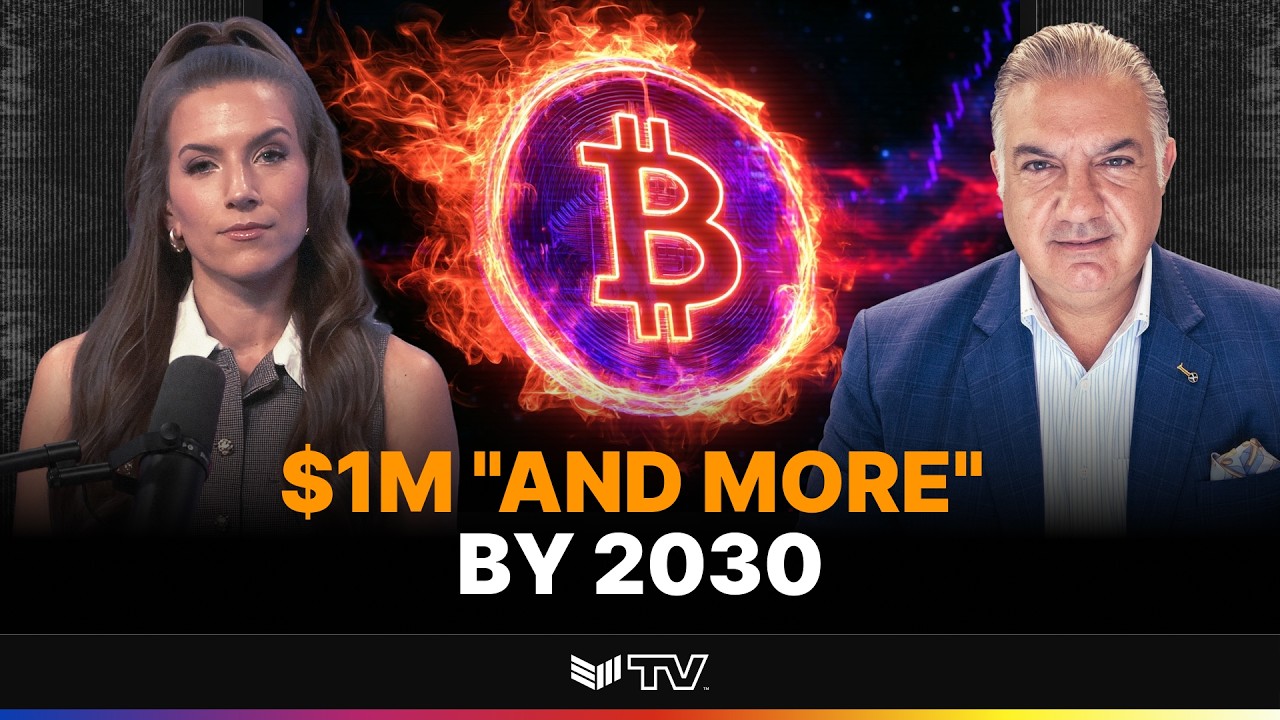
Calamos Investments CEO John Koudounis: Bitcoin Will Hit $1M by 2030
Bitcoin Magazine Calamos Investments CEO John Koudounis: Bitcoin Will Hit $1M by 2030 Is Bitcoin headed for a “huge awakening” thr...