Russian Parliament Votes on Bill Opening Door for Digital Ruble
Russian lawmakers have approved a draft law facilitating the implementation of the digital version of the national currency, the ruble. The legislation amends various other acts to introduce definitions and establish pro...
Archive context
Older archive item. Useful for background and entity history, but not a fresh market-moving signal.
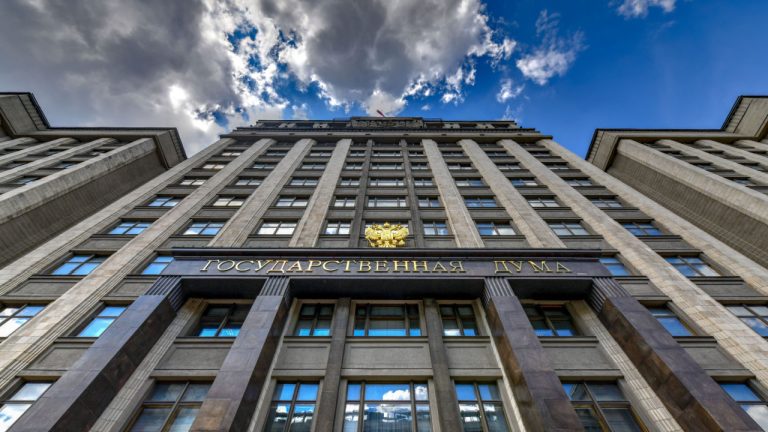
Russian lawmakers have approved a draft law facilitating the implementation of the digital version of the national currency, the ruble. The legislation amends various other acts to introduce definitions and establish procedures related to the launch of the central bank digital currency.
Russian State Duma Passes Digital Ruble Draft Law on First ReadingThe lower house of Russian parliament, the State Duma, has adopted in the first reading a bill introducing legislative changes necessary for the realization of the digital ruble project. Most notably, it seeks to amend the law “On the National Payment System.”
The latter will be supplemented with legal definitions related to the central bank digital currency (CBDC) issued by the Bank of Russia. The authors also propose procedures for accessing the state-backed coin’s platform as well as for opening a digital wallet, RBC Crypto noted in a report.
According to the business daily Vedomosti, the draft suggests terms like “participant of the digital ruble platform” and “user of the digital ruble platform.” It assigns the role of sole operator to the Central Bank of Russia (CBR) which will guarantee its safe functioning.
The bill also amends the law “On Currency Regulation and Currency Control.” This particular revision secures the status of the digital ruble as a currency of the Russian Federation and defines the digital currencies of other central banks as foreign currencies.
The sponsors want to grant the CBR powers to process personal data without obtaining user consent and without notifying the body responsible for the protection of such information. This will be done through changes to the federal law “On Personal Data.”
The bill was submitted to the State Duma in late December by a group of deputies and senators led by the chair of the Financial Market Committee, Anatoly Aksakov. Now the house has tasked the committee to “take into account the need to ensure the protection of the rights of personal data subjects” when finalizing the document ahead of the second reading.
Alongside the digital ruble bill, the house also adopted amendments to the Civil Code that classify the CBDC as non-cash money and regulate other aspects such as inheritance. Proposals for further revisions of the drafts will be accepted by mid-April. Bank of Russia plans to start testing the digital ruble with real users and transactions on April 1 and aims for a full launch in 2024.
Do you think Russia will accelerate the introduction of the digital ruble amid sanctions and financial restrictions over the war in Ukraine? Share your expectations in the comments section below.
Why this matters
This cryptocurrency story adds another data point to the current market tape and is useful when read alongside nearby source coverage.
Original source
Read on Bitcoin NewsRelated market context

Nigeria’s Central Bank Now Requires Offshore Stablecoin Issuers to License Locally
Stablecoin issuers based abroad can no longer serve Nigerian users on the strength of a foreign license under a new rulebook from...
Russia’s central bank approves Bitcoin, Ether and USDT trading for retail investors
Russia's move could boost crypto adoption, influencing global regulatory trends and potentially reshaping retail investment landsc...

China central bank probes Solana after Shanghai shutdown, report
China’s central bank has launched an investigation into Solana after authorities shut down an “illegal” promotional Solana event l...

Nigeria’s central bank mandates licenses for stablecoin issuers
Nigeria's licensing mandate for stablecoin issuers could reshape the digital currency landscape, emphasizing regulatory compliance...

Paraguay Bank Collapse Shows Why Bitcoin Was Created as USDT Hits Premium
Paraguay bank crisis is showing why Bitcoin was created in the first place. USDT sellers reportedly demanded premiums of up to 13%...
Nigeria’s central bank introduces stablecoin licensing rules, bans algorithmic versions
Nigeria's central bank issued new virtual asset regulations requiring stablecoin issuers and other service providers to obtain loc...