US Senator Introduces Bill to Ban Direct-to-Consumer Central Bank Digital Currency
U.S. Senator Ted Cruz has introduced “legislation to prohibit the Federal Reserve from developing a direct-to-consumer” central bank digital currency (CBDC). The lawmaker warned that it “could be used as a financial surv...
Archive context
Older archive item. Useful for background and entity history, but not a fresh market-moving signal.
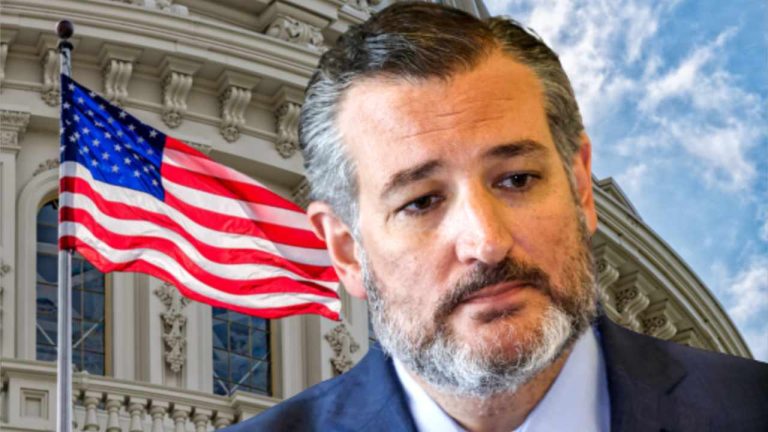
U.S. Senator Ted Cruz has introduced “legislation to prohibit the Federal Reserve from developing a direct-to-consumer” central bank digital currency (CBDC). The lawmaker warned that it “could be used as a financial surveillance tool by the federal government.” Another senator stressed: “The American people ought to be able to spend their money how they choose without the possibility that every transaction could be tracked by the government.”
Senator Ted Cruz’s CBDC Bill
U.S. Senator Ted Cruz (R-TX) announced Tuesday that he has reintroduced “legislation to prohibit the Federal Reserve from developing a direct-to-consumer central bank digital currency which could be used as a financial surveillance tool by the federal government.” The bill, cosponsored by Senators Braun (R-IN) and Grassley (R-IA), was first introduced in March of last year.
The announcement highlights the importance of ensuring that the U.S. digital currency policy “protects financial privacy, maintains the dollar’s dominance, and cultivates innovation.” Cruz warned:
CBDCs that fail to adhere to these three basic principles could enable an entity like the Federal Reserve to mobilize itself into a retail bank, collect personally identifiable information on users, and track their transactions indefinitely.
The senator from Texas noted that unlike decentralized cryptocurrencies, such as bitcoin, CBDCs “centralize Americans’ financial information, leaving it vulnerable to attack.”
He cautioned, “The federal government has no authority to unilaterally establish a central bank currency,” adding:
We should be empowering entrepreneurs, enabling innovation, and increasing individual freedom — not stifling it.
“Allowing the government to centralize Americans’ financial information and increase surveillance of Americans’ financial activity is simply a bad idea,” Senator Braun noted.
Commenting on the bill he cosponsored, Senator Grassley opined:
The American people ought to be able to spend their money how they choose without the possibility that every transaction could be tracked by the government.
Senator Cruz is a bitcoin investor who purchases BTC on a weekly basis. Expressing strong optimism towards the crypto, he explained that he is bullish on BTC because it’s decentralized and uncontrollable. In January this year, he introduced a resolution encouraging Capitol gift shops to accept cryptocurrency.
Meanwhile, Congressman Tom Emmer also recently reintroduced his “CBDC Anti-Surveillance State Act” in the House of Representatives. This week, Florida Governor Ron DeSantis proposed a ban on the use of a federally adopted CBDC as money in his state. Federal Reserve Chairman Jerome Powell, however, said earlier this month that the Fed is not at the stage of making any real decisions on a CBDC. “We haven’t decided that this is something that the financial system in the country would want or need,” he clarified.
Do you agree with Senator Ted Cruz about the harm a direct-to-consumer central bank digital currency could bring to U.S. consumers? Let us know in the comments section below.
Why this matters
This cryptocurrency story adds another data point to the current market tape and is useful when read alongside nearby source coverage.
Original source
Read on Bitcoin NewsRelated market context

China central bank probes Solana after Shanghai shutdown, report
China’s central bank has launched an investigation into Solana after authorities shut down an “illegal” promotional Solana event l...

Nigeria’s Central Bank Now Requires Offshore Stablecoin Issuers to License Locally
Stablecoin issuers based abroad can no longer serve Nigerian users on the strength of a foreign license under a new rulebook from...

Nigeria’s central bank mandates licenses for stablecoin issuers
Nigeria's licensing mandate for stablecoin issuers could reshape the digital currency landscape, emphasizing regulatory compliance...

Russia’s central bank approves Bitcoin, Ether and USDT trading for retail investors
Russia's move could boost crypto adoption, influencing global regulatory trends and potentially reshaping retail investment landsc...

Paraguay Bank Collapse Shows Why Bitcoin Was Created as USDT Hits Premium
Paraguay bank crisis is showing why Bitcoin was created in the first place. USDT sellers reportedly demanded premiums of up to 13%...
Nigeria’s central bank introduces stablecoin licensing rules, bans algorithmic versions
Nigeria's central bank issued new virtual asset regulations requiring stablecoin issuers and other service providers to obtain loc...