White House Releases ‘First-Ever’ Framework for Digital Asset Development — Crypto Industry Leader Says Recommendations Are Unclear
The White House has now released what it called its “first-ever” comprehensive framework for the responsible development of digital assets just over six months after U.S. President Joe Biden signed an executive order on...
Archive context
Older archive item. Useful for background and entity history, but not a fresh market-moving signal.
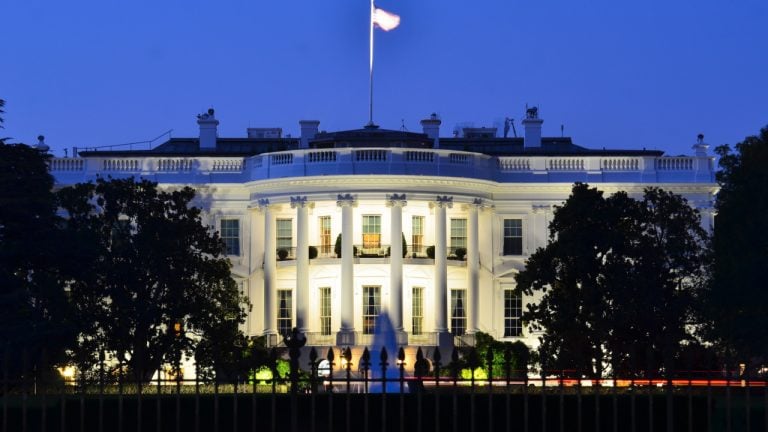
The White House has now released what it called its “first-ever” comprehensive framework for the responsible development of digital assets just over six months after U.S. President Joe Biden signed an executive order on the same matter. However, one crypto industry leader has lamented the lack of clarity and understanding of the technology in the White House’s fact sheet.
Reinforcing United States Leadership in the Global Financial SystemJust over six months after U.S President Joe Biden signed an Executive Order (EO) outlining the government’s multi-pronged approach toward digital assets, the White House, on September 16, unveiled what it termed the “first-ever comprehensive framework for digital asset development.”
Explaining the Biden administration’s decision to release the framework, the White House said while digital currencies may have the potential to “reinforce the U.S. leadership in the global financial system,” they still pose risks to investors and consumers as evidenced by the crypto market’s crash in May.
Therefore, to protect millions of people, including United States residents that have acquired digital assets, U.S government agencies have developed frameworks that advance six key priorities identified in the EO. The six key priorities identified in the March 9 EO are consumer and investor protection, financial stability, countering illicit finance, the United States’ leadership in the global financial system, financial inclusion, and responsible innovation.
According to the White House fact sheet, nine reports articulating a “clear framework for responsible digital asset development and [paving the] way for further action at home and abroad” have since been submitted to President Biden. In addition to advocating for orderly digital asset development, the nine reports are also said to identify roles government agencies must play to help American companies.
“The reports call on agencies to promote innovation by kickstarting private-sector research and development and helping cutting-edge U.S. firms find footholds in global markets. At the same time, they call for measures to mitigate the downside risks, like increased enforcement of existing laws and the creation of commonsense efficiency standards for cryptocurrency mining,” the White House’s fact sheet reads.
Besides focusing on privately created or issued digital currencies, the nine reports, according to the White House, also encourage the U.S. Federal Reserve “to continue its ongoing CBDC [central bank digital currency] research, experimentation and evaluation.” They also call for the “creation of a Treasury-led interagency working group to support the Federal Reserve’s efforts.”
Perceived Lack of ClarityMeanwhile, in her reaction to the White House’s publishing of the fact sheet, Sheila Warren, the CEO of the Crypto Council for Innovation, lamented the lack of clarity and understanding of the technology in some of the recommendations made. She noted:
This is surprising given the clear instructions from the EO and work from Members of Congress to move things forward. Regulation by enforcement is not regulatory clarity. If we regulate by enforcement, it also gives other countries a runway to figure out how the tech works for their interests, which may be contrary to those of the U.S.
To back her assertions, Warren referred to a September 15 U.S. Senate Committee hearing convened to review the Digital Commodities Consumer Protection Act. According to the CEO, leaders at the hearing “seemed worried about other countries overtaking the U.S.”
In concluding her remarks, Warren said her organization stands ready to help U.S. lawmakers understand the digital asset industry which she called “a complex and nuanced space.”
What are your thoughts on this story? Let us know what you think in the comments section below.
Why this matters
This cryptocurrency story adds another data point to the current market tape and is useful when read alongside nearby source coverage.
Original source
Read on Bitcoin NewsRelated market context

Securitize Plans River One Acquisition to Connect Stablecoin Capital With Asset-Backed Finance
TL;DR: Securitize has announced an agreement to acquire River One as it looks to connect tokenized capital with traditional asset-...

Kimber Digital Securities secures broker-dealer license for onchain US assets
KDS's broker-dealer license could streamline tokenized securities trading, enhancing regulatory compliance and potentially boostin...

Mark Zuckerberg Meta AI BTC Price Prediction for 2030
As of mid-November 2026, Bitcoin trades near $74,000–$75,000 after a period of consolidation. However, a Meta AI BTC price predict...

Crypto News Today: Waller’s Rate-Hike Warning, MARA’s $1.1B Bitcoin Sale and USDC’s EU Deadline
Crypto news today is being shaped by three different pressures on digital money: a Federal Reserve official keeping a half-point r...

EU Seeks Experts to Help Set Tokenisation Standards as Financial Markets Move Onchain
TL;DR: European authorities are inviting nominations for a new Tokenisation Standards Group, with applications due on November 27....

MARA Sells 13,597 Bitcoin for $1.1B as Its AI Pivot Reshapes Treasury Strategy
MARA has put a sizeable number on the changing economics of Bitcoin mining. In its third-quarter shareholder letter, the company s...