Randcast – On-Chain Verifiable Randomness
Why you should listen Randcast is ARPA’s first product, an on-chain verifiable random number generation service with an easy-to-use Smart Contract SDK that can be directly integrated into DApps to provide out-of-the-box...
Archive context
Older archive item. Useful for background and entity history, but not a fresh market-moving signal.

Randcast is ARPA’s first product, an on-chain verifiable random number generation service with an easy-to-use Smart Contract SDK that can be directly integrated into DApps to provide out-of-the-box functionalities like rolling dice, shuffling an array, generating in-game item attributes based on probability, generating random in-game maps or dungeons, and deciding the probability outcomes of a lottery.
Using a random number in a smart contract is a common requirement. For example, a game may need to generate a random number to determine the lottery winner. However, the blockchain is deterministic, and the result of a smart contract is determined by the input. That is to say, a blockchain is a decentralized and trustless environment where the random number generation can be easily manipulated by any party in the network. e.g., if we use a block hash or timestamp as the source of randomness, the miners can manipulate it to their advantage by either withholding the block or manipulating the timestamp.
The solution is to use an external source of randomness. Randcast is a service that generates random numbers through a decentralized network and provides them to smart contracts. The process of generating randomness is both transparent and verifiable. It is facilitated by a group of nodes that utilize the threshold BLS signature scheme. Before returning the requested random number to the user’s smart contract, the randomness is verified on-chain by the Randcast Adapter smart contract.
Randcast and the ARPA Network solve another major issue with random number generation. Randomness generated by a single off-chain entity could potentially be tampered with or manipulated by that entity. Randcast solves this issue by using multiple nodes in the ARPA Network to generate randomness through BLS Threshold signature tasks, which means that no single node has the ability to manipulate the final randomness result.
Supporting linksBitget VIP Link with BONUS 1000 USDT
If you enjoyed the show please subscribe to the Crypto Conversation and give us a 5-star rating and a positive review in whatever podcast app you are using.
ADVERTISEMENT
Advertise with BNC
Why this matters
This research story adds another data point to the current market tape and is useful when read alongside nearby source coverage.
Original source
Read on Brave New CoinRelated market context

Sui’s Hashi Bitcoin Finance Network Launches With More Than $500 Million Committed
TL;DR: Hashi, Sui’s native Bitcoin finance infrastructure, will begin a phased mainnet rollout later this month with more than $50...

WhiteBIT Integrates Lightning Network for Fast and Cheap Bitcoin Transactions
Bitcoin Magazine WhiteBIT Integrates Lightning Network for Fast and Cheap Bitcoin Transactions The Lightning Network continues to...

Liquid Network halts Bitcoin redemptions with reserves at about 86% coverage
The halted redemptions highlight the critical need for robust security and full reserve backing in maintaining trust in sidechain...
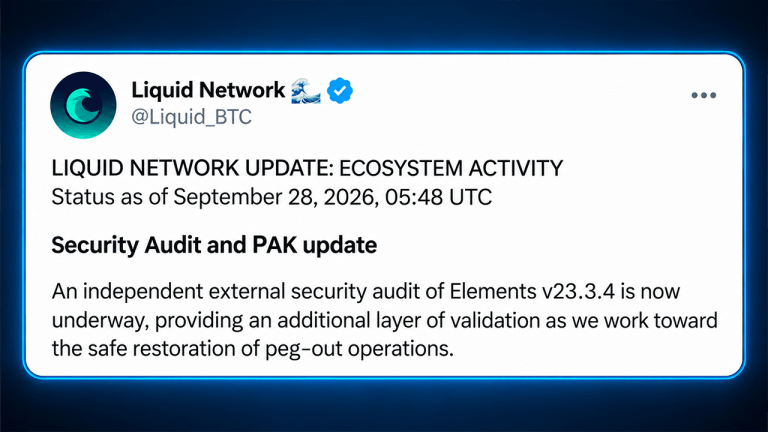
Liquid Network at 86% Backing as Bitcoin Redemption Freeze Drags On
It has been 35 days since an attacker exploited a vulnerability in the Liquid Network’s Elements software, draining nearly 4,000 B...

Chinese Communist Party Calls for a National Blockchain Network
The Central Committee of the Chinese Communist Party (CCP) has called for the creation of a national blockchain network to foster...

Circle mints 250M USDC on Solana, boosting liquidity and network potential
Increased USDC supply on Solana may enhance network activity and adoption, but market caution persists regarding significant price...