Will the U.S. Launch a Digital Dollar? Federal Reserve Chairman Wants To
Jerome Powell, chairman of the Federal Reserve, stated Tuesday that the U.S. central bank should collaborate with Congress to develop a digital dollar. Powell told the Senate Banking Committee that while existing laws ov...
Archive context
Older archive item. Useful for background and entity history, but not a fresh market-moving signal.
Jerome Powell, chairman of the Federal Reserve, stated Tuesday that the U.S. central bank should collaborate with Congress to develop a digital dollar.
Powell told the Senate Banking Committee that while existing laws overseeing the Fed’s activities could work as a foundation for issuing a digitized version of the U.S. dollar, he instead preferred to work on a legislation-backed push.
Powell claimed: “I believe this is such a fundamental issue that it would be ‘ideal’ if it were the result of broad consultation and ultimately authorizing legislation from Congress.”
The chairman stated earlier this year that he believed that Congress might need to give authorization, but his remarks on Tuesday indicate that he would welcome such involvement. Back in May, Vice Chairman for Supervision Randal Quarles told the very same committee that coming Fed activity on a digital dollar would demand congressional approval.
The Boston Fed branch is currently working on prototype digital dollar applications with the Massachusetts Institute of Technology. Still, we shall see what shape a Fed-led digital dollar might take. Some of the process’s outcomes are expected to be made public before the end of this year.
While there were many concerns about the project, Powell claimed that the Fed intended to reach out to the public and that the central bank must consider other market’s health.
“We’re working on the technical challenges, as well as collaborating and sharing work with other central banks [worldwide] that are doing this,” said Federal Reserve Chair Janet Yellen.
“We might need legislative approval for something like this. It won’t be clear until we figure out which way we’re going,” Powell added.
Powell’s remarks follow his remarks yesterday before the Senate Banking Committee. He stated that the Federal Reserve was carefully considering whether the United States should launch a digital dollar. Moreover, the Fed Chair also noted that stablecoins and digital currencies are unlikely to impact monetary policy transmission.
The post Will the U.S. Launch a Digital Dollar? Federal Reserve Chairman Wants To first appeared on CryptoGazette - Cryptocurrency News.Why this matters
This cryptocurrency story adds another data point to the current market tape and is useful when read alongside nearby source coverage.
Original source
Read on CryptoGazetteRelated market context

Gold overtakes US treasuries in central bank foreign exchange reserves, per Bloomberg
Central banks' preference for gold over U.S. Treasuries may signal a shift in global economic strategies, impacting future gold ma...
Kazakhstan Moves to Build a National Crypto Reserve Funded by Bitcoin Miners
Bitcoin Magazine Kazakhstan Moves to Build a National Crypto Reserve Funded by Bitcoin Miners Kazakhstan has laid out a plan to bu...

BlackRock, Coinbase, Strategy Among Nine Firms Launching the Bitcoin Security Consortium, Pledging $15 Million To BTC Security Development
Bitcoin Magazine BlackRock, Coinbase, Strategy Among Nine Firms Launching the Bitcoin Security Consortium, Pledging $15 Million To...

Swiss Bank BancaStato Launches Bitcoin Trading Through Sygnum and Avaloq
Bitcoin Magazine Swiss Bank BancaStato Launches Bitcoin Trading Through Sygnum and Avaloq BancaStato, the cantonal bank of Ticino...

S&P launches blockchain fundamentals index for digital assets
The benchmark tracks blockchain networks using protocol revenue, offering an alternative to traditional market capitalization-weig...
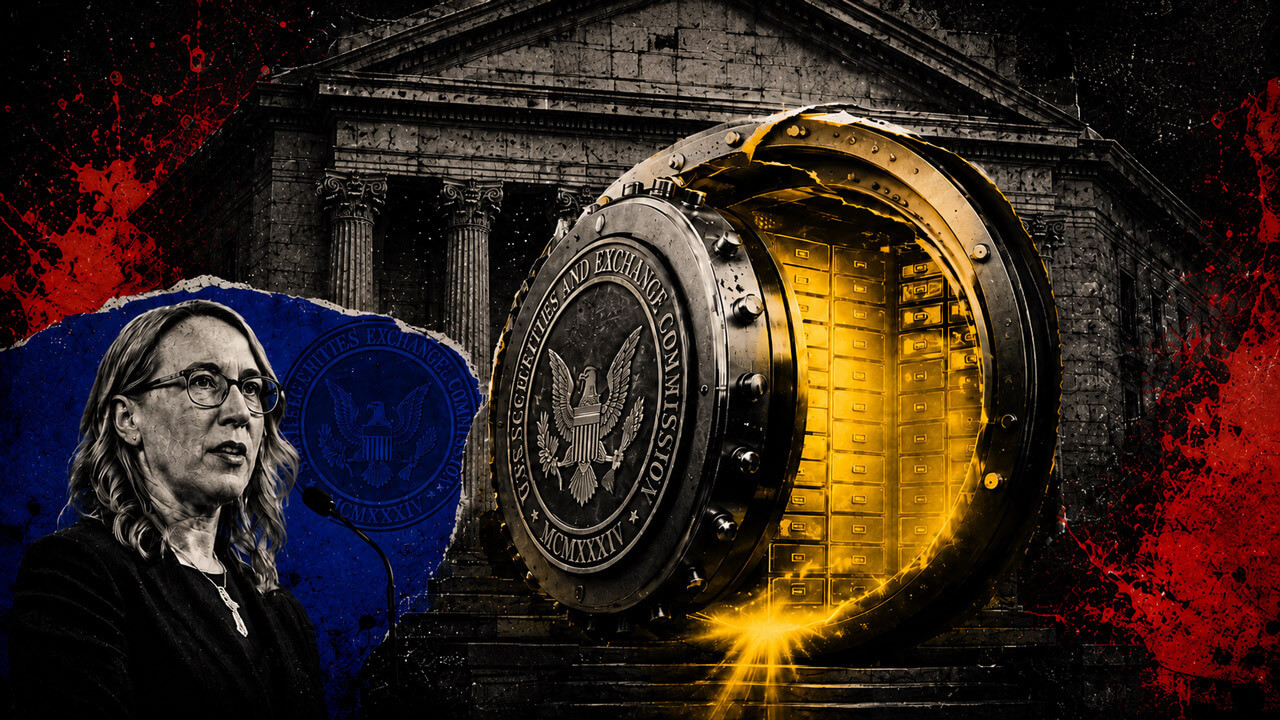
$131 billion crypto vault boom will test the limits of SEC’s friendlier crypto stance
On July 22, SEC Commissioner Hester Peirce warned that some crypto vaults and onchain lending strategies may fall under federal se...