Bitcoin Demand Weak As Middle East Tensions Impact Crypto Markets
Analysts attribute the slump to increased selling pressure following Iran’s recent missile strikes on Israel, leading the Bitcoin decline of 8% in the last week, according to Brave New Coin’s Bitcoin Liquid Index. Source...
Archive context
Older archive item. Useful for background and entity history, but not a fresh market-moving signal.

Analysts attribute the slump to increased selling pressure following Iran’s recent missile strikes on Israel, leading the Bitcoin decline of 8% in the last week, according to Brave New Coin’s Bitcoin Liquid Index.
Source: Brave New Coin Bitcoin Liquid Index
On Tuesday, Iran launched over 180 ballistic missiles at Israel in retaliation for Israeli assaults on Hezbollah positions in southern Lebanon. This surge in regional tensions has had a direct impact on Bitcoin demand, as highlighted by CryptoQuant data. The Net Taker Volume metric, which indicates the net buying or selling pressure, has seen a substantial decrease since the escalation began.
“Buying pressure has remained subdued since the Iran strike,” stated J.A. Maartunn, a CryptoQuant analyst, in an interview with The Block. “The drop in net taker volume by over $150 million signals significant selling pressure, while the fact that it hasn’t exceeded $100 million since Tuesday suggests a lack of strong buying momentum.”
This downturn is not isolated to Bitcoin alone. Ethereum also experienced a significant 12.60% decline in the last week, dropping below the $2,300 mark on October 4th, according to Brave New Coin’s Ethereum Liquid Index.
Market Sentiment Shifts to NeutralBitwise Head of Research – Europe, André Dragosch, observed a negative trend in net buying volumes on Bitcoin spot exchanges over the past three days. However, he noted signs of short-term seller exhaustion, citing an increase in long Bitcoin futures liquidations—the highest since August 5, when Bitcoin reached its recent low.
“Moreover, short-term holders have sent the most bitcoins at a loss to exchanges since the lows in August,” Dragosch explained. He added that sentiment has shifted from relatively high to more neutral levels, according to the Bitwise Cryptoasset Sentiment Index.
Adding to the complexity, Glassnode data reveals that the illiquid supply of Bitcoin has recently hit an all-time high, while the supply categorized as highly liquid and liquid has dropped to a year-to-date low. This indicates a significant shift in market dynamics, where long-term holders are retaining their assets despite the current volatility.
Source: Glassnode
Bitwise Research Analyst-Europe Ayush Tripathi pointed out an increase in the supply of Bitcoin held by long-term investors—those who have held their Bitcoin for at least 155 days—despite the recent price decline. Since the beginning of October, the supply held by these investors has risen, suggesting that while short-term demand has weakened, confidence in Bitcoin as a long-term investment remains strong.
“The increase in the supply of bitcoin held by long-term holders since the beginning of October suggests that while short-term demand has weakened, there is still confidence in bitcoin as a long-term investment,” said Tripathi.
QCP Capital Sees Temporary DownturnDespite the current challenges, QCP Capital analysts believe the downturn in Bitcoin demand is temporary. They highlighted the strong correlation between the performance of cryptocurrencies and U.S. stocks, predicting that as equities recover, crypto markets will follow suit.
“Macroeconomic factors, particularly in the U.S., are currently driving the price of risk assets,” the analysts stated. They pointed to the latest U.S. ADP National Employment report, which showed stronger-than-expected job growth in September, as a sign of labor market strength that could encourage the Federal Reserve toward a more dovish stance on interest rates.
“The ADP payroll report beat expectations, and tomorrow’s non-farm payroll report will be key in confirming a strong U.S. labor market. A combination of expected rate cuts and labor strength could boost risk assets,” QCP Capital analysts added.
Market Hesitates Amid Rising Geopolitical TensionsIn cryptocurrency market trading on Thursday, investors remained cautious as they awaited a potential Israeli response to Iran’s missile strikes. This geopolitical uncertainty has heightened risk aversion among investors, leading to reduced trading volumes and heightened volatility in the crypto markets.
Bitcoin has held just above the $60,000 mark, while Ethereum experienced a drop below $2,300. The cautious sentiment is further reflected in the subdued Net Taker Volume, which has not exceeded $100 million since the escalation of tensions on Tuesday. This lack of strong buying momentum underscores the market’s hesitancy to commit to large investments amid ongoing geopolitical instability.
Long-term holders and institutional investors may find opportunities to accumulate Bitcoin at lower prices, anticipating a rebound once the geopolitical landscape stabilizes. However, short-term volatility is likely to persist as the market absorbs the impact of ongoing conflicts and adjusts to changing economic policies.
Why this matters
This bitcoin story adds another data point to the current market tape and is useful when read alongside nearby source coverage.
Original source
Read on Brave New CoinRelated market context

XRP Price, $300M ETF Demand, and 45% Q3 Supply Overhang
XRP price rose more than 45% in Q3 as U.S. spot XRP ETFs attracted about $307.9 million, yet the token entered October near $1.50...
Bitcoin’s $85,000 recovery awaits proof that ETF investors kept buying after payrolls
Bitcoin's recovery above $85,000 faces a demand test after a sharp fall in bets on another Federal Reserve rate hike. A new post-p...

Bitcoin (BTC) Price Today: 2028 Halving Cycle and BlackRock ETF Inflow Signal Long-Term Rally
Recent market data also show that Bitcoin buyers have absorbed a key sell wall around $85,000, reducing one source of near-term re...

Stablecoin issuers have replaced 40% of China’s lost US Treasury demand
Stablecoin issuers are emerging as a new source of demand for US government debt as foreign official holdings lose ground. Tether...
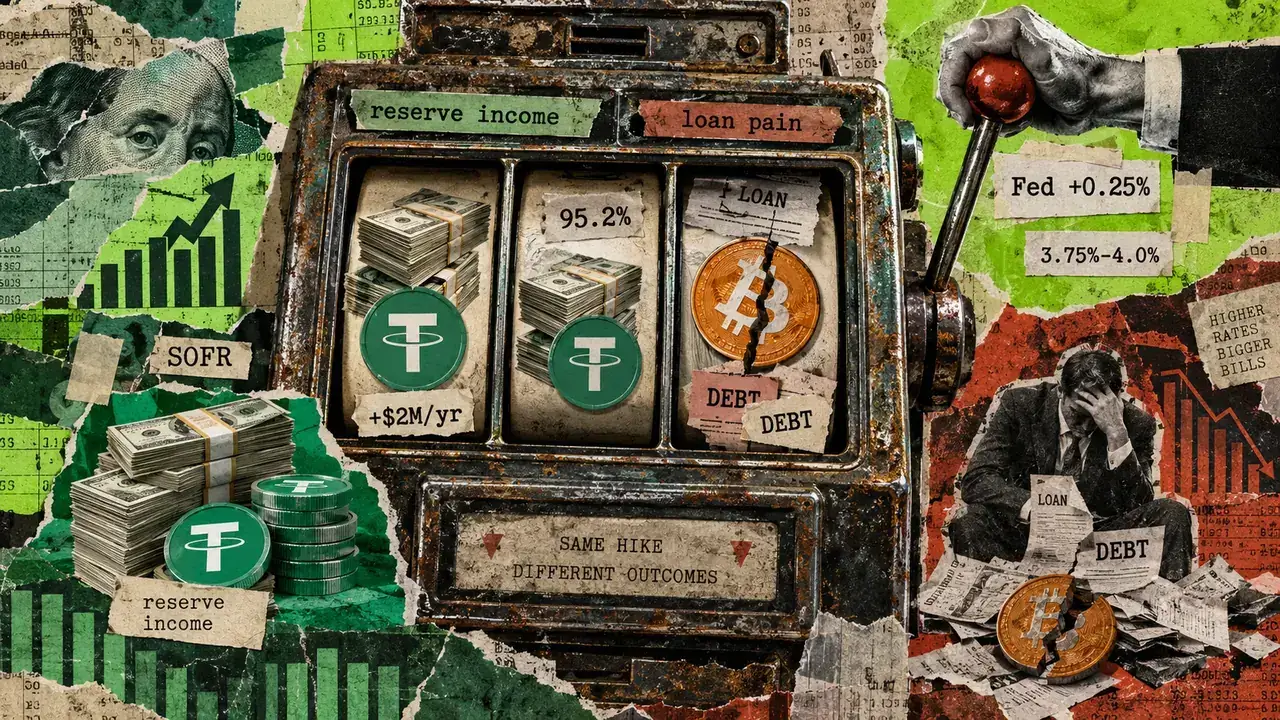
The same Fed rate hike can help stablecoins and hurt Bitcoin borrowers
When you hold a dollar stablecoin, somebody else may be earning interest on the assets backing your balance, while a company borro...

XRP Price Prediction: Ripple’s $700M Escrow Return Puts $1.59 Resistance in the Spotlight
The setup comes shortly after Ripple returned 700 million XRP, worth more than $1 billion, to escrow following its scheduled Octob...