Citrini Research Puts Hyperliquid On Wall Street’s Crypto Radar
Citrini Research has singled out Hyperliquid’s HYPE token as a crypto asset with a cash-flow profile that separates it from what the firm calls the “memetic majority” of the market. In its June 2026 “State of the Themes”...
Archive context
Older archive item. Useful for background and entity history, but not a fresh market-moving signal.

Citrini Research has singled out Hyperliquid’s HYPE token as a crypto asset with a cash-flow profile that separates it from what the firm calls the “memetic majority” of the market. In its June 2026 “State of the Themes” report, the research firm argued that HYPE’s fee-driven buyback structure, expanding Assistance Fund and emerging ETF narrative make Hyperliquid one of the more compelling crypto market-structure stories now reaching Wall Street’s radar.
Hyperliquid Gains Wall Street AttentionThe core of Citrini’s thesis is straightforward: HYPE is not being framed merely as a speculative exchange token, but as an asset tied to recurring platform economics. “This is what makes HYPE compelling — unlike the memetic majority of crypto (bitcoin included), HYPE generates legitimate cash flow,” the firm wrote.
That cash flow, according to Citrini, is reinforced by a protocol-level repurchase mechanism. The report said more than 90% of the fees generated by Hyperliquid are redirected into the Assistance Fund, which then systematically buys HYPE in the open market. Citrini described those repurchases as “built into the fabric of the Hyperliquid protocol.”
Citrini also emphasized the scale of Hyperliquid’s buyback program. “The structure in itself is attractive, but what’s more astonishing is the pure scale of the Fund,” the firm wrote. Since the Assistance Fund launched in January 2025, cumulative purchases have surpassed $2 billion, according to the report.
The firm added that, by some measures, Hyperliquid repurchases have accounted for nearly half of all token-buyback activity across the crypto market in 2025. Measured against token market capitalization, Citrini said the HYPE buyback “clocks in at roughly 7% annually.”
That figure is important because it places HYPE closer to a traditional capital-return framework than the typical crypto token model. A recurring 7% annualized buyback rate, if sustained, gives investors a concrete reference point for evaluating token supply dynamics and protocol economics. It does not remove execution risk, but it changes the conversation from pure speculation to the durability of Hyperliquid’s volume, fee base and competitive position.
Citrini also pointed to a pending supply-side development. The report said the Hyperliquid Foundation had brought forward a validator vote that would officially burn $1 billion in HYPE tokens held in the Assistance Fund. “Looking forward, all HYPE tokens held in the Assistance Fund will be viewed as burned,” the firm wrote.
That treatment would sharpen the token’s buyback narrative. Instead of Assistance Fund holdings being seen as a passive reserve, Citrini’s framing suggests investors may increasingly treat them as economically removed from circulating supply. For a market that closely tracks float, unlocks and emissions, that distinction matters.
The report’s final point focused on Hyperliquid’s runway. Citrini said the “advent of Hyperliquid ETFs” has shone a spotlight on the exchange, citing Bitwise’s spot HYPE ETF under the ticker BHYP US. “The Hyperliquid runway is wide,” the firm wrote. “We think there is still significant market share to be captured.”
That is the Wall Street angle. Hyperliquid is no longer just being discussed as a fast-growing decentralized perpetuals venue inside crypto-native circles. Citrini is presenting it as a cash-flowing, buyback-supported market-structure asset that could benefit from institutional product development and continued share gains in derivatives trading.
At press time, HYPE traded at $62.13.
Why this matters
Hyperliquid is showing up inside the Market Structure theme, so this story is worth tracking for follow-through rather than treating it as a one-off headline.
Original source
Read on NewsBTCRelated market context

Bitwise Asks SEC To Protect Funds Relying On Token Status Filings
TL;DR: Bitwise filed a supplemental SEC comment seeking clearer protection for firms that rely on token-status filings. The Octobe...
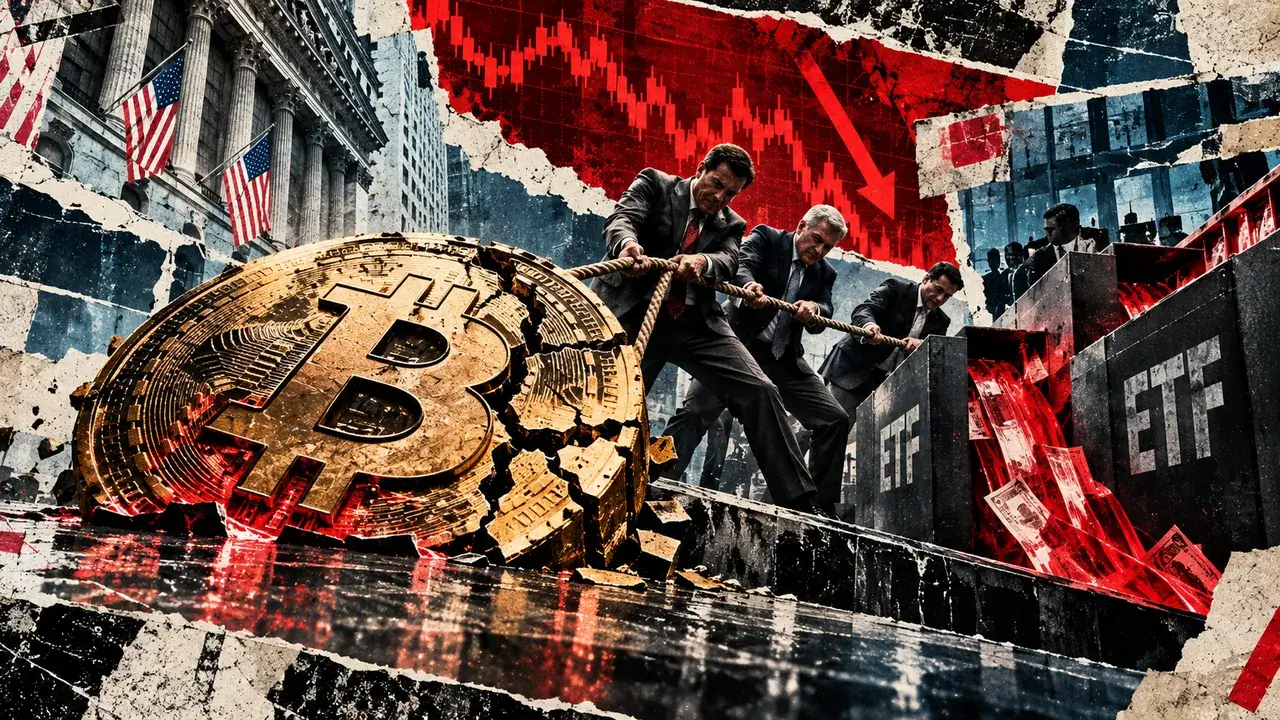
Bitcoin ETFs sold through 7 of 8 crashes even as Wall Street makes BTC selloffs less violent
Bitcoin ETFs recorded outflows during seven of eight major selloffs, challenging expectations that Wall Street investors would sup...

Retail Money is “Dead” – Wall Street is how Bitcoin Actually Wins
📺 Watch VideoBitcoin Magazine Retail Money is “Dead” – Wall Street is how Bitcoin Actually Wins Bitcoin is moving from the fringe...

Hyperliquid market orders of up to $20M moved Papertrade prices at launch
The launch highlights the vulnerability of synthetic exchanges to external market influences, posing risks for traders and liquidi...

$20M market orders on Hyperliquid drive papertrade price at launch
The significant early demand and activity on Hyperliquid could signal growing confidence and interest in synthetic-perpetuals mark...
SoFi unveils bank-issued tokenized deposit for yield-bearing crypto funds
SoFi Bank launched SoFi Earn, a tokenized deposit paying 4.40% APY with FDIC coverage, allowing users to convert funds to stableco...