CZ called Hyperliquid’s no KYC model “awesome” – Then mentioned lawyers
Hyperliquid's biggest advantage is starting to look like its cleanest legal risk: the no-KYC access model CZ says Binance cannot copy. In a Galaxy Brains episode published June 18, Galaxy's Alex Thorn spoke with Binance...
Archive context
Older archive item. Useful for background and entity history, but not a fresh market-moving signal.

Hyperliquid's biggest advantage is starting to look like its cleanest legal risk: the no-KYC access model CZ says Binance cannot copy.
In a Galaxy Brains episode published June 18, Galaxy's Alex Thorn spoke with Binance founder Changpeng Zhao about the crypto cycle, perps moving onshore, prediction markets, and Hyperliquid's no-KYC model.
Thorn's June 16 clip made the distinction clear: CZ praised Hyperliquid's product, said Binance cannot compete with a niche built around no KYC and claimed decentralization, and said he would not run that model given his own experience.
The discussion has also evolved beyond CZ simply saying Binance cannot compete in Hyperliquid's niche. Subsequent chatter focused on his saying Hyperliquid's model was “awesome,” but also noted that he assumed the project had “good lawyers.” That remark exposed the regulatory dimension of the debate by tying the platform's competitive edge directly to legal and compliance risk.
That distinction turns a product compliment into a market-structure problem. One derivatives platform now faces a broader conflict over which parts of on-chain perps-regulated exchanges can copy.
Hyperliquid's moat includes more than faster trading, crypto-native design, or trader loyalty. It is the ability to offer perpetual futures-like markets with an access model that feels different from a centralized exchange operating under the compliance expectations now attached to major global venues.
If on-chain perps keep growing because they feel open, fast, and less intermediated, the policy conflict becomes whether that same openness can survive scrutiny of who is being served, what products are being offered, and who is responsible when a venue claims decentralization.
The access advantage CZ pointed toCZ's answer carries weight because Binance is the exchange most associated with global crypto derivatives scale, and because he separated product admiration from operating risk. Hyperliquid can be good at what it does while running in a lane Binance does not want to enter.
That distinction is the core of the market-structure fight. Regulated venues can improve matching engines, extend trading hours, list more crypto-linked contracts, and design products that more closely resemble perpetual exposure.
The harder part to reproduce is the user experience of trading without the same identity checks, jurisdictional filters, or centralized compliance gates that come with regulated exchange status.
Hyperliquid's own terms and onboarding documentation are therefore part of the operating risk. The exact wording around access, eligible users, restricted jurisdictions, and user obligations is where the trading model becomes a policy object.
A product can be technically decentralized in some ways and still draw scrutiny over who operates the interface, who promotes access, and how users from restricted markets are kept out.
The clearest implication of CZ's remarks is that Hyperliquid is competing from a different risk position. Binance can compete on liquidity, listings, brand, and infrastructure.
It is much harder for Binance to compete by giving up the compliance posture that now defines its global operating model.
The practical consequence is simple. If no-KYC access is what traders value most, then the market leader in that lane may be the venue most exposed to the question of whether the model can keep scaling without becoming more like the exchanges it disrupted.
The access model also reaches beyond derivatives specialists. The trading edge sits in a user promise: fewer barriers between a trader and a leveraged market.
That promise can drive liquidity, but it also gives regulators a concrete place to examine who controls the market and which users are being reached.
Why the legal risk is already visibleThe legal risk is concrete but bounded. CZ was offering his own view, not a regulatory finding, and the concrete official marker is a UK warning rather than a US action.
The UK's Financial Conduct Authority has published a warning page for Hyperliquid, first posted on May 21 and updated on June 7, saying the firm may be providing or promoting financial services without permission and may be targeting people in the UK.
As of press time, the warning remains active and continues to frame Hyperliquid as an unauthorized firm that may be targeting UK users. It has become one of the clearest public examples of regulators treating a major on-chain perpetuals venue as more of a financial-services provider than a neutral software infrastructure.
Related Reading Hyperliquid’s UK warning reveals the regulatory test behind its Wall Street push Hyperliquid’s growing derivatives market has pulled in traders and drawn a UK warning. Jun 6, 2026 · Oluwapelumi AdejumoThat warning already put Hyperliquid's Wall Street ambitions under a regulatory lens, while CZ's remarks add a different concern. Regulators may also ask whether the same no-KYC posture that makes the platform hard to match also makes it hard to normalize.
US history gives that risk sharper edges without making Hyperliquid the target of the same facts. In 2022, the CFTC brought its action against bZeroX and Ooki DAO, alleging illegal off-exchange digital-asset trading, registration failures, and Bank Secrecy Act violations tied to leveraged and margined retail commodity transactions.
The action carries a limited lesson: US derivatives regulators have previously argued that decentralized or DAO-linked structures can still fall within regulatory reach.
That precedent leaves Hyperliquid outside the facts of the case while showing why officials may focus on access. If a venue offers products that behave like derivatives and reaches users regulators believe should be protected or screened, the debate can shift from code and community to promotion, venue control, and accountability.
Decentralization claims carry a double edge. The more credibly a platform can demonstrate that it operates outside the conventional intermediary model, the stronger its argument against being treated as one.
The more users experience it through identifiable front ends, promotional channels, market incentives, and practical controls, the easier it becomes for regulators to ask who is actually responsible for the market.
For traders, decentralization becomes practical rather than rhetorical. The more a venue relies on visible interfaces, incentives, and user flows, the more officials can focus on the parts of the system that still appear to be governed by people, policies, and market design choices.
Onshore products change the comparisonThe other half of the competitive risk is regulated market design. Galaxy's episode description placed CZ's Hyperliquid remarks alongside perps coming onshore at CME and CBOE.
The product gap between offshore crypto-native venues and regulated markets is not static.
Cboe announced in November 2025 that its futures exchange offering continuous futures for Bitcoin and Ether.
The exchange's Bitcoin and Ether Continuous Futures are trading as U.S.-regulated products designed to provide perpetual-style exposure through long-dated contracts with daily funding adjustments.
The policy fight over crypto perpetual futures regulation and related venue-classification disputes has also intensified as prediction markets and perps-like products press against older market categories.
Related Reading Crypto traders may finally get US perps, if regulators can agree on the rules The SEC-CFTC comment process could decide which US venues can list crypto perps, event contracts, and hybrid derivatives. Jun 21, 2026 · Liam 'Akiba' WrightThe comparison still depends on product design and legal status. Regulated continuous futures differ from Hyperliquid-style on-chain perps in custody, margining, venue control, access, and the operator's legal status.
But the more regulated venues bring continuous crypto exposure onshore, the more competition shifts. Hyperliquid's defense has to rest on the whole package, including access, on-chain settlement, and market culture, remaining meaningfully different.
CZ's remarks land there. If regulated exchanges can close part of the product gap while preserving KYC and venue oversight, Hyperliquid's advantage becomes more concentrated in the part regulated players least want to copy.
That is good for differentiation until it becomes the exact part regulators treat as unacceptable.
The policy fight around prediction markets adds another layer. As perps-like exposure, event contracts, and continuous futures move closer to regulated venues, agencies and courts will have more chances to define which products belong under which rules.
Related Reading CME lawsuit challenges whether Kalshi’s Bitcoin leverage push can become an everything-exchange CME’s lawsuit against the CFTC over Kalshi’s Bitcoin perps shows how the fight over crypto derivatives is turning into a broader battle over who gets to build the next everything-exchange. Jun 19, 2026 · Gino MatosThat makes the distinction between product shape and access model more important. Hyperliquid can win traders with a different experience, but that experience is exactly what makes future official language important.
A regulated venue can reduce the product gap without changing the access gap. That distinction is the reason CZ's remarks cut through ordinary exchange rivalry.
If onshore markets keep improving, the remaining advantage shifts toward the feature that carries the most policy pressure: who can trade, from where, and under which checks.
Access changes would define the moatHyperliquid's own public language now carries more weight: terms, onboarding, jurisdiction blocks, front-end controls, and any shift in how the platform describes user eligibility.
A move toward stronger identity checks or heavier geofencing could leave the product intact while testing how much of the moat came from access rather than execution.
Regulatory language would carry the second major marker. Another FCA-style warning, a US agency statement, a derivatives venue action, or a court fight over a perps-like product would carry more weight than generic debate over whether the platform is decentralized enough.
The important marker is what regulators identify as the problem: the product, the users reached, the operator, the interface, or the lack of checks.
The onshore market is the third marker. If CME, Cboe, Kalshi-style venues, or other regulated platforms keep adding crypto exposure that feels closer to perpetual trading, Hyperliquid will be competing against better legal certainty on one side and looser access on the other.
That is a powerful position only if traders continue to value the access premium more than the regulatory discount.
CZ's remarks put that tension in unusually plain language. Hyperliquid's moat may be real precisely because Binance cannot copy it.
The unresolved risk is whether the same moat can survive the legal pressure that follows when on-chain perps become too important for regulators and regulated exchanges to ignore.
The post CZ called Hyperliquid’s no KYC model “awesome” – Then mentioned lawyers appeared first on CryptoSlate.
Why this matters
Hyperliquid is showing up inside the Regulation theme, so this story is worth tracking for follow-through rather than treating it as a one-off headline.
Original source
Read on CryptoSlateRelated market context
As traditional giants rush into digital dollars, USDD’s Yvonne Chia explains why 24/7 access, self-custody, and transparent yield give decentralized stablecoins an edge banks can’t replicate. 20 November – Road Town, Totorla, British Virgin Islands – Decentralized stablecoin protocol USDD is accelerating its multichain utility across TRON, Ethereum, and BNB Chain—combining automated sUSDD yield via its Smart Allocator with GasFree zero-TRX transfers—as traditional financial giants race to build competing stablecoin rails. In a recent industry interview with instant exchange partner ChangeNOW, USDD Head of Communications Yvonne Chia outlined why self-custody, 24/7 settlement, and transparent onchain reserves give decentralized digital dollars a structural advantage over bank-issued alternatives. 1. Permissionless Access vs. Gatekept Accounts For billions of people globally, opening and maintaining a traditional bank account still involves paperwork, minimum balance requirements, geographic restrictions, and approval delays. Even when banks integrate stablecoin rails behind the scenes, those services remain gated behind legacy compliance walls and intermediary control. Crypto-native stablecoins flip that model on its head. As Yvonne Chia highlighted during the interview: “Compare this to a stablecoin like USDD, where all you need is a phone, a working internet connection, you can immediately start a wallet and you have access to your funds right away.” With USDD, users can access and manage their digital dollars directly through their own wallets, without depending on traditional financial intermediaries. This represents a fundamental shift in financial access: users are no longer limited to the services, operating hours, or account structures of a single institution. Instead, they have the freedom to hold, manage, and transfer their assets on their own terms. Self-custody also gives users greater autonomy over their financial decisions. They can choose which wallets to use, where to transfer their assets, and which supported decentralized applications to interact with, without needing to route every transaction through a centralized financial institution. With USDD, users’ digital dollars can move with them across an open blockchain ecosystem, rather than remaining tied to a particular bank or service provider. 2. 24/7 Global Settlement vs. “Banking Hours” Legacy payment networks still operate on decades-old schedules: weekend cutoffs, bank holidays, and multi-day cross-border settlement delays accompanied by hefty wire fees. Blockchain networks never close. Whether it is a Sunday night or a public holiday, USDD moves globally without depending on traditional banking operating hours or settlement windows. “We are able to have transfers 24/7 and we’re not limited to any traditional banking hours. So I think that in some ways, stablecoins are not just becoming banks, but exceeding what traditional banks can offer to users.” To make everyday transfers even smoother than fintech apps, USDD introduced GasFree integration on TRON, allowing users on supported wallets to pay network fees directly in USDD without needing to hold TRX. This removes another practical barrier to stablecoin adoption: having to acquire and maintain a separate gas token just to transfer digital dollars. With GasFree, eligible users can pay approximately 0.5 USDD per transaction, compared with around 1.5 USDT for a standard USDT transfer under the referenced fee conditions. These improvements matter because the usefulness of a stablecoin is not determined by its peg alone. Low-cost transfers, straightforward wallet experiences, and around-the-clock availability are what make digital dollars practical for everyday payments and global value transfers. 3. Passing Yield Back to Users vs. Bank Spreads Perhaps the sharpest contrast between banks and decentralized stablecoins lies in how yield is distributed. In traditional banking, institutions take customer deposits, deploy them into yield-generating markets, and retain a significant portion of the returns. Everyday depositors may receive relatively low interest rates, while higher-yielding products often come with eligibility requirements, minimum deposits, or fixed maturity periods. Stablecoins introduce another way to participate in digital-dollar opportunities. Rather than keeping capital entirely within a traditional deposit account, users can access onchain yield opportunities through decentralized protocols and transparent investment mechanisms. USDD was built to return that value directly to holders. Through USDD Earn, users can deposit USDD to receive sUSDD, earning automated, competitive yield powered by our Smart Allocator system, with no fixed lock-up periods restricting access to their capital. For users, the distinction is important: USDD Earn provides access to a productive stablecoin while maintaining flexibility, rather than requiring users to commit their capital to a conventional fixed-term product. 4. Onchain Verification vs. Institutional Trust Traditional banks ask customers to trust closed-door balance sheets and periodic regulatory filings—until a crisis proves otherwise. USDD takes a different approach through its “Don’t trust, verify” ethos, emphasizing publicly accessible onchain information and independent verification. Onchain Transparency: Smart contract addresses, collateral reserves, and Smart Allocator deployments are publicly viewable, allowing users to examine relevant information directly on the blockchain. Structured Disclosures: Quarterly Treasury Reports provide additional information about reserve positions, financial performance, and operational developments. Independent Security Reviews: USDD undergoes third-party security audits to assess its smart contracts and identify potential vulnerabilities. Transparency does not eliminate financial or technical risks, but it changes how users can evaluate them. Instead of relying exclusively on an institution’s assurances, users have access to information that can be independently examined and verified. 5. Beyond a Single Network: An Open, Multichain Financial Ecosystem Financial freedom is not just about holding digital dollars. It is also about being able to use them wherever opportunities and applications exist. A stablecoin confined to a single network or limited use case cannot fully realize the potential of open blockchain finance. Following its January 2025 protocol upgrade, USDD expanded natively from TRON onto Ethereum and BNB Chain, extending its reach across multiple blockchain ecosystems. This multichain presence allows USDD to connect with different communities, liquidity environments, and decentralized applications. Its sUSDD product has also expanded into DeFi integrations, including Pendle and Morpho, giving users additional ways to access yield strategies across supported ecosystems. The bigger picture is an interconnected financial ecosystem in which users can move between holding, transferring, exchanging, and deploying their stablecoins according to their own needs. These are not isolated functions. Together, they make stablecoins more useful as everyday financial infrastructure. The Future: Interconnected, Open, and Multichain Banks will undoubtedly continue using stablecoin rails to modernize their back-end settlement. However, true financial freedom comes from open networks where assets flow freely across protocols without intermediaries. For USDD, the opportunity goes beyond offering a dollar-pegged asset. It is about making digital dollars accessible, transferable, and productive across an interconnected financial ecosystem. From self-custody and 24/7 transfers to flexible yield opportunities and multichain DeFi access, these capabilities give users more ways to put their money to work. Banks may be bringing stablecoins into traditional finance. Crypto-native protocols are showing what stablecoins can make possible beyond it.
As traditional giants rush into digital dollars, USDD’s Yvonne Chia explains why 24/7 access, self-custody, and transparent yield...

Hyperliquid Monero Crashes? Wagyu-Linked XMR1 Collapses, $13.2M Flows Into Ethereum
A Monero token crashed 99% on Friday after 5.2 million XMR1 tokens moved from a wallet tied to its creator, triggering a massive s...

Hyperliquid’s execution model raises concerns for institutional traders, Quote.Trade CTO warns
Concerns over Hyperliquid's execution model may deter institutional traders, highlighting the need for privacy and predictable exe...
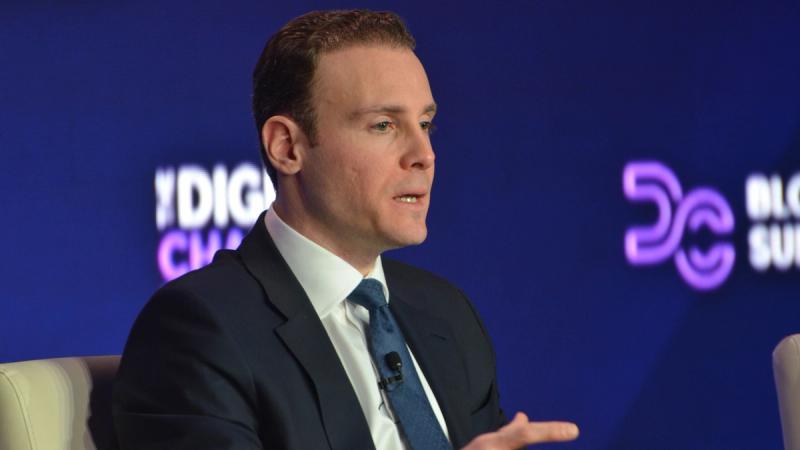
No special rules for Hyperliquid or other onchain trading platforms, CFTC says
Hyperliquid and other onchain exchanges can offer derivatives to U.S. traders if they obtain the required licenses or work with a...

CFTC Chair on Hyperliquid and onchain venues, Ripple CLO doubts Elizabeth Warren will set crypto policy, and more
In today's newsletter, CFTC Chair Selig outlines how Hyperliquid and other onchain venues could enter the US; Ripple's Alderoty do...

CFTC chairman Selig signals compliant US pathways for platforms like Hyperliquid
The CFTC's guidance could reshape the crypto derivatives landscape, encouraging offshore platforms to align with US regulatory fra...